

More news on this day
New York’s John F. Kennedy International Airport has been identified as the most stressful major U.S. gateway for business travelers in a new analysis from Booking.com for Business, underscoring how crowded terminals, lengthy transfers and frequent disruption are reshaping the corporate travel experience.
Get the latest news straight to your inbox!
Booking.com for Business Puts JFK Under the Spotlight
The Booking.com for Business study examined dozens of high-traffic airports worldwide, combining operational and traveler-focused criteria to produce a comparative index for corporate trips. Publicly available coverage of the analysis indicates that factors such as flight connectivity, on-time performance, transfer convenience, access to nearby accommodation and links to central business districts were assessed to understand how well airports serve time-pressed professionals.
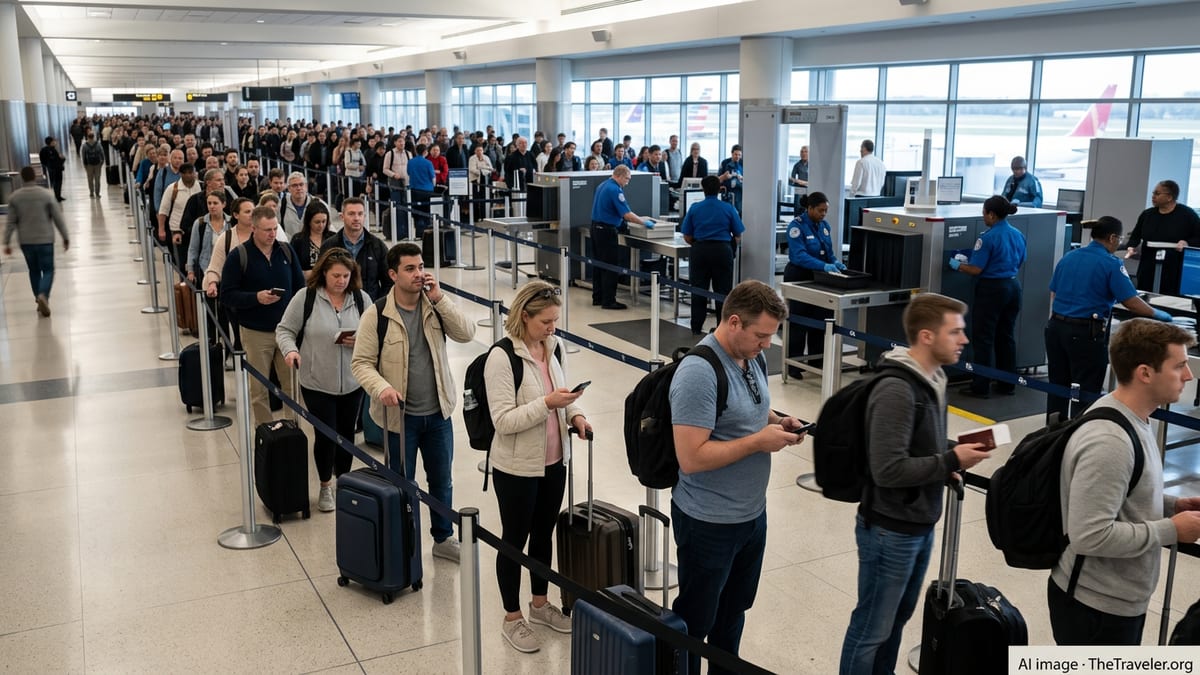
Within this framework, New York’s JFK emerged as the most stressful major U.S. airport for business travel. While the hub remains a vital transatlantic and long-haul gateway, the report’s interpretation suggests that the very scale which makes JFK attractive for global connectivity also contributes to crowding, longer queues and increased potential for delays. These pressures are particularly acute for travelers operating on tight meeting schedules or same-day turnarounds.
Comparative rankings from the same Booking.com for Business exercise point to a contrasting experience at other large U.S. hubs. Coverage of the findings highlights Hartsfield-Jackson Atlanta International Airport as the best-performing U.S. airport for business travelers overall, with a significantly higher score on measures such as route breadth, ease of transfers and proximity of services catering to corporate itineraries. This gap underlines how sharply business travel stress can vary from one major airport to another.
The study adds to a growing body of industry research suggesting that the airport segment of a trip is a critical determinant of how stressful business travel feels, often more so than the flight itself. By singling out JFK as particularly challenging, the Booking.com for Business index reinforces concerns that major U.S. gateways are struggling to keep pace with rising passenger volumes and changing corporate travel expectations.
Why JFK Scores High on the Stress Index
Analysts reviewing the Booking.com for Business data point to several structural features that may be driving JFK’s high stress score for corporate passengers. The airport’s multi-terminal layout, the need to rely on inter-terminal shuttles or the AirTrain, and the distance to Manhattan’s primary business districts all add steps, time and uncertainty to already packed workday schedules.
JFK’s role as a key hub for international long-haul services also means that its operations are heavily exposed to knock-on disruption from weather systems and air traffic congestion across the North Atlantic and beyond. Publicly available performance analyses of New York airports have previously documented higher levels of delays and cancellations at the region’s major hubs compared with many inland U.S. airports, reinforcing perceptions that flying through New York can be unpredictable for those with non-negotiable meeting times.
Business travelers passing through JFK tend to depend on efficient ground transport into Manhattan or other commercial centers. However, traffic congestion on key road corridors between the airport and Midtown, coupled with variable journey times on public transport, can erode what little schedule buffer frequent travelers build into their itineraries. For executives required to move between client sites or attend multiple appointments in a single day, each additional layer of uncertainty adds measurable stress.
The corporate traveler profile also magnifies these pressures. Research cited in recent business travel surveys shows that many professionals now combine intensive work obligations with shorter trips, leaving less room to absorb airport-related disruption. When check-in, security and transfers at a complex hub like JFK take longer than expected, the time available for rest, preparation or in-person meetings is quickly squeezed.
Business Travel Stress Rising Across U.S. Skies
The Booking.com for Business findings on JFK fit into a broader trend of rising frustration with the air travel experience in the United States. Recent national polling on travel sentiment reports that a significant share of Americans believe flying has become more difficult over the past year, with many citing longer security lines, more frequent delays and crowded terminals as key pain points.
Industry-wide research on corporate travel behavior has documented similar concerns among frequent business flyers. Studies from travel management and expense platforms show that schedule unpredictability and airport bottlenecks now rank among the top stressors for employees on the road, often outranking traditional worries such as fear of flying or navigating unfamiliar cities. Many respondents report adding “buffer days” to itineraries or insisting on earlier arrivals in order to protect important meetings from disruption.
Analysts also note that corporate travel policies are gradually adjusting to these realities. Some companies are encouraging employees to build in longer connection times, while others are prioritizing routings through airports known for stronger on-time performance, even when those options are not the cheapest. The emphasis is shifting from minimizing ticket cost alone to balancing price, productivity and traveler well-being.
Against this backdrop, the stress ranking for JFK provides a data point that corporate travel managers may factor into routing decisions. Organizations with a high volume of trips through New York are likely to weigh the operational risks of connecting via JFK against alternatives such as LaGuardia or Newark, depending on destination, airline partnerships and traveler feedback.
How JFK Compares With Other U.S. and Global Hubs
While JFK is singled out in the Booking.com for Business index as the most stressful U.S. airport for corporate travel, the same analysis and related coverage highlight that not all large hubs generate the same level of pressure. Hartsfield-Jackson Atlanta, for example, is reported to deliver one of the most favorable experiences for business travelers, with a strong combination of domestic connectivity, streamlined transfers and an array of lounges and nearby hotels supporting efficient itineraries.
Outside the United States, the Booking.com for Business data set spotlights several airports that score highly on measures valued by corporate passengers. Coverage of the study points to hubs such as Istanbul, Doha and leading European and Asian gateways, where extensive direct route networks, robust business class offerings and relatively quick links to financial districts help reduce friction for time-sensitive travelers. These airports are often designed with integrated terminal layouts and modern infrastructure, allowing passengers to move between flights and ground transport with fewer obstacles.
By contrast, U.S. gateways like JFK are frequently constrained by legacy terminal designs, ongoing construction and surrounding urban density. Even as major redevelopment projects are underway at JFK to upgrade facilities and consolidate terminals, the short-term impact often includes temporary detours, relocated checkpoints and construction-related congestion, all of which can heighten stress for travelers on tight schedules.
The comparison reinforces a wider debate within aviation and business circles about how U.S. infrastructure stacks up against newer hubs abroad. For global companies deciding where to base regional operations or stage key meetings, the quality of airport access, reliability of flight schedules and ease of transfers can have a tangible influence on location strategy.
What the Ranking Means for Corporate Travel Planning
For individual business travelers, the Booking.com for Business designation of JFK as the most stressful U.S. airport serves as both a warning and a planning cue. While many trips will still necessitate travel through New York’s primary international gateway, awareness of its operational challenges can encourage more conservative scheduling, such as earlier flights, longer connection windows and flexible meeting times.
Corporate travel managers, meanwhile, may use the findings to refine preferred routing guidelines and educate employees on the trade-offs associated with different hubs. In some cases, companies may direct travelers to connect through airports that score better on reliability and convenience, even if that adds a short additional flight segment or slightly longer overall journey time, on the grounds that reduced stress and higher on-time performance support better business outcomes.
The Booking.com for Business analysis also underscores the growing importance of airport services aimed specifically at corporate passengers. Demand is likely to remain strong for fast-track security options, quiet workspaces, reliable airport Wi-Fi and hotels located within a short transfer of terminals. Airports that invest in these amenities, while also tackling core operational bottlenecks, are better positioned to appeal to business travelers seeking to reclaim productive time on the road.
As air travel volumes continue to recover and corporate trips regain momentum, the experience at hubs like JFK will remain a focal point in discussions about traveler well-being and productivity. The stress ranking attached to New York’s largest airport suggests that, for now, many business travelers still face a demanding journey before they even reach the boardroom.