


More news on this day
The United States has reiterated its strongest warning against travel to Lebanon, underscoring the risk of drone and missile strikes in Beirut as regional tensions and the fallout from the 2026 Lebanon war continue to unsettle the country’s security environment.
Get the latest news straight to your inbox!
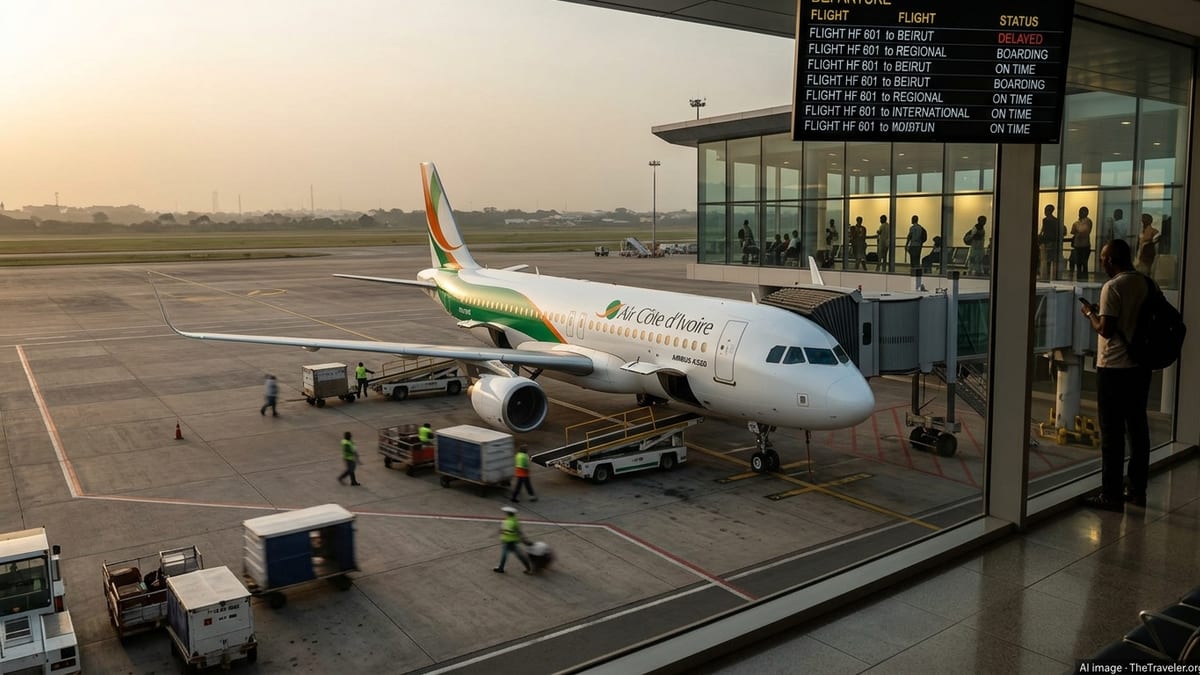
Level 4 advisory reissued for Lebanon
Publicly available information from the US Department of State shows that Lebanon remains under a Level 4 “Do Not Travel” advisory, updated on October 23, 2026. The advisory urges US citizens to avoid all travel to the country due to crime, terrorism, civil unrest, kidnapping, landmines and armed conflict.
The advisory notes that US government capacity to provide emergency services in Lebanon is severely constrained. Embassy Beirut has imposed strict limits on the personal movement of its own staff, who require advance permission for travel anywhere in the country. These measures are presented as a reflection of the broader security environment facing foreign nationals.
Information on the advisory history indicates that Lebanon has remained at Level 4 throughout much of the ongoing regional crisis. The latest update reiterates that US citizens are “at risk” in Lebanon and emphasizes that travel should not take place for any reason, including tourism and nonessential business.
Other governments, including those of Australia, Ireland, Canada and the United Kingdom, maintain similarly severe warnings, advising their citizens against travel to large parts of Lebanon and specifically highlighting Beirut and the country’s airspace as high-risk areas.
Risk of strikes highlighted in Beirut and beyond
The renewed US advisory specifically points to the threat of drone, rocket and missile strikes across Lebanon, including the capital, Beirut. According to the text of the State Department notice and related guidance pages, such strikes can occur with little or no warning and may affect civilian neighborhoods, critical infrastructure and transportation routes.
Recent travel advice from foreign ministries and aviation safety briefings describes an environment in which Israeli military activity and retaliatory fire from armed groups in Lebanon have periodically extended toward Beirut and its southern suburbs. These areas have seen previous airstrikes and are widely flagged as particularly dangerous due to the presence of armed factions and the risk of further attacks.
Specialist airspace risk monitors report that Lebanon’s flight information region continues to be classified as high risk, with multiple states advising airlines to avoid Lebanese airspace except for limited operations into and out of Beirut over the sea. This reflects concern that any escalation along the Lebanon Israel front could quickly bring renewed strikes on or near the capital.
Government advisories from countries such as Ireland and Canada also warn that road access to Beirut–Rafic Hariri International Airport has been intermittently disrupted by airstrikes, clashes and protests, adding an additional layer of uncertainty for any attempt to enter or leave the city.
Regional tensions and embassy posture
The reissued US warning comes against the backdrop of persistent regional volatility and the aftershocks of the 2026 Lebanon war. Open-source timelines record repeated cross-border incidents between Israel and Hezbollah throughout 2026, along with airstrikes in southern Lebanon and the southern outskirts of Beirut.
The broader regional picture includes heightened concern about attacks on US interests and diplomatic facilities across the Middle East. In parallel with the Lebanon advisory, recent press coverage describes US moves to adjust staffing levels at several embassies in the region in response to increased threat perceptions linked to Iranian-backed groups and ongoing conflicts.
Within Lebanon, multiple foreign governments underline the risk of protests and demonstrations tied to domestic political and economic crises as well as regional issues. These events are reported to occur frequently in Beirut and other urban centers and have, on some occasions, turned violent with little warning.
Travel advisories stress that the Lebanese authorities face significant constraints in guaranteeing the safety of foreign visitors amid overlapping security, economic and infrastructure challenges. Power shortages, damaged health facilities and the legacy of unexploded ordnance are all cited as additional complications should a security incident occur in or around Beirut.
Impacts on air travel and tourism plans
The continuing Level 4 advisory and references to strike risks in Beirut are having a direct impact on air travel and tourism planning. Aviation bulletins show that some international carriers have previously suspended or curtailed services to Beirut during spikes in regional tension, while others have adjusted flight paths to minimize exposure to potentially contested airspace.
Foreign ministries in Europe and the Asia Pacific region caution that flight availability to and from Beirut can change at short notice if security conditions deteriorate. Disruptions may include cancellations, diversions or temporary closures of the airport or its access roads, limiting options for rapid departure.
Public guidance from the US and other countries advises individuals who decide to remain in Lebanon against official recommendations to maintain contingency plans, including arrangements for sheltering in place and alternative departure routes should commercial flights become unavailable. Insurance providers are also urging travelers to confirm whether policies cover travel to destinations listed under high-risk or “do not travel” categories.
Tourism to Lebanon had been slowly recovering in recent years, with Beirut serving as a key entry point. However, the combination of an ongoing Level 4 advisory, warnings about possible strikes in and around the capital, and broader instability is likely to weigh heavily on future leisure and business travel decisions.
What the advisory means for US travelers
The latest US position is framed in unequivocal terms. The State Department’s standing guidance states that individuals should not travel to Lebanon for any reason and that those who are already in the country face elevated risks that could limit the ability of any government to assist in an emergency.
Publicly available consular information emphasizes that evacuation operations during a sudden crisis may not be possible, particularly if air routes are disrupted or armed conflict escalates near Beirut. Travelers are encouraged to closely monitor official alerts, local media and airline notices for rapid changes in the security and operational picture.
For US citizens who decide to remain in Lebanon despite the advisory, government sites recommend enrolling in traveler registration systems so that security updates and any available guidance can be communicated quickly. Similar mechanisms are used by other countries to locate and assist their nationals if conditions deteriorate further.
With no indication that the Level 4 warning will be relaxed in the near term, the latest reiteration serves as a clear signal that Lebanon, and Beirut in particular, is currently regarded by multiple governments as a destination where the risk of missile and drone strikes, civil unrest and broader armed conflict remains unacceptably high for discretionary travel.