


More news on this day
An IndiGo flight from Kolkata to Agartala was temporarily grounded at Netaji Subhas Chandra Bose International Airport after a lightning strike caused a sudden power loss on board, disrupting morning operations and delaying the journey of more than 140 travelers.
Get the latest news straight to your inbox!
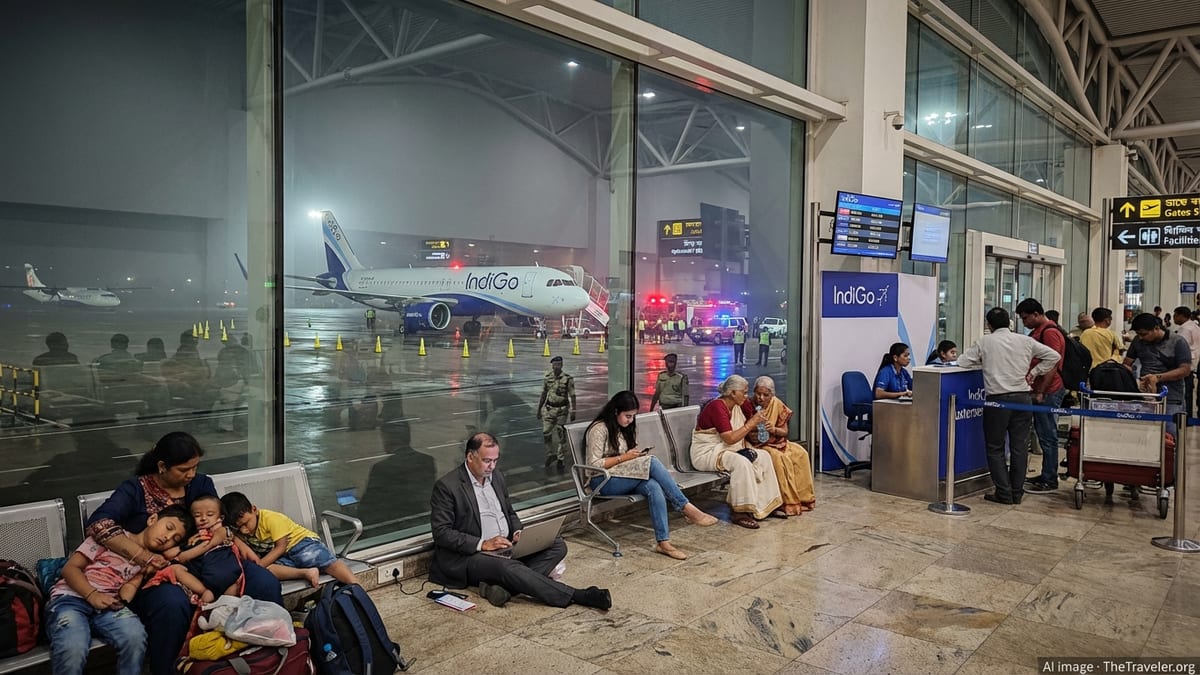
Lightning Strikes Stationary Aircraft During Morning Thunderstorm
According to multiple Indian media reports, the incident occurred on the morning of June 19, 2026, when IndiGo flight 6E6068, operating from Kolkata to Agartala, was parked at an aerobridge stand during an active thunderstorm over the city. The Airbus A320 aircraft, registered VT-IPW, was positioned at aerobridge 56L at Netaji Subhas Chandra Bose International Airport when it was struck by lightning.
Published coverage indicates that the aircraft experienced a sudden power failure immediately after the strike, with onboard systems briefly going offline. There were 141 passengers and six crew members on board at the time, placing more than 140 travelers directly in the path of a rare but serious weather-related event as heavy rain and thunderclouds moved across the airport.
Reports describe the strike as occurring around 9:30 a.m. local time, shortly after the aircraft had completed boarding and while it was preparing for departure. The Airport Operations Control Centre had already circulated weather advisories related to thunderstorms in the Kolkata area, part of a broader spell of monsoon-season instability that has brought frequent lightning and heavy showers.
Initial assessments shared in the public domain suggest the lightning primarily affected electrical and power systems rather than causing visible structural damage to the airframe. However, any direct lightning event on a commercial jet requires detailed inspections, leading to an immediate halt in the aircraft’s planned operations.
Passengers Deboarded Safely and Shifted to Replacement Aircraft
Following the strike and loss of power, standard safety procedures led to all passengers being deboarded from the affected aircraft. Media reports indicate that IndiGo arranged for travelers to be transferred to another aircraft, an Airbus A321 registered VT-ICD, which later operated the flight to Agartala once checks and preparations were completed.
Publicly available timelines show that the flight was originally scheduled to depart around 9:20 a.m. but eventually left Kolkata closer to 12:50 p.m. The roughly three-hour disruption extended journey times for more than 140 passengers, many of whom were traveling onward to or from Tripura’s capital at the start of the monsoon period.
Reports emphasize that there were no injuries among the passengers and cabin crew. Two members of ground handling staff were described in coverage as slightly affected by the incident and were taken to a medical facility for evaluation before being discharged. There have been no indications of serious medical issues linked to the lightning strike.
For travelers inside the terminal, the event added to delays already associated with stormy weather over Kolkata and surrounding districts. News coverage from the region has described waterlogging and traffic congestion across the city that same morning, which compounded the impact of airport disruptions for those attempting to reach or depart from the hub.
Operational Impact at Netaji Subhas Chandra Bose International Airport
Netaji Subhas Chandra Bose International Airport serves as a major base for IndiGo and a key gateway to India’s northeast, including frequent links to destinations such as Agartala. During intense thunderstorm activity, ground operations can slow significantly as airlines and airport operators apply additional safety margins around refueling, boarding and aircraft movement on the apron.
In this case, the lightning strike occurred while the aircraft was still connected to the aerobridge, sparing it the added risk of being airborne or accelerating on the runway. Even so, the sudden power loss and the need to secure the aircraft, verify its condition and arrange alternative capacity placed additional pressure on Friday’s morning schedule at one of eastern India’s busiest terminals.
Available reporting suggests that other flights in and out of Kolkata were also affected by the weather, with delays and temporary disruptions particularly pronounced during the most intense storm cells. For an airport that handles a high volume of domestic departures in quick succession, a grounded jet and extended gate occupation can have knock-on effects, including short-term congestion at nearby stands and additional waiting time for subsequent departures.
The incident highlights how rapidly local conditions can deteriorate during the monsoon season, even at airports that issue advance thunderstorm advisories. While lightning protection on modern aircraft is designed to manage such events, any direct strike still triggers maintenance and inspection protocols that can cascade into wider schedule changes for airlines and passengers.
Lightning Risk and Safety Protocols in Commercial Aviation
Aircraft are built to withstand lightning, and industry data indicate that commercial jets around the world are struck with some regularity during their operational lifetimes, often without passengers even noticing. Fuselages and wings act as conductors, allowing electrical charge to travel along the exterior and exit safely, while sensitive avionics are shielded and systems are designed with multiple redundancies.
However, when a strike coincides with visible disruption to onboard power, operators are required to treat the aircraft as potentially affected until thorough technical checks are completed. This can involve taking the aircraft out of service temporarily, inspecting the skin, antennas and control surfaces, and running diagnostic tests on electrical and electronic systems.
Reports on the Kolkata incident indicate that IndiGo followed a conservative approach by grounding the A320 and deploying a replacement aircraft. Such measures align with a wider safety culture in commercial aviation, where schedule reliability is secondary to confirming that equipment has not suffered hidden damage. For travelers, the most visible consequence is often an extended wait in the terminal, even when outward signs of damage are minimal.
Events like the Kolkata lightning strike also draw renewed attention to airport-level weather monitoring. Thunderstorm alerts issued to airlines and ground handlers are intended to minimize exposure during high-risk windows, but individual cells can still produce sudden and intense lightning activity over a relatively small area, as appears to have been the case near aerobridge 56L on June 19.
What the Incident Means for Travelers on the Kolkata–Agartala Route
The Agartala route is one of the key domestic connections from Kolkata into the northeast, serving a mix of business travelers, government officials, students and families. While the June 19 incident has been described in public coverage as an isolated weather event, it is likely to prompt many regular flyers on this corridor to pay closer attention to pre-monsoon and monsoon forecasts when planning morning departures.
In practical terms, the delay of roughly three hours for flight 6E6068 underscores the value for travelers of building extra buffer time into itineraries that involve same-day connections or important commitments after arrival. Thunderstorms over eastern India can build quickly in the late morning, and lightning-related disruptions can extend beyond the immediate duration of a storm cell as aircraft await inspection or rescheduling.
For IndiGo, which maintains a strong presence at Netaji Subhas Chandra Bose International Airport, the episode is another reminder of the operational challenges posed by seasonal weather in a congested airspace. While the airline was able to field a substitute aircraft for the Agartala-bound passengers, the need to reshuffle equipment can reverberate across its broader network for the rest of the day.
For now, reports indicate that passengers on the affected flight eventually reached Agartala on the replacement aircraft without further incident. With no serious injuries and the aircraft grounded for checks, the lightning strike is likely to be viewed within the industry as a disruptive but contained episode that nonetheless illustrates the continuing importance of robust weather planning for airlines and airports across India’s monsoon belt.