


More news on this day
A lightning strike on air traffic control systems at London Luton Airport triggered a shutdown of arrivals and departures on Thursday evening, leaving passengers stranded and forcing airlines to divert and cancel flights across the London system.
Get the latest news straight to your inbox!
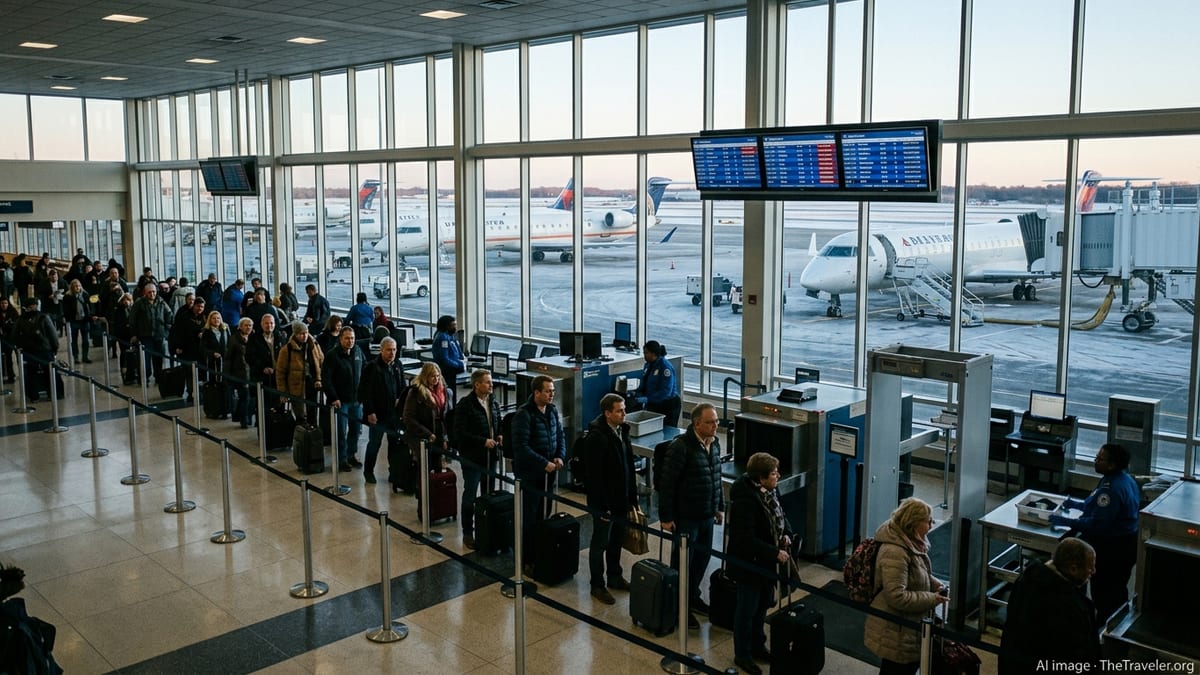
Storms over Bedfordshire force rapid airport shutdown
According to published coverage, operations at London Luton Airport were suspended for about 95 minutes after a lightning strike affected key air traffic control equipment on the evening of 27 August 2026. Reports indicate that the suspension began at around 17:40 BST, just as a line of intense thunderstorms moved across Bedfordshire and the northern edge of Greater London.
Publicly available information shows that the outage stopped both arrivals and departures, with flights entering holding patterns, diverting to other airports or returning to their points of origin. While lightning strikes on aircraft are relatively common and rarely dangerous, disruption to radar, communications and power infrastructure on the ground can require an immediate halt to movements on safety grounds.
The suspension coincided with heavy rain and flash flooding on local roads, making access to the airport more difficult for passengers already on their way to evening departures. Images and video shared on social platforms showed surface water on approach roads and crowded terminal areas as the disruption unfolded.
Reports from aviation-focused outlets describe the incident as one of the most severe weather-related interruptions at Luton this summer, following a prolonged dry spell in the region.
Dozens of flights cancelled, diverted and delayed
Coverage from UK news outlets and aviation industry sources indicates that around 30 flight services were directly affected during the 95 minute suspension, with the knock-on impact rippling into late evening and early morning schedules. Cancellations and diversions involved a mix of short haul European services and leisure routes serving holiday destinations around the Mediterranean.
Several flights bound for Luton were diverted to other airports serving London and the Midlands, including Gatwick, Stansted and East Midlands, according to flight tracking data cited in specialist aviation reports. Some services later repositioned back to Luton once operations restarted, while others required passengers to continue their journeys by road or rail from the diversion airports.
Low cost operators that use Luton as a major base faced particular disruption. One aviation analysis site reported that Wizz Air flights from Turin and Prague were among those diverted, while additional aircraft were reallocated to help clear backlogs once the lightning related outage ended. The scale of the weather band moving across southern England meant that recovery was gradual rather than immediate.
Although operations formally resumed shortly after 19:15 BST, published coverage notes that delays and schedule changes continued late into the night as airlines attempted to rotate aircraft and crew back into planned positions.
Passengers stranded as London routes feel the impact
Reports from local news sites in Bedfordshire and Hertfordshire describe passengers stranded both inside Luton’s terminal and at regional airports where their flights were forced to divert. Travellers expecting straightforward evening arrivals into north London instead found themselves landing at airports such as East Midlands, with onward ground transport arranged at short notice.
Publicly available information shows that some passengers travelling from Gatwick and Heathrow later in the evening also experienced indirect effects, as knock on congestion built across the London air traffic system. Airlines re-routed aircraft to cover gaps in the schedule, adding to busy peak holiday traffic and existing weather related delays elsewhere in the south of England.
Travel industry analysts note that while the incident at Luton was relatively short compared with large scale shutdowns seen previously at Heathrow during power failures, even a disruption of under two hours can leave aircraft out of position and crews over their legal working limits. That combination can lead to cancellations hours after the original trigger event.
For many passengers, the most immediate impact was uncertainty at departure gates and baggage belts as information screens updated to show rolling delays, gate changes and new departure times.
Weather vulnerability and air traffic systems under scrutiny
The lightning strike has drawn attention to the vulnerability of airport ground systems during increasingly volatile summer weather patterns in the UK. Aviation commentators highlight that radar installations, communication masts and local power infrastructure are inherently exposed, and that losing one of these systems, even briefly, can require a temporary suspension of operations while redundancy measures are assessed.
Specialist aviation reporting on the Luton incident notes that redundant systems and safety protocols functioned as intended, with air traffic controllers halting movements and diverting arrivals until they were confident that equipment was fully operational again. The 95 minute duration, while disruptive, is being viewed in industry analysis as broadly consistent with the checks needed after a direct lightning impact on sensitive electronics.
Climate and travel analysts point to a series of recent weather and infrastructure related shocks across major European hubs, arguing that passengers should increasingly expect short notice disruption linked to storms, flooding and power failures. London’s airports have all experienced significant operational interruptions over the past two years, whether from lightning, high winds or external power supply incidents.
For Luton, which has grown rapidly as a low cost gateway for the capital, the episode is likely to feed into ongoing reviews of resilience and contingency planning, particularly around peak holiday periods when terminals and stands are heavily used.
What affected passengers can do next
Guidance from the UK Civil Aviation Authority indicates that when flights are disrupted by events considered extraordinary circumstances, such as severe weather or lightning strikes, airlines are still required to provide care and assistance to affected passengers. This typically includes meals, refreshments and, when necessary, hotel accommodation proportionate to the length of the delay.
Passengers whose flights were cancelled or significantly delayed as a result of the Luton lightning incident are generally entitled to a choice between a refund or re-routing at the earliest opportunity, subject to seat availability on alternative services. Travel rights specialists advise keeping all receipts for food, accommodation and any additional transport costs incurred while waiting for replacement flights.
Consumer organisations also encourage travellers caught up in sudden airport closures or weather related suspensions to monitor airline apps and official channels closely, as schedules can change at short notice while air traffic control authorities manage congestion and slot availability. For those with connecting journeys, especially long haul itineraries, contacting carriers as early as possible can help secure remaining seats on later services.
Travel planners say the lightning strike at Luton serves as a reminder to allow extra buffer time when connecting to or from London airports during unsettled weather, and to consider flexible ticket options or travel insurance policies that cover missed connections and overnight delays.
Lightning strike triggers mass flight cancellations at London Luton Airport | Evening Standard
Lightning strike disrupts flights at Luton Airport | BBC News
Luton Airport operations suspended for 95 minutes after lightning strike | London Travel News
Passenger rights guidance for UK airport disruption | UK Civil Aviation Authority