


More news on this day
Families planning a European rail holiday are finding it easier to keep costs in check, as major rail operators and pass schemes expand or promote generous discounts for children and multi-generational groups across the continent.
Get the latest news straight to your inbox!
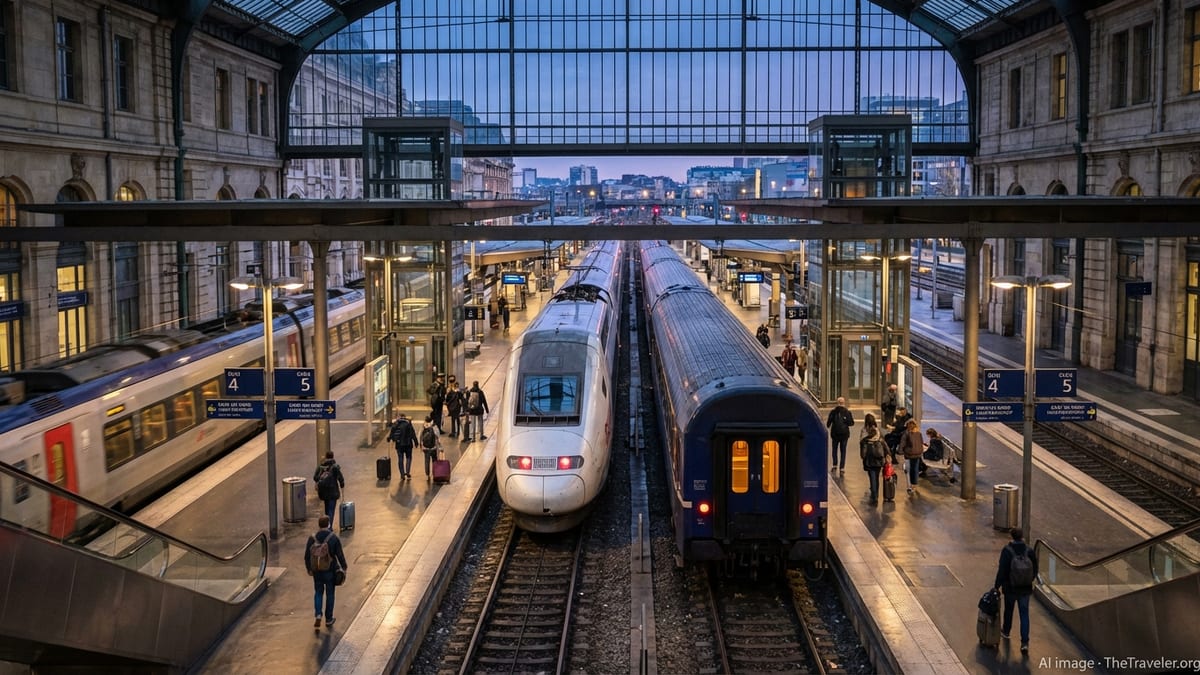
Big Savings on Pan-European Rail Passes for Kids
Pan-European rail passes remain one of the most powerful tools for cutting the cost of multi-country family trips. Interrail, for European residents, and Eurail, for non-European visitors, both promote policies that allow children to travel at no extra cost when they are linked to an adult pass. According to information published by Interrail, up to two children aged 4 to 11 can travel free with each adult holding a full-fare pass, effectively eliminating base ticket costs for many family itineraries that span several countries.
Eurail applies similar rules for visitors from outside Europe. Conditions of use for the passes indicate that children under 4 travel free without a pass in most cases, while children up to 11 can obtain a child pass at no charge when associated with an adult traveler. This approach is designed to make longer rail journeys, such as month-long tours or multi-stop summer holidays, more attractive for families who might otherwise rely on budget airlines.
National operators are also using these pass partnerships to promote international tourism. Coverage in Spain, for instance, has highlighted Renfe campaigns that apply additional percentage discounts to Interrail and Eurail passes, widening the appeal of rail over short-haul flights for cross-border family travel in and out of the Iberian Peninsula.
Germany’s Free Travel Rules Help Larger Families
Germany’s long-standing child fare structure is another pillar of affordable family rail travel. Publicly available information from Deutsche Bahn and independent summaries of its fare system show that children up to and including 14 years old can travel free on many long-distance services when accompanied by a paying passenger aged 15 or over, provided they are correctly listed during booking. For families, this can reduce the cost of long journeys such as Hamburg to Munich or Berlin to the Alps to little more than the adult fares.
On selected regional and nationwide tickets, such as day passes administered within Germany’s wider tariff system, additional provisions allow adults to bring several children at no extra cost. Guidance on Deutsche Bahn’s customer pages describes how a single ticket can cover multiple youngsters when names and ages are entered at purchase, which is particularly useful for larger families or intergenerational groups traveling together on slower but cheaper regional trains.
Recent years have also seen promotional products targeted directly at families, highlighted in both operator announcements and rail enthusiast coverage. These seasonal offers typically bundle a flat price for adults with free or heavily discounted places for children, encouraging domestic rail holidays during school breaks and aligning with broader efforts to shift leisure travel toward lower-emission transport.
Family and Child Discounts on French and Cross-Channel Routes
In France, family-friendly rail policies combine age-based free travel with a tiered system of reductions for larger households. Information from SNCF’s customer support channels notes that children under 4 can travel for free on TGV, Intercités and many regional services when they share a seat with an accompanying adult and are listed in the booking. For children aged 4 to 11, discounted child fares apply, and holders of certain discount cards can secure percentage reductions that extend to accompanying youngsters.
France’s official “carte familles nombreuses” scheme adds an additional layer of savings for households with at least three children. According to details published on the French government portal and in explanatory material, the card gives all eligible family members reduced-price tickets on SNCF lines, with the discount increasing as the number of children rises. This structure in effect rewards larger families with progressively cheaper rail travel on both everyday and holiday journeys.
On international routes, Eurostar applies its own set of child and family rules. Guidance on the operator’s travel pages states that children under 4 travel free without a ticket if they do not occupy a seat, while those aged 4 to 11 typically receive about a 50 percent reduction in Standard and Standard Premier when booked with an adult, on services linking France, Belgium, the Netherlands and Germany. The combination of free infant travel and reduced child fares can make high-speed rail a competitive alternative to flying for cross-Channel family trips.
How Families Can Maximize Rail Discounts
While the details vary between operators and countries, several practical themes emerge for travelers trying to secure the lowest possible fares. First, most European systems require that children who are traveling free or at reduced cost be named and aged correctly at the time of booking. Published guidance from rail companies frequently warns that failure to add children to a reservation can limit eligibility for no-cost travel, even where generous policies exist for accompanied minors.
Second, advance planning is often rewarded. Coverage of tickets and passes around Europe shows that discounted family products and promotional passes, from Germany’s seasonal family offers to Renfe-linked Interrail campaigns, are typically capacity-controlled or sold within specific booking windows. Families planning to travel in school holidays are therefore encouraged to secure passes and key long-distance reservations early, before cheaper fare tiers sell out.
Finally, industry and traveler reports alike highlight the importance of checking both pass-based options and point-to-point tickets. In some parts of Central and Eastern Europe, regular fares remain low enough that buying individual tickets for adults, then adding free or reduced child tickets, can be cheaper than multi-country passes. In Western Europe, by contrast, the combination of high base fares and free child passes often makes Interrail or Eurail a better value for families, especially on itineraries that rely heavily on high-speed services.
Rail Travel as a Budget-Friendly, Low-Carbon Choice
The expansion and promotion of family discounts aligns with Europe’s broader transport and climate objectives. European Union initiatives encouraging young people to explore the continent by train, alongside national campaigns to shift passengers from air and road to rail, have created an environment in which operators emphasize the affordability and practicality of family rail travel. Programs that distribute free or discounted passes to young travelers are often paired with additional reductions on accommodation and local transport, creating wider value for family budgets.
For parents weighing the cost of a multi-stop European holiday, the combined effect of free child passes, progressive family cards, and generous accompanied-child rules can significantly reduce the overall price of long-distance travel. Although families must navigate a patchwork of age limits, booking conditions and reservation fees, publicly available information suggests that, with careful planning, trains can now rival or undercut low-cost airlines on many popular routes, while offering a more comfortable and lower-emission journey for children and adults alike.
Interrail: Free travel for kids policy
Eurail: Child pass information
Deutsche Bahn: Children free travel overview