


More news on this day
Lisbon and Porto are emerging as two of Europe’s most in-demand short-trip cities, as record tourism numbers in Portugal combine with strong air links and a search for affordable culture-rich breaks.
Get the latest news straight to your inbox!
Record Tourism Fuels City-Break Boom
Portugal has posted successive tourism records, cementing its position as one of Europe’s fastest-growing destinations for city and weekend breaks. National data compiled by Turismo de Portugal and other public sources show that the country surpassed 80 million overnight stays in 2024, with foreign visitors driving much of the growth. Recent summaries of official statistics indicate that more than 29 million international tourists visited Portugal in 2024, placing the country among the top inbound destinations globally and lifting tourism revenue to all-time highs.
Within that national picture, Lisbon and Porto have become the clear urban standouts. Industry reports note that Greater Lisbon and the northern region anchored by Porto account for a large share of all overnight stays in the country, reflecting their role as gateways for short cultural trips, food-focused weekends and wine tourism. Analysts tracking tourism flows describe both cities as core hubs in a broader shift toward city-based travel instead of longer traditional beach holidays.
The latest market commentary from banks, consultancies and Portugal’s own tourism intelligence platforms points to continued momentum into 2025, with overnight stays and guest numbers still edging above pre-pandemic peaks. Those trends are particularly visible in urban accommodation, where occupancy and average daily rates have risen in step with demand for two- to four-night stays.
Lisbon Ranks Among Europe’s Most-Searched City Breaks
Travel search and booking companies consistently place Lisbon near the top of their European city-break rankings. A European city-break report compiled by TUI Musement, based on Google search volumes for terms such as “weekend in Lisbon” and “Lisbon city breaks,” highlights the Portuguese capital among the most sought-after destinations for trips of one to three nights. Separate rankings by travel media and rental platforms position Lisbon as a leading choice for 2024 and 2025, citing a combination of mild weather, walkable neighborhoods and competitive prices compared with other Western European capitals.
Publicly available analyses of search data show that interest in Lisbon spikes around long weekends and shoulder seasons, signaling strong appeal for quick escapes rather than extended stays. Airlines and online travel agencies also report robust demand on short-haul routes into Lisbon from major European hubs, supporting a pattern in which travelers pair two to four days in the city with day trips to nearby coastal and heritage areas such as Cascais and Sintra.
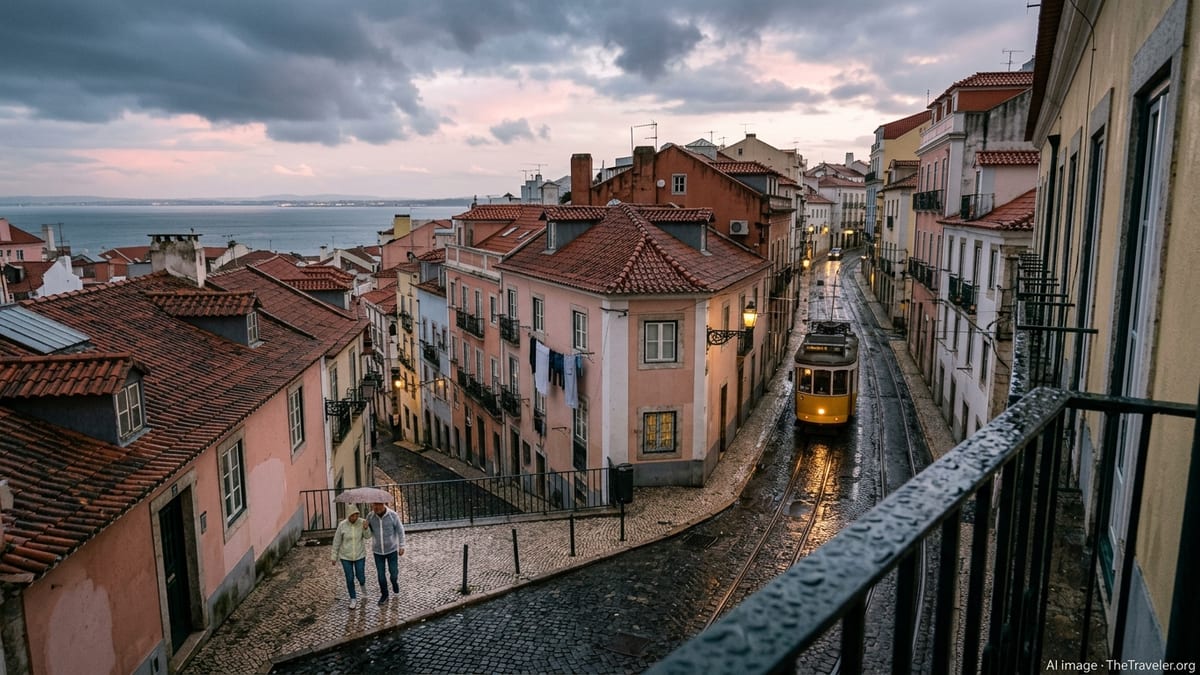
The city’s tourism offer lends itself to compressed itineraries. Visitors can cover historic districts like Alfama and Bairro Alto, ride the iconic tram network, sample contemporary Portuguese cuisine and visit waterfront museums within a compact timeframe. This concentration of attractions, combined with efficient public transport and a dense hotel and guesthouse network, helps explain why Lisbon is increasingly marketed as a flexible weekend destination rather than only a stop on longer Iberian tours.
Porto Emerges as a High-Growth Weekend Destination
Porto, long associated with its wine lodges on the Douro River, has rapidly transitioned into a mainstream weekend-break city. Municipal economic bulletins show that the city’s share of national tourist guests has climbed steadily, with Porto responsible for close to one in ten visitors staying in Portugal in 2024 and an even higher share within the northern region. Earlier academic work already identified Porto as one of Europe’s fastest-growing city-break destinations, and more recent local data suggest that this trajectory has continued.
Growth has been supported by wider air connectivity at Porto’s Francisco Sá Carneiro Airport, where low-cost carriers and European network airlines have expanded routes aimed at two- to four-night leisure stays. Tourism authorities and local observers note rising occupancy rates in boutique hotels and short-term rentals in the historic center, mirroring the pattern seen in other European cities that have become fashionable for quick cultural getaways.
Porto’s appeal for short trips is rooted in its compact, dramatic cityscape. Visitors can explore the Ribeira riverside district, cross the Dom Luís I Bridge, tour port wine cellars in Vila Nova de Gaia and access viewpoints over the Douro in a single weekend. The city also serves as a launchpad for day tours into the Douro Valley wine region, which are commonly packaged as add-ons to two- or three-night stays, reinforcing Porto’s role as a base for intensive but time-limited travel.
Value, Air Links and Travel Behavior Drive the Shift
The surge in short trips to Lisbon and Porto reflects broader changes in European travel behavior. Eurostat data cited by the travel industry show that short getaways of up to three nights now account for more than half of all trips, a share that has grown as travelers seek more frequent but shorter holidays. TUI Musement’s city-break analysis notes that searches for one- to three-night trips are particularly strong for destinations considered good value relative to other capitals, a category that often includes Portuguese cities.
Portugal’s positioning as a relatively affordable eurozone destination has amplified this trend. Comparative studies of average hotel prices, restaurant costs and local transport suggest that both Lisbon and Porto generally undercut cities such as Paris, Amsterdam or Copenhagen, while offering similarly rich cultural experiences. This has proven especially attractive to younger travelers and remote workers who assemble multiple short city breaks across the year rather than one long summer holiday.
Improved air links have also played a decisive role. Both Lisbon and Porto are now served by an extensive network of point-to-point flights from secondary European airports, particularly in the United Kingdom, Germany, France, the Netherlands and Italy. Schedules are often tailored around weekend departures and returns, encouraging two- or three-night stays. Rail connectivity within Portugal, especially between Lisbon and Porto, makes it easy for visitors to combine both cities in a single short itinerary.
Pressure on Infrastructure and the Search for Balance
The rapid rise in city-break tourism has brought new pressures alongside economic gains. Reports from urban planning bodies, media outlets and international organizations such as the OECD highlight concerns around housing affordability, congestion and the sustainability of tourism growth in Lisbon and Porto. Local data show high concentrations of short-term rentals in historic neighborhoods, prompting debates about how to manage visitor numbers while preserving community life.
Policy discussions are increasingly centered on dispersing demand beyond the most saturated districts and encouraging visits outside peak months. National tourism strategies outlined for the coming decade emphasize spreading travelers more evenly across regions and seasons, while maintaining Portugal’s competitiveness as a leading European destination. For city-break hotspots, that may translate into tighter rules on tourist accommodation, investments in public transport and promotion of lesser-known neighborhoods and nearby towns.
For travelers planning short trips, these dynamics mean that early booking is becoming more important, particularly for spring and autumn weekends when demand from European markets is highest. Travel advisers recommend paying close attention to neighborhood choice, public transport access and any evolving regulations affecting short-term stays. As Lisbon and Porto continue to climb the rankings of Europe’s favorite quick escapes, the challenge for Portugal will be to channel surging demand into a model of urban tourism that remains attractive both to visitors and to residents.