


More news on this day
Flight delays at Boston Logan International Airport eased on Tuesday morning after a telecommunications failure at a regional air traffic control facility in the Northeast grounded or delayed hundreds of flights across several major airports the previous day.
Get the latest news straight to your inbox!
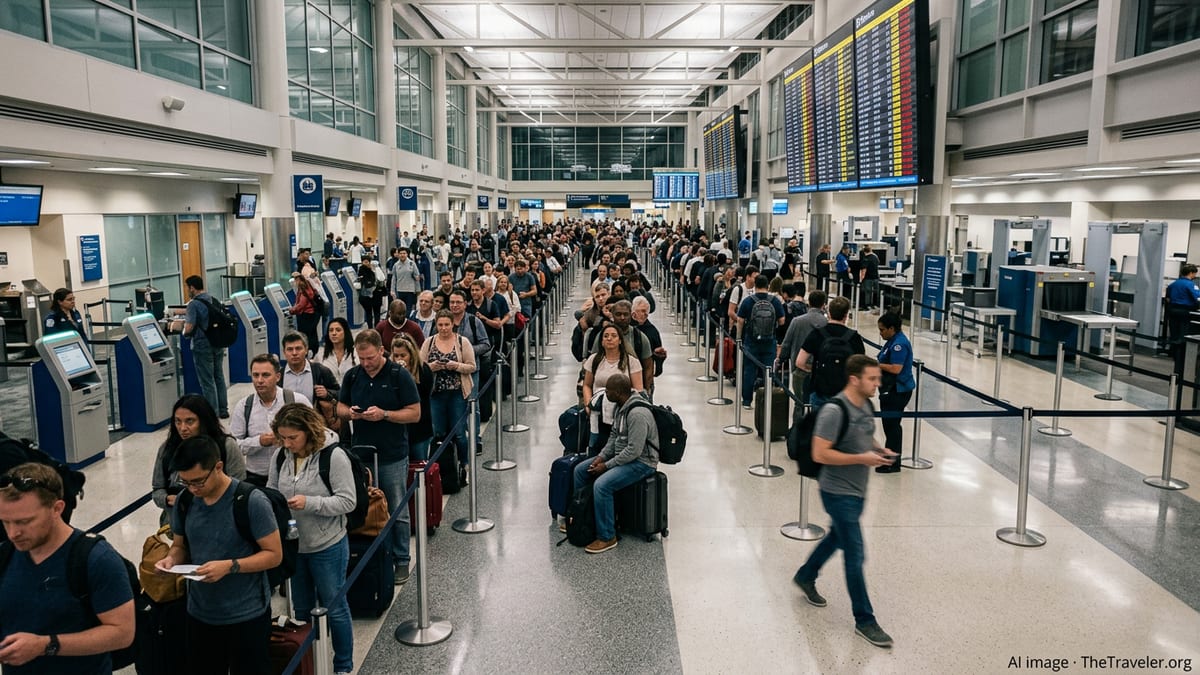
Regional outage ripples into Boston
Publicly available information indicates that a cut fiber-optic line connected to air traffic control systems near Philadelphia on Monday, September 21, led to widespread disruptions across the busy Northeast air corridor. The problem affected the ability of controllers to manage traffic into and out of several large hubs, triggering ground stops and extensive delays.
Coverage from multiple outlets shows that airports including Newark Liberty, Philadelphia International, John F. Kennedy, LaGuardia and Boston Logan all experienced significant restrictions on arrivals and departures while technicians worked to restore the network. Airlines were forced to hold aircraft on the ground, divert incoming flights and thin out schedules to maintain safe spacing between planes.
At Logan, regional reporting notes that air traffic control equipment issues translated into hours-long waits for many travelers as departure times slid repeatedly throughout the day. Some passengers who had expected to leave Boston on Monday evening were still trying to reach their destinations on Tuesday morning, as aircraft and crews remained out of position.
By early evening on Monday, federal transportation updates indicated that the damaged telecommunications lines had been repaired and that the regional air traffic system was coming back online. Even so, the backlog of delayed aircraft meant that Logan and other airports continued to see knock-on disruptions into the night.
Hundreds of flights delayed and canceled
Flight-tracking data summarized in local and national coverage shows that the outage translated into hundreds of delays at Logan alone. On Monday, airport tallies and flight-tracking services indicated that roughly four hundred to five hundred flights into or out of Boston were delayed or canceled as a direct result of the air traffic equipment problems and the resulting flow restrictions.
Regional media in Boston reported that Logan was among the hardest-hit airports outside the core New York and Philadelphia hubs, with some airlines canceling entire late-evening banks of departures once it became clear that crew duty limits and aircraft positioning would make recovery difficult. Travelers faced crowded gate areas, long lines at customer service desks and limited options for same-day rebooking.
According to published coverage, Philadelphia International Airport saw roughly four hundred delays and about two hundred cancellations on Monday, while Newark and the New York-area airports also recorded several hundred impacted flights. Because many of those flights were scheduled to continue on to Boston, the disruptions at Logan were amplified well beyond the immediate local impact of the outage.
The volume of affected flights prompted several major U.S. carriers to issue system waivers for travel on September 21 and 22, allowing customers booked through Boston and other Northeast airports to change to alternate dates or routes without standard change fees, so long as they rebooked within a limited window and kept the same origin and destination.
Tuesday recovery brings gradual improvement
By Tuesday morning, September 22, the most severe bottlenecks at Logan had eased, according to Boston-based outlets that track airport operations. Overnight, airlines repositioned aircraft and crews, allowing early departing flights to leave closer to schedule and restoring a more predictable flow of traffic into and out of the airport.
Publicly available flight status boards showed that, while delays persisted, they had narrowed to more modest holds for many departures, often under an hour. Some early morning cancellations remained, largely associated with routes that had already experienced multiple disruptions the previous day or that depended on aircraft still returning from out-of-position locations.
Travel and aviation publications noted that delays could linger across the Northeast for at least part of Tuesday as airlines worked through a complex puzzle of aircraft routings and crew schedules. Logan’s experience matched that pattern, with a gradual return to normal rather than an immediate snap back once the equipment issue was resolved.
Airport statements posted on social media continued to advise travelers heading to Logan on Tuesday to check their flight status frequently and to arrive with extra time, particularly during peak morning and late-afternoon hours when the residual congestion was most visible.
What travelers through Logan should expect next
With the damaged telecommunications infrastructure repaired and the affected air traffic control systems reported to be back online, analysts expect Logan’s remaining disruptions to stem primarily from operational knock-on effects rather than any continuing technical limitation. That includes aircraft and crew rotations that still need to be realigned, as well as typical factors such as weather and runway use patterns.
Travel-industry coverage indicates that most major carriers have focused recovery efforts on clearing stranded passengers from the largest hubs first, then normalizing service on secondary routes. For Boston-area travelers, this means that high-demand business and transcontinental services are likely to stabilize faster than lower-frequency leisure routes that depend on specific aircraft types.
Passengers with upcoming itineraries through Logan are being encouraged in public advisories to use airline mobile apps or text alerts to monitor changes, to accept free rebooking options when available and to anticipate that gate assignments and departure times may still shift even after check-in. Those connecting through other Northeast airports, particularly New York and Philadelphia, may face additional schedule adjustments as the broader system continues to recalibrate.
For travelers making time-sensitive trips over the next day or two, some travel publications recommend considering early-morning departures, which tend to be less affected by cascading delays, or nonstop flights that avoid tight connections in the still-recovering Northeast corridor.
Spotlight on infrastructure and resilience
The outage has drawn attention in aviation reporting to the vulnerability of critical air traffic control infrastructure to single points of failure such as a severed telecom cable. Monday’s incident followed other recent disruptions in different regions, prompting renewed questions in trade publications about redundancy and resiliency in the systems that underpin U.S. air travel.
Analysts cited in industry coverage note that the Northeast is among the most complex and saturated airspaces in the country, with interlocking flows into Boston, New York, Philadelphia and Washington. When a key node in that network loses capacity or connectivity, even for a few hours, the resulting schedule disruptions can reverberate nationwide as aircraft and crews fall out of their planned rotations.
Reports also highlight that Monday’s equipment failure coincided with a busy travel period and major events drawing additional traffic into New York, compounding the strain on the system. In that context, Logan’s rapid move from nearly five hundred impacted flights on Monday to a more manageable, though still elevated, level of delay on Tuesday is being viewed as a relatively swift recovery.
While investigations and technical reviews of the outage are still unfolding, early discussions in aviation circles suggest that additional safeguards, alternate routing paths for critical communications lines and clearer contingency planning for large regional facilities may be among the measures examined in the weeks ahead. For travelers through Boston Logan and other Northeast airports, those efforts are likely to shape how future disruptions are handled and how quickly the system can rebound.