


More news on this day
Flight delays at Boston Logan International Airport eased on Tuesday morning after an air traffic control equipment failure at a regional facility disrupted operations and grounded or delayed hundreds of flights across the Northeast on Monday.
Get the latest news straight to your inbox!
Operations Stabilize After Widespread Disruptions
Publicly available flight-tracking data and airport status boards on Tuesday showed Logan returning to relatively normal operations, with only a modest number of delayed and canceled flights compared with the previous day. The improvement followed the restoration of critical telecommunications lines that support Federal Aviation Administration air traffic systems serving the busy corridor from Washington, D.C., to Boston.
According to published coverage, minimal delays were reported at Logan early Tuesday, with several airlines operating largely on time and some flights arriving ahead of schedule. National airspace status information indicated no major nationwide system issues, in contrast with Monday afternoon, when a regional outage sharply reduced arrival rates at several Northeast hubs.
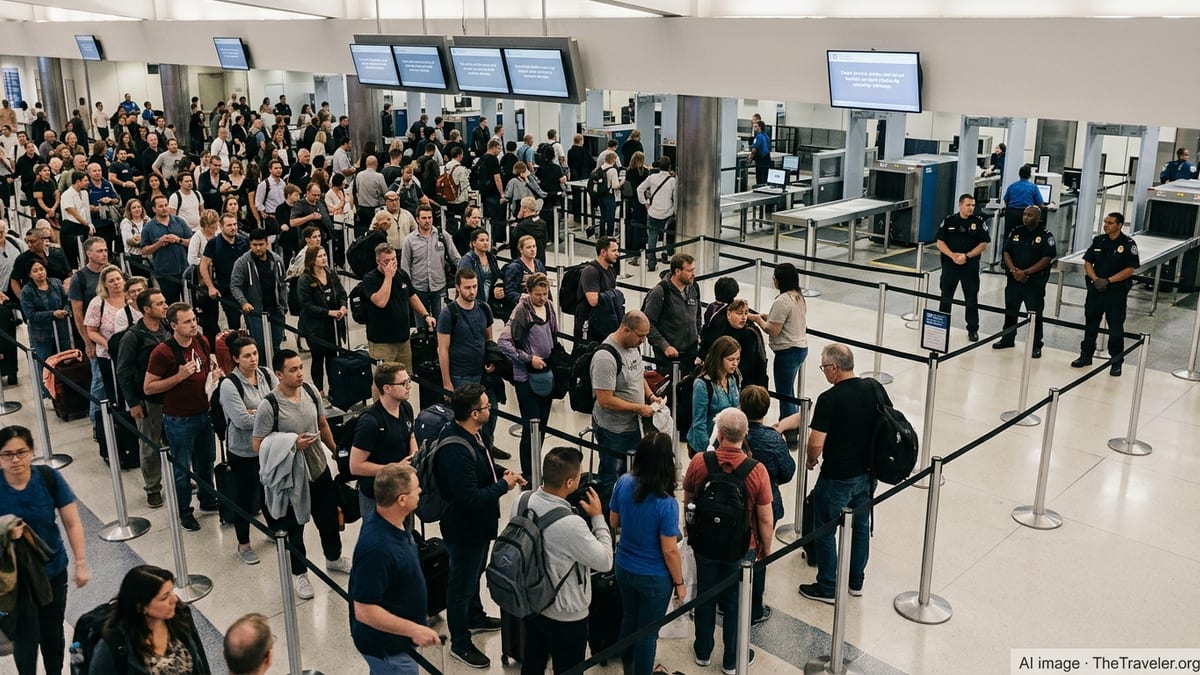
Data from FlightAware and similar tracking services indicated that by early Tuesday there were fewer than 100 delays and several dozen cancellations nationwide, a fraction of the disruptions reported at the height of Monday’s problems. At Logan, the reduced congestion translated into shorter lines at ticket counters and security checkpoints, as well as more typical wait times on the tarmac.
Real-time status information for Boston on the FAA’s public portal listed general conditions as arriving and departing “on time,” with no destination-specific delay programs in effect. While individual flights continued to experience schedule changes for routine reasons, the regional gridlock caused by Monday’s outage appeared to have largely cleared.
Equipment Failure in Philadelphia Triggered Regional Ground Stops
Reports from national and local outlets indicate that the disruptions began Monday after an equipment failure at a key air traffic facility in the Philadelphia area. The problem was traced to a damaged telecommunications circuit that interrupted data flows needed for managing traffic in high-density Northeast airspace, prompting the FAA to impose ground stops and flow restrictions at multiple airports.
Coverage from several news organizations described ground stops or severe arrival limitations affecting major airports in the New York City region, Philadelphia and Boston. In practice, that meant flights bound for these airports were held at their origin points or rerouted elsewhere, while departures faced growing delays as the system struggled to absorb diversions and recover from earlier interruptions.
At Logan, publicly available information from flight-tracking sites showed that by Monday evening nearly 500 flights had been delayed and dozens more canceled as the outage rippled across airline schedules. Some aircraft originally intended for New York-area airports were diverted to Boston, adding to congestion on the ground and in the airspace around the city.
Transportation and aviation officials used social media and public statements to note that the affected telecom lines had been repaired by Monday night and that operations across the Northeast were resuming. However, they also warned that it would take time for airlines and airports to work through backlogs of aircraft and crews positioned in the wrong cities, with those knock-on effects lingering into Tuesday.
Construction and Weather Add Local Pressure at Logan
While the Philadelphia equipment failure provided the initial shock to the system, local factors at Logan intensified delays for Boston travelers. Construction work affecting runway and taxiway configurations limited some of the airport’s flexibility during peak periods, reducing the number of arrival and departure streams that could be used when traffic surged.
FAA status summaries for Boston in recent weeks have frequently cited runway and taxiway construction as contributing to average departure delays of around an hour or more during busy windows. On Monday, that work intersected with the regional air traffic control outage, leaving fewer options to handle diverted flights or quickly launch departures once partial restrictions began to lift.
Weather also played a secondary role. According to regional media reports, a low cloud ceiling in the Boston area contributed to Monday’s average delay times, which reached roughly one hour and 45 minutes at points during the afternoon and evening. In combination with the air traffic control constraints, the reduced visibility further slowed arrival rates.
Even after the technical fault was resolved, airlines at Logan faced the logistical challenge of repositioning aircraft and crews that had been stranded elsewhere. That led to scattered residual delays on Tuesday as carriers swapped aircraft, adjusted crew pairings and rebuilt their schedules around available resources.
What Travelers Experienced on the Ground
The sudden onset of restrictions on Monday left many travelers at Logan facing extended waits in terminals and on board aircraft parked on the tarmac. Social media posts and local broadcast reports described passengers seeing their departure times repeatedly pushed back, with some domestic flights delayed by three to four hours or more.
As arrival rates to New York and Philadelphia slowed, Logan found itself receiving additional diversions, briefly pushing gate and ramp capacity close to its limits. Published accounts noted that the airport’s tarmac contingency planning, developed to manage extended on-board delays, was not formally activated at scale, but airlines relied on those protocols to decide when to bring passengers back to gates for food, water and restroom access.
Inside the terminals, departure boards on Monday afternoon and evening showed long blocks of orange and red as flight after flight slipped behind schedule. By contrast, boards on Tuesday morning were largely blue and green, indicating on-time performance with only isolated delays scattered across airlines and destinations.
Customer advocates pointed to the episode as another reminder for passengers to build extra buffer time into itineraries that involve connections through the Northeast, especially during peak travel seasons. Suggestions included monitoring flight status on airline apps before leaving for the airport, enabling push alerts for gate and schedule changes, and considering earlier departures when a same-day connection is essential.
Outlook for the Coming Days
With the primary telecommunications issue resolved, aviation analysts quoted in travel industry coverage expect operations at Logan and other Northeast airports to continue normalizing through midweek. The remaining disruptions are likely to stem from typical factors such as localized weather, ongoing runway work and routine aircraft maintenance rather than systemwide technical failures.
Airlines serving Boston have begun to rebuild their networks by cycling aircraft back into regular rotations and rebalancing crew assignments that were interrupted by Monday’s events. As that process continues, the number of same-day cancellations linked to the outage is expected to decline, although occasional knock-on effects may persist for a short period as equipment and staff return to their intended routes.
For travelers with flights in the next several days, publicly available guidance from airports and carriers emphasizes the importance of checking status frequently, particularly for early morning departures on routes that saw heavy disruption. Rebooking options, seat availability and upgrade inventories may continue to fluctuate as carriers finalize their recovery schedules.
Industry observers note that the Philadelphia equipment failure has renewed attention on the resilience of telecommunications infrastructure underpinning modern U.S. air traffic control, especially in congested regions such as the Northeast corridor. While such outages remain uncommon, this week’s disruption highlighted how quickly a single damaged circuit can cascade across multiple states and affect tens of thousands of passengers, even as airports like Logan work to return to business as usual.