


More news on this day
A new artificial intelligence system developed for the Federal Aviation Administration is being introduced in the Washington region, with the stated goal of predicting air traffic bottlenecks earlier and helping to reduce flight delays at major D.C. area airports.
Get the latest news straight to your inbox!
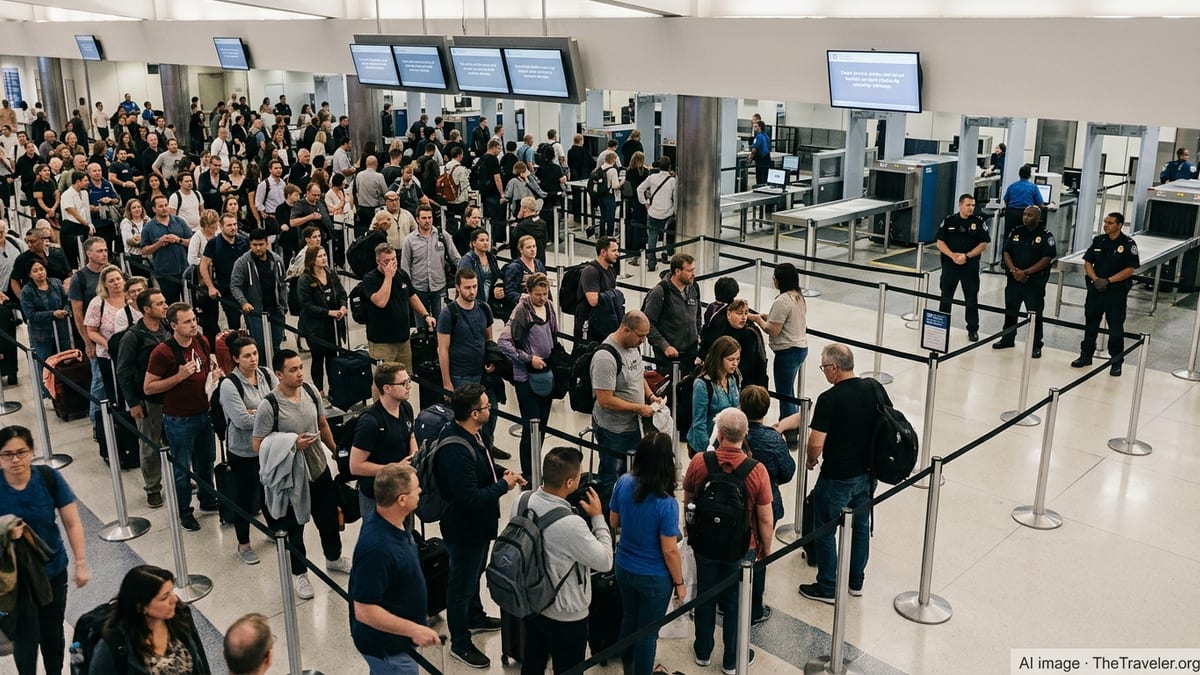
AI-backed SMART platform debuts in nation’s capital
Publicly available information from the U.S. Department of Transportation describes the new system, known as Strategic Management of Airspace, Routes and Trajectories, or SMART, as an AI-supported platform that centralizes roughly 200 separate data streams used in managing national airspace operations. These feeds include airline schedules, filed flight plans, real-time radar positions, weather patterns, traffic flow constraints and controller staffing metrics.
According to a recent Transportation Department announcement, SMART’s analytics engine synthesizes this information into a single operational picture for specialists at the Air Traffic Control System Command Center outside Washington and for regional traffic management units. The tool is designed to highlight where demand is poised to exceed capacity, showing planners when storms, congestion or staffing limitations are likely to create cascading delays.
The current rollout is focused on the Washington metropolitan airspace, which includes Ronald Reagan Washington National Airport in Arlington, Washington Dulles International Airport in Virginia and Baltimore/Washington International Thurgood Marshall Airport in Maryland. These airports sit at the core of one of the country’s busiest air traffic corridors, and Washington Center, the regional air route traffic control facility, handled more than 2.4 million aircraft operations in 2024, according to federal activity data.
Transportation officials have framed the Washington deployment as an early operational use case that could later be expanded nationwide if the technology proves effective. The approach aligns with broader modernization efforts within the FAA’s NextGen program, which has increasingly relied on time-based and trajectory-based management tools to improve traffic flow.
How SMART is intended to reduce delays for travelers
Federal budget and program documents show that the FAA has been working for years to move away from a “first come, first served” model of surface and airspace management toward systems that schedule flights using advanced prediction and metering. The SMART platform is described as a further step in that direction, combining forecast and real-time data to recommend traffic management initiatives before long queues build up at departure gates or holding patterns form in the sky.
By anticipating where bottlenecks will occur, SMART is expected to help planners design ground delay programs, reroutes and departure schedules that more closely match available runway and airspace capacity. Transportation Department materials list fewer delays and cancellations, less time waiting on the tarmac or circling arrival airports, and reduced diversions among the anticipated benefits if the tool performs as intended.
The system is designed to complement, rather than replace, existing decision-support tools such as the FAA’s Time-Based Flow Management platforms and the Terminal Flight Data Manager, which already assist controllers with metering arrivals and managing surface traffic. SMART’s role is to provide a higher-level view of how weather systems, traffic surges and equipment constraints are likely to interact across multiple regions over the course of hours or days.
For passengers in the D.C. area, any tangible impact will likely be seen in how airlines and the FAA adjust schedules ahead of forecast thunderstorms or peak holiday rushes. If the AI-generated outlooks are accurate, some delays may shift from last-minute gate holds and in-flight vectors to earlier schedule changes, giving travelers more warning when disruptions are unavoidable.
Why Washington’s airspace is a test bed
The choice of the Washington region as an initial focus reflects the concentration of infrastructure and traffic in and around the capital. Reagan National is one of the 25 busiest airports in the United States by passengers, and Dulles ranks among the nation’s largest by land area and international traffic. The combined D.C.-Baltimore airspace serves tens of millions of travelers annually and sits at the intersection of traffic flows connecting the Northeast, Southeast and Midwest.
Washington is also home to the Air Traffic Control System Command Center and to several FAA headquarters offices that oversee daily management of the National Airspace System. Public descriptions of the rollout indicate that locating the early deployment near these facilities allows managers and technical staff to closely monitor performance, make adjustments and collect data on how the AI recommendations interact with existing procedures.
Operationally, the region’s mix of short-haul shuttle flights, long-haul domestic routes and extensive international service, together with frequent convective weather in the summer, presents a complex test environment. Reports on FAA modernization efforts have long identified such “metroplex” regions, where several major airports share constrained airspace, as priority candidates for advanced scheduling and flow management technologies.
Travel industry observers note that the Washington corridor has experienced significant delays during past weather events and holiday peaks, particularly when traffic snarls in New York and Philadelphia compound regional congestion. If SMART can help planners smooth peaks and spread demand more evenly across time and routes, the system could provide a template for other congested regions.
Balancing technological promise with safety concerns
Coverage in national and local media has highlighted both optimism and unease about introducing AI into such a critical part of the transportation system. Some lawmakers representing the Washington region have publicly questioned the decision to begin live operations in the local airspace, raising concerns about safety and about the perception that area travelers are being used as a test case for unproven technology.
In response, the FAA and Transportation Department have emphasized in public materials that all SMART outputs are advisory. The system generates recommended strategies for how to route traffic or sequence departures and arrivals, but those suggestions are reviewed by traffic management specialists, and local facility leadership retains authority to accept or reject the proposals.
Industry groups representing air traffic controllers have also underscored that even the most advanced decision-support systems are meant to supplement, not supplant, human judgment. Existing FAA policies for the use of automation stress that responsibility for the safety of the National Airspace System remains with trained personnel on duty, regardless of the recommendations made by any software platform.
For passengers, the near-term implications are more likely to be operational than visible. The introduction of SMART is not expected to change security procedures, boarding processes or terminal layouts. Instead, any improvements or new complications will largely be reflected in how often flights depart and arrive on time during periods of strain on the system.
What travelers should watch in the coming months
Because the SMART deployment in the Washington area is still in its early stages, public assessments of its effectiveness are limited. The FAA and Transportation Department are expected to monitor metrics such as average delay per flight, the frequency and duration of ground delay programs, and the number of weather-related reroutes to determine whether the system is meeting objectives.
Regular flyers in and out of Reagan National, Dulles and BWI may begin to notice differences during summer thunderstorm season or busy holiday periods, when delays in the past have often rippled through the system for hours. If the new AI platform helps planners act earlier, some of those disruptions could manifest as schedule adjustments that appear in airline apps and departure boards well before passengers arrive at the airport.
Travelers may also see more emphasis on proactive communication from airlines, as carriers integrate the FAA’s traffic outlook into their own operational control systems. Earlier notice of likely congestion can make it easier for passengers to rebook or adjust connections, though it may also mean more advance cancellations when forecast conditions leave little room for maintaining tight schedules.
Transportation planners have indicated in public forums that results from the Washington trial will play a significant role in decisions about whether to extend SMART to other major hubs. For now, the D.C. region is emerging as an early laboratory for how artificial intelligence might reshape the behind-the-scenes work of keeping crowded skies moving, with millions of travelers standing to benefit if the technology delivers on its promise.