


More news on this day
Passengers travelling through London Gatwick on Friday, July 24, are encountering scattered delays and a handful of cancellations as the airport moves into the peak summer getaway period and introduces a new robotic parking system at its South Terminal.
Get the latest news straight to your inbox!
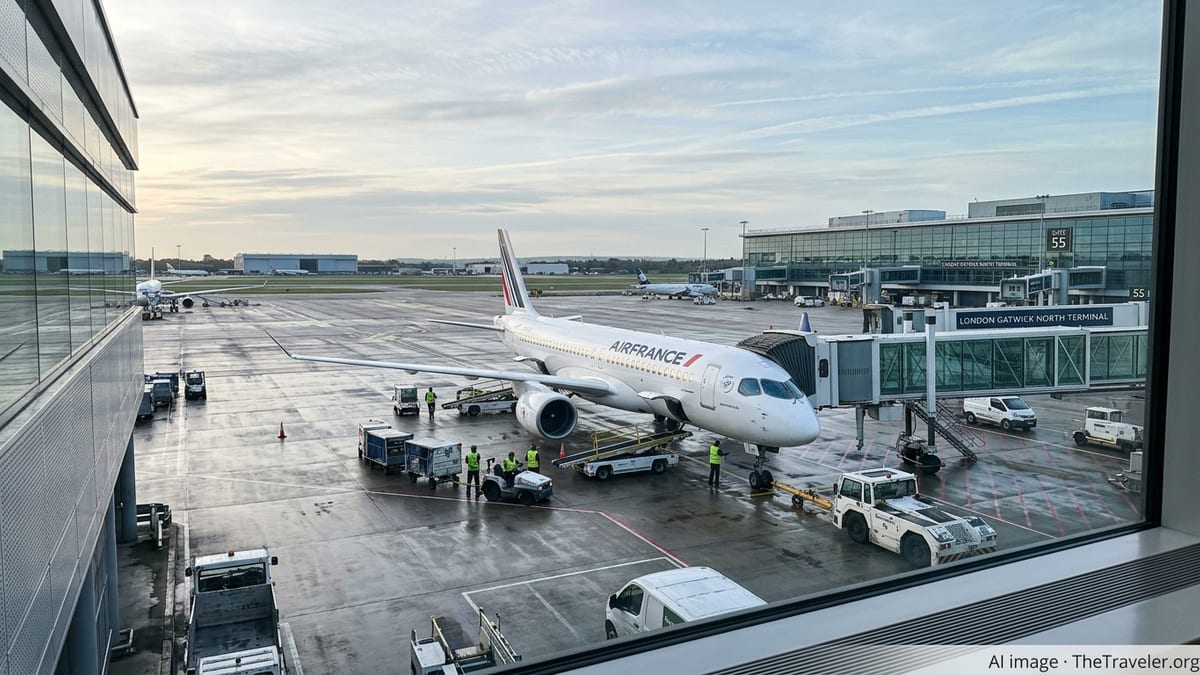
Early delays and cancellations on a busy summer Friday
Flight information boards for London Gatwick on Friday show a largely stable schedule but with pockets of disruption during the morning peak, particularly on short-haul leisure routes that are heavily used by holidaymakers. Live departure and arrival feeds indicate a mix of on-time operations, minor delays of up to an hour and a series of cancellations concentrated on a small number of services.
Reports from aviation tracking services point to several early-morning flights operating ahead of schedule or landing slightly early, suggesting that overall air traffic control flow is improving after intermittent bottlenecks earlier in the month. However, by mid-morning, a growing number of services were flagged as delayed, with some departures pushed back as aircraft and crews rotated through a tightly packed summer timetable.
Local media coverage on Friday has highlighted renewed pressure on easyJet operations at Gatwick, with around two dozen flights reportedly cancelled at short notice following staff sickness. The cancellations affect both arrivals and departures, with passengers on certain European leisure routes having to rebook or reroute via alternative airports as the airline reshuffles its schedule.
Travel industry commentary notes that the disruption is far more limited than the widespread issues seen during previous peak seasons, when staff shortages and weather-related air traffic restrictions led to hundreds of cancellations across multiple days. For now, the pattern at Gatwick on July 24 appears to be one of isolated issues rather than systemic breakdown, though travellers are still advised to check their flight status repeatedly before setting off for the airport.
Airport braces for the main school-holiday getaway
Friday, July 24, marks one of the first major getaway days of the UK school summer holidays, with Gatwick scheduled to handle hundreds of flights serving beach destinations across the Mediterranean as well as long-haul services to North America, the Middle East and Africa. The airport has signalled in recent weeks that it expects one of its busiest summer seasons in years, with more than 230 destinations on offer and a record number of airline partners operating from its two terminals.
Operational updates published ahead of the holidays indicate that Gatwick has been working to keep a closer grip on capacity this year. After several summers marked by congestion, the airport has maintained measures to balance scheduled movements with available staff and infrastructure, particularly during the morning and late afternoon peaks when runway and terminal demand is at its highest.
Official performance data for spring and early summer show on-time departure rates improving compared with the immediate post-pandemic years, although punctuality still lags behind pre-2020 levels. Aviation analysts suggest that Gatwick’s single-runway configuration leaves it especially vulnerable to knock-on effects when even minor incidents occur, such as extended turnarounds, aircraft technical issues or ground handling bottlenecks.
For passengers, the advice circulating from airlines and travel agents is consistent: arrive early, allow for potential queues at security and border control, and build in contingency time for connections with rail services such as the Gatwick Express. With school holidays now fully under way, any localised disruption can quickly ripple across the day’s programme if recovery windows are tight.
Robotic car parking launches at the South Terminal
Amid the operational pressures of the summer season, Gatwick is also using July to showcase one of its highest-profile technology projects. On July 23, the airport announced the launch of a new robotic parking service at the South Terminal, delivered in partnership with French firm Stanley Robotics. The system, which has been trialled in previous years, is now being made available to paying passengers for the first time on a larger scale.
Under the scheme, drivers pre-book a space in the robotic car park before arrival. On reaching the facility, they park in an enclosed drop-off cabin, unload luggage and lock the vehicle. A low-slung autonomous robot then lifts the car from underneath, transports it to a densely packed parking area and slots it into position without the need for human drivers or conventional access aisles.
Information from Gatwick’s parking pages describes the service as a way to make better use of limited land near the terminal, creating thousands of additional spaces by allowing vehicles to be parked closer together than in a traditional car park. Passengers retain their keys and cars remain stationary while parked, with the robot returning each vehicle to a collection bay ahead of the driver’s scheduled return time.
The launch makes Gatwick the first UK airport to offer a full-scale robotic valet parking option to the general public. While take-up is initially focused on South Terminal users, planning and surface-access documents indicate that the airport views robotic parking as a key long-term tool for increasing capacity and reducing the need for further surface car park expansion, particularly as passenger numbers grow.
Balancing innovation with reliability concerns
The introduction of robotic parking comes at a sensitive time for Gatwick, which has faced public scrutiny in recent weeks over isolated runway closures and emergency declarations linked to aircraft diversions and fuel concerns. Although those incidents were comparatively short-lived, they underscored how quickly operational strain can build at a busy single-runway hub.
Airport strategy papers and local consultation documents suggest that investment in technologies such as robotic parking is part of a broader effort to modernise ground infrastructure while controlling environmental impacts. By packing more vehicles into the same footprint, Gatwick aims to reduce pressure to pave over additional land for parking, which has been a recurring concern for nearby communities and local planners.
At the same time, passenger advocacy groups and frequent travellers are closely watching how new systems perform during live operations. Any extended glitches in parking access or car retrieval during peak summer weekends could quickly add to the stress of already time-sensitive journeys, particularly for families travelling with heavy luggage or connecting to early-morning flights.
For now, reports from early users of the robotic facility suggest that the experience is relatively seamless, with automated number plate recognition, clear wayfinding and a short walk or shuttle link to the South Terminal. The greater test will likely come over the next few weeks as the volume of holiday traffic climbs and the system is pushed closer to its designed capacity.
What travellers should expect in the coming days
Looking beyond Friday, July 24, schedules indicate that Gatwick will remain under sustained pressure as the school holiday season continues into August. Airlines are maintaining dense timetables to popular destinations in Spain, Greece, Italy and Turkey, with little slack built into daily rotations, leaving limited room for extended turnaround delays or last-minute aircraft substitutions.
Travel advisers widely recommend that passengers build additional time into their journeys to account for potential hold-ups, particularly at parking facilities and security checkpoints. Those planning to use the new robotic parking service are encouraged to read the eligibility criteria carefully, including vehicle size and weight limits, and to keep booking confirmations handy for smooth entry and exit.
On the flight side, observers note that while Gatwick’s current disruption level is moderate, the combination of high load factors, crew availability challenges and changeable summer weather across Europe can still trigger clusters of cancellations or long delays with little warning. Passengers are therefore urged to monitor airline apps and airport information displays throughout the day rather than relying solely on original booking details.
As the first major summer getaway weekend unfolds, Gatwick’s performance will be closely watched by airlines, regulators and the travelling public alike. The airport’s ability to keep flights moving, while bedding in new technology such as robotic parking, will help shape perceptions of its readiness for continued growth and further infrastructure projects over the rest of the decade.