


More news on this day
London Gatwick is reporting a patchwork of minor delays and a limited number of cancellations on Monday, June 22, as early operational constraints and knock-on congestion affect parts of the schedule, particularly on busy European leisure routes.
Get the latest news straight to your inbox!
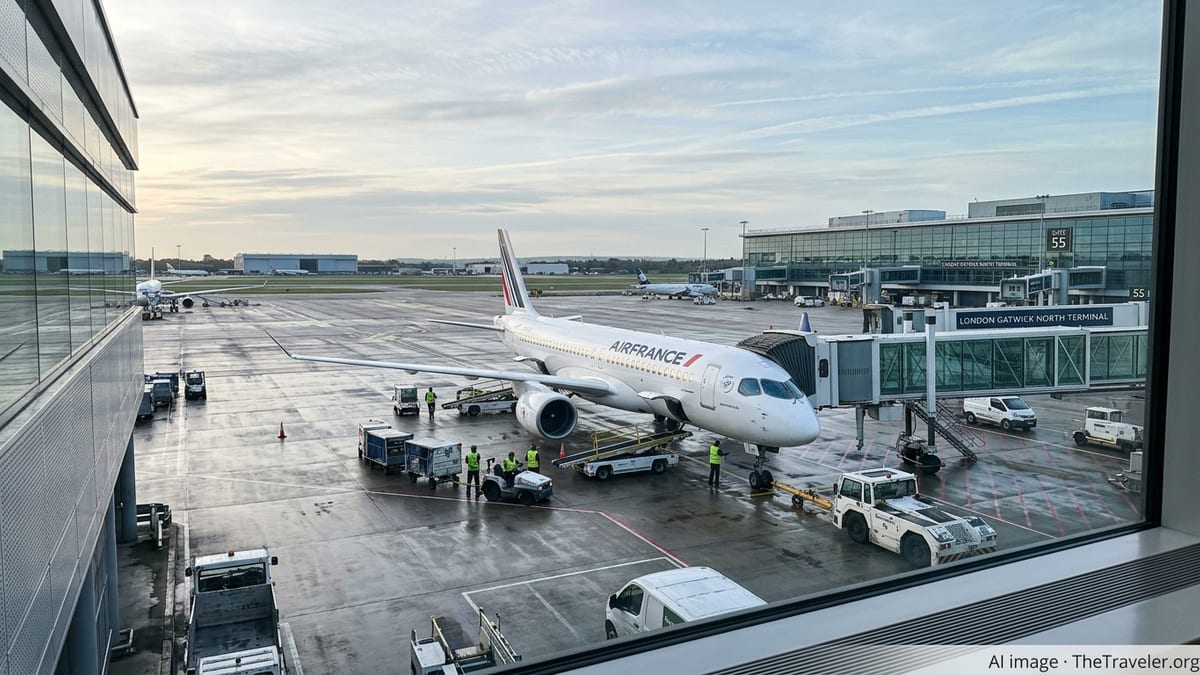
Morning departures hit by rolling delays
Publicly available departure boards for London Gatwick show that the morning peak on Monday opened largely on time, but with a growing cluster of services pushed back by 15 to 45 minutes as the schedule built up. Short-haul flights to popular European destinations, including Spain, Italy and Greece, appear among the most affected, reflecting the airport’s role as a major base for leisure carriers.
Some services scheduled to leave in the early to mid-morning period have been reassigned later departure times, with updated estimates often moving more than once. Reports indicate that passengers on certain departures were advised to remain near their gates as airlines sought to recover punctuality without cancelling flights outright.
Operational data suggests the delays are being managed within Gatwick’s single-runway constraints, with aircraft turnaround and slot availability playing a larger role than any single disruptive incident. The pattern is consistent with a busy summer schedule where relatively small hold-ups at the start of the day can propagate across multiple rotations.
There are indications that a handful of early flights were withdrawn from the timetable overnight or in the very first hours of the morning, helping to ease pressure on ground operations but leaving some travelers to be rebooked onto later services or alternative routes.
Limited cancellations concentrated on European routes
Flight-status services tracking London Gatwick list a modest number of outright cancellations so far today, mostly on intra-European sectors where airlines can consolidate demand. These appear to affect both departures and arrivals, with services to and from certain Mediterranean destinations among those removed from the live boards.
According to the latest publicly available information, the cancellations are spread across several carriers rather than concentrated on a single airline. That pattern points to localized operational pressures, such as aircraft and crew availability or aircraft rotations affected by earlier disruptions elsewhere in Europe, rather than a single technical or safety issue at Gatwick itself.
Industry observers note that, under European passenger-protection rules, travelers whose flights are cancelled at short notice may be entitled to rerouting, care and in some cases financial compensation, depending on the cause of the disruption. Airlines typically encourage affected customers to use mobile apps or self-service channels to select alternative flights where capacity allows.
On social media and travel forums, some passengers departing from Gatwick on Monday have reported receiving rebooking notifications during the night or early morning, suggesting that at least part of the cancellation decision-making took place ahead of airport arrival to reduce crowding at check-in desks.
Weather and air traffic constraints shape operations
Meteorological data for the Gatwick area around the start of the operational day indicates generally benign conditions, though periods of reduced visibility and low cloud can require increased separation between aircraft movements and more conservative runway use. Even modest restrictions at a high-intensity single-runway airport can translate into queuing on the ground and minor arrival and departure delays.
Air traffic management across southern England also remains a factor. Gatwick’s traffic flows are closely linked with the wider London airspace system, and adjustments to manage workload at area control centers or to accommodate congestion on popular European corridors can result in ground holding or airborne sequencing for individual flights.
Recent publications from aviation authorities have highlighted the pressure on European airspace capacity during the high summer season, with particular attention on balancing safety, environmental objectives and punctuality. Gatwick’s tight schedule, with a high proportion of short-haul flights operating multiple rotations per day, leaves limited slack when upstream delays feed into the network.
While there are no indications of a single, large-scale technical failure affecting today’s operations, the interaction of weather, airspace flow management and intensive scheduling appears to be contributing to the pattern of scattered delays visible on public trackers.
Knock-on effects expected through the afternoon
Based on typical operational patterns at Gatwick, the morning’s rolling delays and isolated cancellations are likely to have knock-on effects into the afternoon and early evening peaks. Flights operating their second or third rotation of the day may carry earlier lateness forward, even where turnaround times are kept tight.
Publicly available data shows some mid-day departures already carrying predicted delays compared with their originally scheduled times, suggesting that airlines are building in realistic expectations rather than repeatedly revising estimates at the gate. This approach can help passengers make more informed decisions about transfers, ground transport and connections at the far end of their journeys.
Travel commentators routinely advise passengers flying from Gatwick during busy summer weekdays to allow extra time at the airport and to monitor airline apps or departure boards closely for real-time updates. Monday’s performance appears broadly in line with that guidance, with the majority of services still operating but not always at their planned times.
For those with tightly timed onward travel, even short delays can be disruptive, particularly when connecting to rail or coach services at destination airports on the continent. Some European hubs served from Gatwick have also reported their own localized congestion in recent days, compounding the risk of missed onward connections.
What travelers should watch for as the day progresses
As operations continue into the evening on Monday, attention will center on whether Gatwick and its airlines can recover punctuality or whether delays will continue to accumulate. The airport’s performance during the afternoon shoulder period, when traffic is still heavy but not at its peak, often determines whether late-evening services can depart close to schedule.
Travelers departing later in the day are being encouraged, in publicly available advisories and media reports, to complete online check-in in advance, arrive in good time for security screening and keep a close eye on gate information. Many carriers operating from Gatwick also push notifications through their own apps when boarding times change or flights are reassigned to different stands.
For those impacted by cancellations, consumer organizations recommend keeping records of booking confirmations, boarding passes and any additional expenses incurred while waiting for alternative arrangements. Such documentation can be relevant if travelers later seek refunds or compensation under applicable air passenger rights regulations.
With school holidays approaching and summer schedules ramping up, Monday’s mixed picture of mostly manageable delays and a small number of cancellations offers an early indication of the strain that peak-season demand can place on one of the UK’s busiest airports. How effectively airlines and airport operators manage days like this will help shape traveler confidence for the weeks ahead.