


In a region increasingly on the radar of curious travelers, Armenia still flies just under the mainstream tourism radar. While neighboring destinations draw the headlines, this compact South Caucasus country quietly serves up snowcapped peaks, Silk Road monasteries, a serious wine revival and one of the most relaxed capitals in the former Soviet world. For travelers willing to look beyond the obvious, Armenia remains one of the most rewarding and underrated choices in the region.
Get the latest updates straight to your inbox!
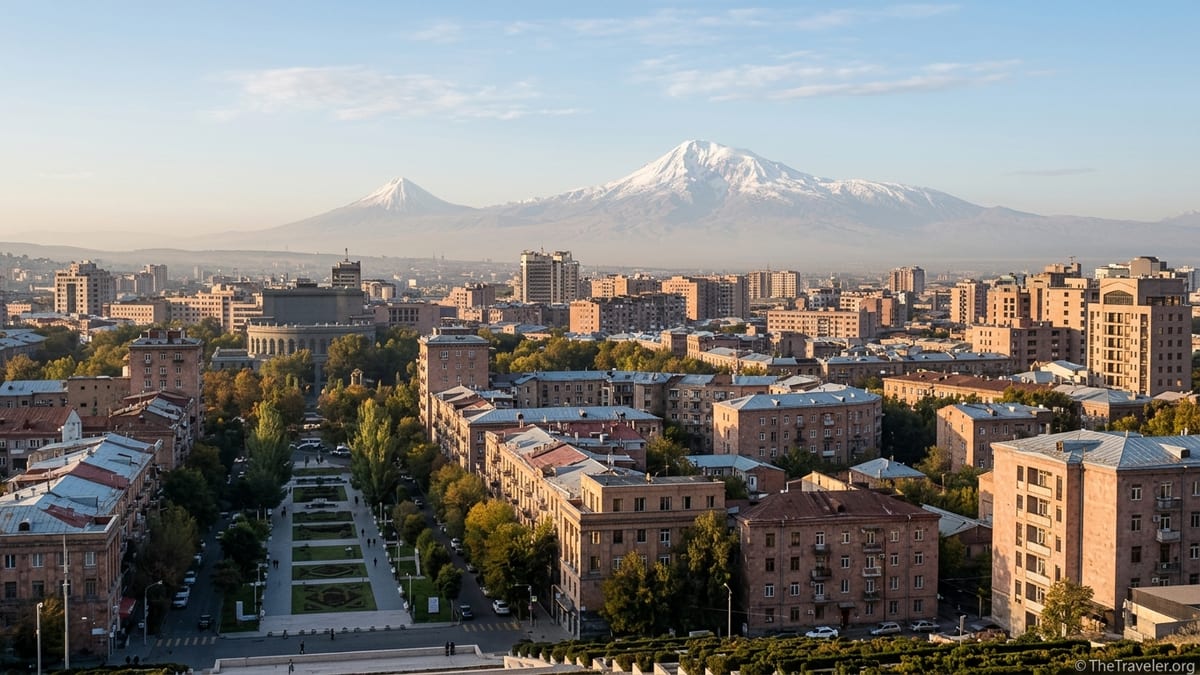
An Ancient Land That Still Feels Like a Discovery
Armenia is one of the world’s oldest Christian countries, dotted with early churches and monasteries that could anchor entire tourism campaigns on their own. Yet many visitors still need to look twice at a map to place it. This disconnect between cultural weight and global profile is a big part of why the country feels so fresh to travelers. Even headline sites such as Geghard Monastery and the Hellenistic Garni Temple can be visited outside peak hours with only a handful of tour buses in sight, a sharp contrast with the crowds at more famous religious sites across Europe.
Tourism has grown steadily in recent years, edging above two million foreign visitors annually before dipping slightly in 2024, yet Armenia still receives far fewer tourists than nearby hubs like Georgia and Turkey. Local tourism officials speak openly about the gap between the country’s potential and its actual visitor numbers, and there is still a sense that the industry is in a formative phase rather than a saturated one. For independent travelers, that means fewer package-tour herds and more room to explore on your own terms, while businesses are actively trying to attract and impress international guests.
This relative underexposure also means many of Armenia’s most atmospheric places retain a lived-in, uncurated feel. In Yerevan, Soviet-era courtyards hide wine bars and specialty coffee shops rather than themed attractions, and outside the capital you are far more likely to encounter farmers and schoolchildren than tour groups. Travelers who enjoy feeling like guests rather than customers often describe Armenia as the place where the romantic idea of “discovering” a country still aligns, at least somewhat, with reality.
Importantly, Armenia is not remote in practical terms. Yerevan’s Zvartnots International Airport sees regular flights from major hubs in Europe and the Middle East, and regional low-cost carriers keep fares competitive, especially outside peak summer. On the ground, traveler infrastructure is modest but improving: English-language signage at key sights, an expanding network of guesthouses and boutique hotels, and widespread smartphone payments make the country much more accessible than its underrated status might suggest.
Value for Money in a Time of Rising Travel Costs
As prices climb across popular European destinations, Armenia’s relative affordability stands out. While exact costs vary, many visitors report that daily budgets in Yerevan and beyond can be significantly lower than in Western Europe for a comparable or better standard of experience. A modern café flat white might cost roughly half of what you would pay in Paris or London, and a substantial restaurant meal with wine in Yerevan can often come in at the price of a single main course in northern Europe.
Accommodation follows the same pattern. Midrange travelers can usually find central Yerevan boutique hotels or stylish guesthouses at nightly rates that feel favorable compared with cities like Tbilisi or Baku, especially outside the high summer season and major festival dates. In regional towns such as Dilijan, Goris or Gyumri, family-run guesthouses with home-cooked breakfasts are often priced to be accessible to domestic visitors, which keeps them attractive for international travelers as well. The sweet spot for many is the emerging category of modern countryside lodges near hiking routes and monasteries, where you can enjoy forest views and hearty local cooking without luxury-resort prices.
Transport also represents good value. Long-distance shared taxis and minibuses connect most major sites for relatively modest fares, and a private driver for a full-day circuit from Yerevan to Geghard, Garni and Lake Sevan can often be arranged at a cost that, when split between two or three people, compares favorably to large-group tours in Western Europe. Within Yerevan, ride-hailing apps keep city journeys inexpensive, particularly during off-peak hours. This cost-effectiveness allows many travelers to stretch their budgets into longer stays or to upgrade certain experiences, such as booking a private wine tasting or an extra night in a spa hotel.
Crucially, Armenia’s value is not only about low prices but about the relationship between cost and authenticity. Paying for a home-hosted meal in a village near Areni, for instance, does more than secure a generous spread of grilled meats, salads and homemade fruit vodka; it also supports families who are often directly involved in agriculture or small-scale tourism. In hiking regions, your nightly rate might help maintain trails or fund local cultural initiatives. In this sense, Armenia’s underrated status works in favor of visitors seeking meaningful experiences without premium price tags.
Big Landscapes and Monasteries without Big Crowds
Armenia’s compact size hides an impressive diversity of landscapes. Within a few hours’ drive from Yerevan, the terrain shifts from the high plateau around Lake Sevan to the forested folds of Tavush and the stark red gorges of Vayots Dzor. Looming over much of this is the silhouette of Mount Ararat, technically just across the border, but visually a constant presence on clear days. Much of this scenery is punctuated by monasteries and ruins that date back over a millennium, yet many remain refreshingly uncrowded outside weekends and national holidays.
One of Armenia’s most striking sights is Tatev Monastery, perched on a basalt plateau above the Vorotan Gorge in the southern Syunik region. The approach itself is part of the experience. Rather than tackling a winding mountain road, most visitors take the Wings of Tatev cable car, a reversible aerial tramway of about 5.7 kilometers that crosses the gorge in roughly 12 minutes. Cabins glide hundreds of meters above the valley floor, and on quiet days you may share the ride with only a handful of other travelers, an almost surreal contrast with similarly dramatic cableways in the Alps or on East Asia’s tourist circuits.
Lake Sevan, one of the largest high-altitude lakes in the world, is another destination where Armenia’s underrated status pays dividends. In summer, local holidaymakers flock to the beaches and fish restaurants, but even then it is possible to find quiet stretches of shoreline or smaller peninsulas beyond the well-known Sevanavank Monastery. Guesthouses in nearby villages such as Noratus or Shorzha offer lake views and access to swimming spots, often at prices more reminiscent of a countryside B&B than an international resort. Outside peak season, Sevan’s shores feel almost contemplative, with fishermen’s boats bobbing in the cold blue water and snow on the surrounding peaks.
In the north, Dilijan National Park and the surrounding forests have drawn increased attention as a hiking and wellness destination. Trails to monasteries like Haghartsin and Goshavank can still be tackled without the long queues and ticketed time slots that characterize more famous European hiking hotspots. Similarly, the volcanic plateau of Aragats and the alpine meadows around lake Kari provide dramatic high-altitude experiences that remain largely absent from international travel brochures. In each case, the absence of heavy tourism infrastructure contributes to a more intimate connection with the landscape, even as basic services slowly improve.
A Capital City That Feels Both Soviet and Stylish
Yerevan is often overshadowed by flashier regional capitals, but visitors who stay a few days usually find it one of the most liveable and approachable cities in the Caucasus. Built largely in pink volcanic tuff stone, the city center glows softly at golden hour, with cascades of apartment balconies looking out over leafy courtyards. Remnants of Soviet planning, such as wide boulevards and generous public squares, coexist with outdoor café culture that feels more Mediterranean than post-Soviet.
In the last decade, Yerevan’s café and bar scene has evolved quickly. Streets near the Cascade complex and Saryan Street have become informal hubs for wine bars, small-plate restaurants and specialty coffee roasters. It is increasingly common to find natural Armenian wines by the glass in relaxed settings, with knowledgeable staff happy to explain the difference between grapes like Areni and Voskehat. Unlike some better-known European capitals, though, it is still possible to secure a terrace table on a summer evening without booking weeks in advance, and prices remain within reach for most midrange travelers.
Culturally, Yerevan rewards slow exploration. The History Museum and the National Gallery on Republic Square provide context for the country’s long and often traumatic past, while smaller institutions and galleries showcase contemporary Armenian art and design. The Cascade complex doubles as both an outdoor staircase with sweeping city views and the site of a sculpture park associated with a major private collection. Even a simple evening walk along Abovyan Street, stopping for sunflower seeds from street vendors or ice cream from a kiosk, offers a glimpse of daily life that feels more local than curated for tourism.
Part of Yerevan’s appeal is its scale. The core neighborhoods are compact enough to traverse on foot, yet dense with everyday amenities. Supermarkets, pharmacies and public transport stops are never far away, and ride-hailing apps fill the gaps when your legs tire. That combination of modest size and urban energy makes Yerevan an easy base for regional day trips while still feeling like a destination in its own right, rather than just an airport city.
Wine, Food and a Slow Revival of Rural Armenia
Armenia’s winemaking heritage stretches back thousands of years, and recent archaeological discoveries of ancient wine production in the Areni region have given the modern industry a compelling narrative backbone. Over the last decade, a wave of boutique wineries has started to translate that history into contemporary experiences. In the Vayots Dzor region south of Yerevan, tasting rooms in and around the village of Areni now pour local reds and whites paired with cheese, dried fruit and lavash flatbread, often at tasting prices that encourage experimentation rather than restraint.
Events such as Yerevan Wine Days, typically held in late spring, signal how central wine has become to Armenia’s tourism identity. Streets in the capital are closed to traffic as producers from across the country pour samples for both locals and international visitors, accompanied by live music and street food. For many travelers, this is their first introduction to how varied Armenian wine can be, from elegant amber styles aged in traditional clay jars to crisp whites that pair well with trout from Lake Sevan. The atmosphere is lively but relatively relaxed compared with some of Europe’s larger wine festivals, and tickets or tasting cards are usually priced accessibly enough to draw a broad audience.
Armenian food remains an underrated highlight in its own right. Classic dishes such as khorovats (grilled meats), tolma (stuffed vegetables) and spas (a yogurt-based soup) are served in everything from simple roadside taverns to polished city restaurants. Fresh herbs appear on tables almost by default, and generous salads, homemade jams and fruit vodkas are common at village guesthouses. In rural areas, many accommodations double as small family farms, meaning the eggs at breakfast or the herbs in your dinner stew may have traveled only a few meters from garden to plate.
This culinary richness is part of a broader, slow revival across rural Armenia. Government initiatives and NGO projects have supported homestays, community-based tourism and trail development in regions that once saw little economic activity beyond subsistence agriculture. The result is a growing network of places where travelers can stay in restored stone houses, join bread-baking or cheese-making workshops, or simply sit under an apricot tree and drink homemade wine. Because Armenia remains relatively undiscovered, these experiences still feel rooted in everyday life rather than staged performances, and your spending often has a tangible impact on local livelihoods.
Logistics, Visas and Safety: Easier Than Many Assume
For a country that many people still perceive as remote, Armenia is surprisingly straightforward to visit. Citizens of numerous countries, including many in Europe and parts of the Americas and Asia, can enter visa-free for limited stays, while others can usually obtain an electronic visa online without complex paperwork. Entry requirements can change, so travelers should always check official sources before booking, but Armenia’s general policy has been to encourage tourism rather than deter it.
Once in the country, getting around is largely a matter of deciding how independent you want to be. Budget travelers often rely on marshrutkas, the shared minibuses that connect cities and larger towns, with departures from stations on the edges of Yerevan. Those with more flexibility commonly hire private drivers for day trips or short multi-day circuits, a popular solution for reaching places like Tatev or remote monasteries without renting a car. Car hire is available in Yerevan for drivers comfortable with mountain roads and variable local driving styles. Road conditions on main highways are generally decent, though surfaces deteriorate in some rural stretches, especially in winter.
On the safety front, Armenia usually ranks as one of the safer countries in the wider region in surveys and traveler reports. Crime levels in Yerevan and major tourist areas are often described as low to very low, and many visitors comment on feeling comfortable walking after dark in central neighborhoods. That said, the country has experienced recent geopolitical tensions, notably related to the Nagorno-Karabakh conflict, and borders with some neighboring states remain closed or sensitive. It is important to distinguish between front-line security issues, which rarely intersect with ordinary tourist movements, and everyday safety in cities and villages, which remains comparatively strong.
Health and practicalities are manageable with routine planning. Tap water in many parts of Armenia is considered drinkable by locals, but visitors with sensitive stomachs may prefer bottled water, which is widely available and inexpensive. Pharmacies are common in cities and larger towns, and many pharmacists speak at least basic English or Russian. Internet coverage is good in urban areas and along main roads, with local SIM cards offering generous data packages at prices that make it easy to navigate, translate and stay in touch while you travel.
Why Armenia Stays Under the Radar While Its Neighbors Boom
Given all these strengths, it is natural to ask why Armenia has not yet joined the ranks of widely recognized “must visit now” destinations. Part of the answer lies in geography and geopolitics. Landlocked and bordered by countries with complex relationships, Armenia lacks the easy beach-and-city combination that has propelled some of its neighbors into the package-tour mainstream. Closed borders with certain neighbors complicate regional itineraries for those who like to cross multiple land frontiers on a single trip.
Another factor is narrative. Georgia, for instance, has successfully marketed itself as a wine-and-mountains destination with a distinct personality, while Turkey’s Mediterranean coast and ancient sites have enjoyed decades of international promotion. Armenia’s story is more subtle and layered, involving themes of ancient Christianity, diaspora history and post-Soviet transition. These are compelling, but they do not lend themselves to a single postcard image that can be plastered across global marketing campaigns. Much of what makes Armenia memorable only becomes clear after you have spent time there: conversations with taxi drivers, impromptu invitations to family tables, the way an unmarked church door swings open to reveal a candlelit interior blackened by centuries of smoke.
Tourism infrastructure and branding are catching up, but much of the promotion still happens organically. Articles in international media occasionally spotlight Yerevan’s wine bars or the spectacle of the Wings of Tatev cable car, and individual tour operators in Europe and the Middle East have started offering Armenia-only itineraries. Yet the country remains far from overrun, and many of its regions, particularly in the deep south and northeast, receive only a trickle of foreign visitors compared with their potential. For travelers, this lag between reality and reputation is a rare opportunity.
There is also an element of traveler psychology at play. Many people retain outdated impressions of the entire Caucasus as a monolithic, unstable region, or conflate Armenia’s security situation with conflicts elsewhere. While a responsible traveler should always stay informed via current advisories, those who take the time to distinguish between headlines and on-the-ground reality often find Armenia far calmer and more welcoming than expected. As more visitors share these experiences through word of mouth and social media, Armenia’s underrated status may gradually erode, but for now it remains a place that feels like a step ahead of the crowd.
The Takeaway
Armenia today occupies a sweet spot in global travel. It offers the depth of an old world culture, striking landscapes and a genuinely hospitable society, yet it still operates on a scale where an individual traveler matters. You can sip wine from ancient grape varieties in a Yerevan bar, then stand almost alone the next day on a monastery terrace high above a gorge, listening to the wind and church bells without the soundtrack of tour-group loudspeakers.
For those feeling squeezed by high prices and crowds in more established destinations, Armenia delivers strong value without sacrificing authenticity. The infrastructure is solid enough to make travel straightforward, but not yet polished to the point of feeling interchangeable with anywhere else. Each interaction, from negotiating a taxi fare in halting Armenian and English to being handed a still-warm piece of lavash in a village bakery, carries the sense that you are encountering a place in motion rather than a finished product.
If you are drawn to destinations just before they become obvious, Armenia deserves a serious look. Come for a week or two, base yourself in Yerevan, then fan out to the lakes, forests, monasteries and wine regions. Chances are that when you leave, you will be asking yourself why more people are not already here, and quietly grateful that, for now, they are not.
FAQ
Q1. Is Armenia safe for tourists in 2026?
Armenia’s main tourist areas, especially Yerevan and popular regional towns, are generally considered safe, with relatively low crime levels. Travelers should still follow normal urban precautions and keep up to date with official travel advisories due to occasional geopolitical tensions in the wider region.
Q2. How many days do I need to see the main sights?
A first-time visitor can see Yerevan and a few classic day trips, such as Garni, Geghard and Lake Sevan, in about four to five days. To include southern highlights like Tatev Monastery and northern forests around Dilijan, plan at least eight to ten days.
Q3. Do I need a visa to visit Armenia?
Many nationalities can enter Armenia visa-free for short stays, while others can usually obtain an e-visa online. Because rules change over time, always check the latest entry requirements from official Armenian sources or your country’s foreign ministry before traveling.
Q4. What is the best time of year to visit?
Late spring and early autumn are ideal, with mild temperatures and clearer skies in the mountains. Summer offers lively lakeside scenes and festivals but can be hot in Yerevan, while winter appeals to those interested in snow-covered landscapes and fewer crowds.
Q5. Is public transport easy to use?
Public transport between major towns relies mainly on shared minibuses and some buses, which are frequent but can be crowded and informal. Many visitors combine public transport with ride-hailing apps in Yerevan and occasional private drivers or organized day tours for more remote sights.
Q6. Can I visit Armenia as a solo traveler?
Yes. Armenia is popular with solo travelers, including women, who often report feeling safe and welcome. English is common in the tourism sector and among younger people in Yerevan, though learning a few basic Armenian or Russian phrases can be very helpful.
Q7. How expensive is Armenia compared with Western Europe?
On average, everyday expenses such as meals, local transport and midrange accommodation tend to be noticeably lower than in most Western European capitals. Prices vary by season and location, but many travelers find they can upgrade certain experiences or stay longer for the same overall budget.
Q8. Is it easy to visit wineries and taste local wine?
Yes. Wineries around the village of Areni and in other wine regions often welcome visitors for tastings, sometimes by prior reservation. In Yerevan, wine bars and annual events like Yerevan Wine Days make it simple to sample a wide range of Armenian wines without leaving the city.
Q9. What about language barriers outside Yerevan?
Outside the capital, English is less widely spoken, and you are more likely to encounter Armenian and Russian. Even so, many travelers find that gestures, translation apps and local hospitality go a long way, and guesthouse owners are increasingly accustomed to hosting international visitors.
Q10. Is Armenia suitable for families with children?
Armenia can be a very family-friendly destination. Children often enjoy the cable car rides, lakes, easy hikes and open squares in Yerevan, and locals tend to be welcoming toward families. Parents should, as always, take standard precautions regarding food, water and sun protection.