


More news on this day
South Korea’s once rival high speed rail operators, KTX and SRT, are being drawn into an integrated system that promises more seats, new through services and a single national brand, reshaping how residents and visitors move around the country.
Get the latest news straight to your inbox!
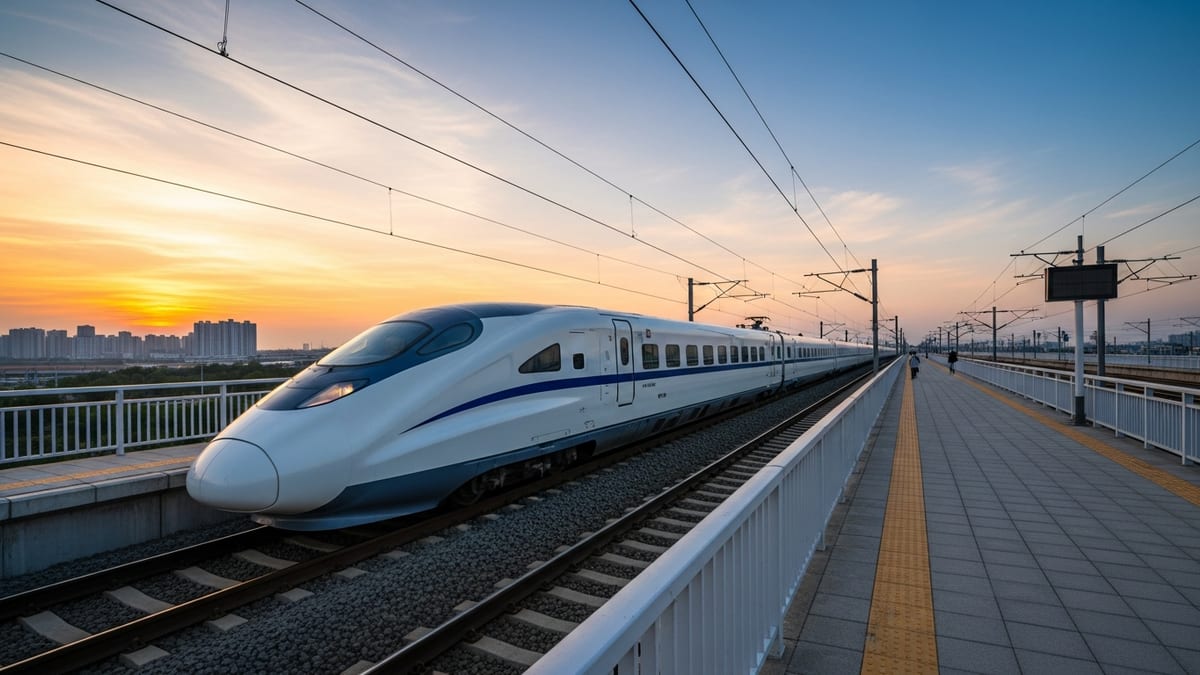
From Fierce Rivals to Planned Partners
For nearly a decade, South Korea’s high speed rail market has been split between KTX services run by Korea Railroad Corporation, better known as Korail, and SRT trains operated by SR Corporation from Seoul’s southern Suseo terminal. Competition between the two operators was originally introduced to spur efficiency, cut fares and widen choice on key corridors such as Seoul to Busan and Gwangju.
Publicly available information shows that this dual structure is now entering a new phase. The Ministry of Land, Infrastructure and Transport has outlined a roadmap to bring the two systems under a unified high speed rail framework by the end of 2026, ending what local coverage often describes as a “10 year experiment” in on track rivalry. The move is framed as an effort to boost capacity, simplify ticketing and strengthen the financial footing of long distance passenger rail.
Reports in Korean business media indicate that the planned integration will not be a straightforward corporate merger. Instead, authorities are pursuing a business transfer style structure that allows Korail and SR to align operations and brands while accounting for differences between Korail’s status as a public institution and SR’s position as a stock company.
The process follows several earlier attempts to merge or more closely coordinate the two high speed operators that stalled amid political, legal and commercial concerns. This time, officials have set out a detailed timetable, with cross operations and brand changes already beginning to appear on the timetable.
Cross Operation Brings New Routes for Travelers
The most visible change for passengers is the gradual “coupling up” of KTX and SRT networks through cross operation. According to government releases and domestic news coverage, a pilot program launched in early 2026 now allows KTX trains to originate from SRT’s Suseo Station in southeast Seoul, while some SRT services are operating out of central Seoul Station, previously the preserve of KTX.
This cross operation effectively opens new journey options without the need to transfer across town. Travelers heading to the country’s southeast and southwest can now board high speed trains from either of Seoul’s major rail hubs, trimming connection times for both domestic trips and international arrivals who route through Incheon or Gimpo airports and stay in different districts of the capital.
A further step, highlighted in official policy briefings, involves so called “linked” or “combined” operations, where KTX and SRT trainsets can be coupled together for parts of their journey. Trial services are being introduced where connected consists run on the busiest sections of the Gyeongbu and Honam high speed lines, then split en route to serve different destinations. For travelers, this is expected to translate into more seats on peak departures and a wider spread of direct trains to regional cities.
Timetables are being adjusted in phases, and early indications from operator announcements suggest that passengers should see a noticeable rise in seat supply on key dates such as national holidays and festival periods. This is particularly significant for Suseo, where strong demand from southern Seoul and surrounding new towns has often produced sold out SRT services at peak times.
Single KTX Brand and What It Means for Fares
Alongside the operational coupling, Korail and SR are preparing to unify their high speed offerings under a single KTX brand. English language business dailies in Seoul report that the integrated operator is targeting completion of brand and service integration around September 2026, with SRT gradually disappearing from timetables and marketing.
A single brand is expected to simplify trip planning for international visitors, many of whom currently grapple with two booking sites, separate loyalty schemes and differing station patterns. Travel industry observers note that consolidating under KTX may support integrated reservations, combined mileage programs and clearer information in foreign languages.
The impact on fares is less clear. Government statements emphasize potential consumer benefits from larger train formations, better asset utilization and streamlined back office functions. However, SR has previously argued in public documents and media commentaries that competition between the two companies helped keep ticket prices in check and encouraged service improvements. With the competitive model being wound down, some commentators are now debating whether the integration could eventually pave the way for fare increases once the transition period ends.
Policy briefings referenced in domestic coverage mention that any fare and mileage adjustments will be handled as part of the broader institutional integration process, which includes reviews of financial structures and regulatory oversight. For now, both KTX and SRT fares remain in place, though some alignment has already occurred on overlapping routes.
Behind the Scenes: Complex Integration Work
While passengers see new routes and brands, the coupling of South Korea’s high speed operators is underpinned by complex institutional work. Reports on the integration roadmap describe the creation of a dedicated task force to coordinate ministries, regulators and the two companies on issues ranging from safety certification to antitrust review.
One of the most technically demanding tasks involves harmonizing the railway safety management systems of Korail and SR. Although both operators already share infrastructure on major lines such as the Gyeongbu and Honam high speed routes, they have maintained separate operational manuals, training regimes and control procedures. These now need to be standardized and reapproved under the country’s Railway Safety Act framework as integrated services expand.
Information technology is another critical area. Ticketing platforms, seat reservation engines and loyalty databases have been developed separately over the past decade. Aligning these systems to provide a unified booking experience while protecting existing customer data requires significant investment and careful sequencing to avoid disruptions during peak travel periods.
In parallel, labor and compensation structures at the two organizations must be reconciled. Commentaries in business and labor press outlets point to potential tensions over wage scales, seniority recognition and job classifications, particularly as SR employees transition into a framework historically dominated by Korail. Negotiations over these issues are likely to influence the pace at which full corporate integration can be achieved.
Implications for Domestic and International Travelers
For travelers, the immediate effects of South Korea’s high speed rail coupling are beginning to emerge in the form of new departure options and higher capacity on popular trains. Tourism boards and rail observers suggest that, as the integration matures, visitors could benefit from more intuitive route maps, a single high speed pass product and easier connections between high speed and regional services.
The ability to board high speed trains from both Seoul Station and Suseo for a wider range of destinations is expected to support hotel and conference development in different parts of the capital, spreading visitor flows more evenly. Regions such as Busan, Daegu and Gwangju stand to gain from additional direct services and potentially shorter travel times as new rolling stock and timetable patterns are introduced under the unified system.
At the same time, some domestic commentators express concern that the end of operator competition may reduce incentives to maintain aggressive pricing or differentiated onboard services. Travel planners and regular passengers are watching closely to see how the integrated KTX brand balances financial sustainability with the need to keep rail attractive against low cost airlines and express buses.
As the 2026 deadline approaches, the coupling of KTX and SRT is set to become a defining test of South Korea’s approach to high speed rail policy. The outcome will shape not only how residents commute and travel for leisure, but also how the country presents its rail network to a growing international audience of visitors seeking fast, reliable and straightforward connections between its major cities.