


More news on this day
Poland is laying the groundwork for a significant restructuring of its long-distance passenger rail market, as government-backed planning shifts toward opening subsidised routes to wider competition after years of dominance by state-owned PKP Intercity.
Get the latest news straight to your inbox!
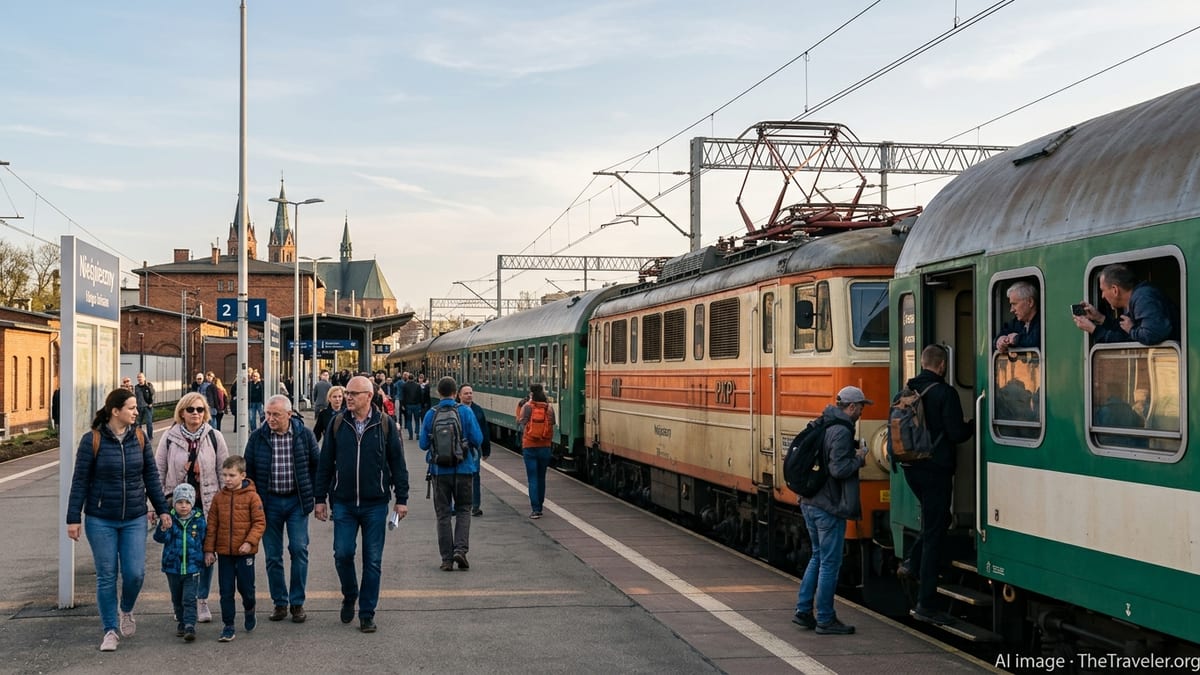
Framework for liberalising long-distance public service routes
Recent policy steps indicate that Warsaw is preparing to introduce competition on long-distance routes operated under public service obligations, the subsidised contracts that underpin most intercity trains across the country. According to published coverage, the Centralny Port Komunikacyjny development company has signed an agreement with the EU Transport Projects Centre to support the Ministry of Infrastructure in defining how these contracts could be opened to rival operators.
The cooperation focuses on around 15 projects, including segmenting the national network between lines that will remain under public service contracts and those left to open access services running purely on commercial terms. Publicly available information shows that this work also covers how timetables, capacity allocation and fares would function once more than one operator is offering long-distance services on the same corridors.
Analysts following the process note that the review could lead to competitive tenders for future contracts that are currently directly awarded to PKP Intercity. Such a shift would bring Poland closer to liberalisation models already seen in parts of Western Europe, where multiple rail companies bid for multi-year packages of subsidised routes.
PKP Intercity growth keeps pressure on capacity and funding
The potential restructuring comes against a backdrop of strong passenger growth on Poland’s long-distance network. Data reported by national media and industry outlets show that PKP Intercity carried more than 40 million passengers in the first half of 2025, setting a record for the operator and confirming a sustained post-pandemic rebound in rail travel.
Maintaining affordable fares has required substantial public funding. Reports indicate that in recent timetable periods the government increased compensation payments for PKP Intercity to cover the cost of operating interregional services under public service contracts, limiting the need for ticket price rises even as operating costs and investment needs climbed.
At the same time, Poland’s infrastructure manager PKP Polskie Linie Kolejowe is in the middle of a large-scale modernisation programme, with extensive summer engineering works and the reopening of routes such as the passenger corridor to Łomża. These upgrades are expected to support higher speeds and more frequent trains but also add complexity to timetable planning as additional operators seek access to busy main lines.
New entrants test an uneven competitive landscape
While the long-distance market has formally been open to new operators for several years, PKP Intercity continues to account for the vast majority of intercity traffic. According to sector analyses, open access competitors have so far gained only a small foothold, concentrated on the busiest trunk routes between major cities.
The Czech company Leo Express currently operates limited open access services on the high-demand Warsaw to Kraków corridor, having entered the market recently with a small number of daily trains. Public information suggests that the operator is seeking additional paths and has applied for further authorisations, although expansion is constrained by track capacity and the need to ensure that commercial services do not undermine subsidised routes.
Another Czech challenger, RegioJet, entered the Polish domestic market in late 2025 with open access connections, but withdrew all remaining services in May 2026 after only a few months of operation. In public statements and media reports, the company highlighted what it characterised as an uneven playing field involving access to station facilities, advertising space and timetable slots, reinforcing concerns among competition advocates that structural barriers remain for newcomers.
Regulatory decisions and the role of the rail regulator
The Office of Rail Transport, Poland’s rail regulator, has been a key actor in managing the gradual opening of the market. According to publicly available decisions, the regulator has granted multiple open access permissions in recent years, including to PKP Intercity, regional carriers and foreign-owned operators such as Leo Express and RegioJet, while also launching inquiries when market disruptions occurred.
One of the central tools in this process is the so-called economic equilibrium test, used to assess whether new commercial services would threaten the viability of existing subsidised routes. Reports indicate that PKP Intercity has used this mechanism in response to applications by competing operators on busy main lines, arguing that additional trains could erode revenue needed to support public service contracts.
As Poland moves toward formal liberalisation of long-distance contracts, observers expect the regulator’s role to expand further. Coordinating timetable slots, ensuring non-discriminatory access to stations and depots, and overseeing ticketing rules across multiple brands will be central to preventing conflicts between incumbents and new entrants.
Implications for travellers and the wider European rail network
For travellers, the restructuring of Poland’s passenger rail market could eventually translate into more choice on key routes, a broader range of on-board standards and potentially sharper price competition on selected corridors. Industry commentators suggest that any benefits will likely appear first on high-volume intercity axes where additional services can be accommodated without compromising punctuality.
However, the experience of early challengers underlines that market opening alone does not guarantee a diverse set of operators. Without clear, enforceable rules on access to infrastructure, sales channels and marketing opportunities, operators with smaller fleets and limited local presence may struggle to sustain services beyond initial trial periods.
At a European level, the changes in Poland are being closely watched by international rail groups aiming to build cross-border networks that connect Central Europe’s major cities. With the planned high-speed “Y” line linking Warsaw, Łódź, Wrocław and Poznań, along with future airport express services linked to the Centralny Port Komunikacyjny project, the way Poland structures its public service contracts and open access regime is expected to play a significant role in shaping long-distance travel patterns across the region.