


Just under an hour by ferry from Dubrovnik, tiny Lopud Island feels far removed from the cruise crowds and city walls. With no cars, a palm-lined harbor village, a rare sandy beach at Šunj and a network of easy walking paths, Lopud offers an appealing mix of old-stone Dalmatian charm and slow, barefoot days by the sea. This focused guide looks at what it is really like to stay on Lopud, from village life and walks to restaurants, monasteries and hotels, and weighs up whether it is the best base in the Elafiti Islands.
Get the latest updates straight to your inbox!
Lopud in Context: A Car-Free Escape Near Dubrovnik
Lopud is the middle of the three main Elafiti Islands, sitting between Koločep and Šipan, a short ferry ride northwest of Dubrovnik. Regular Jadrolinija passenger ferries connect Dubrovnik’s Gruž port with Lopud several times a day in summer on the route that also serves Šipan. Crossing times are usually around 50 minutes, and tickets are typically priced in the low single digits in euros each way, which makes Lopud an easy and affordable add-on to a Dubrovnik trip.
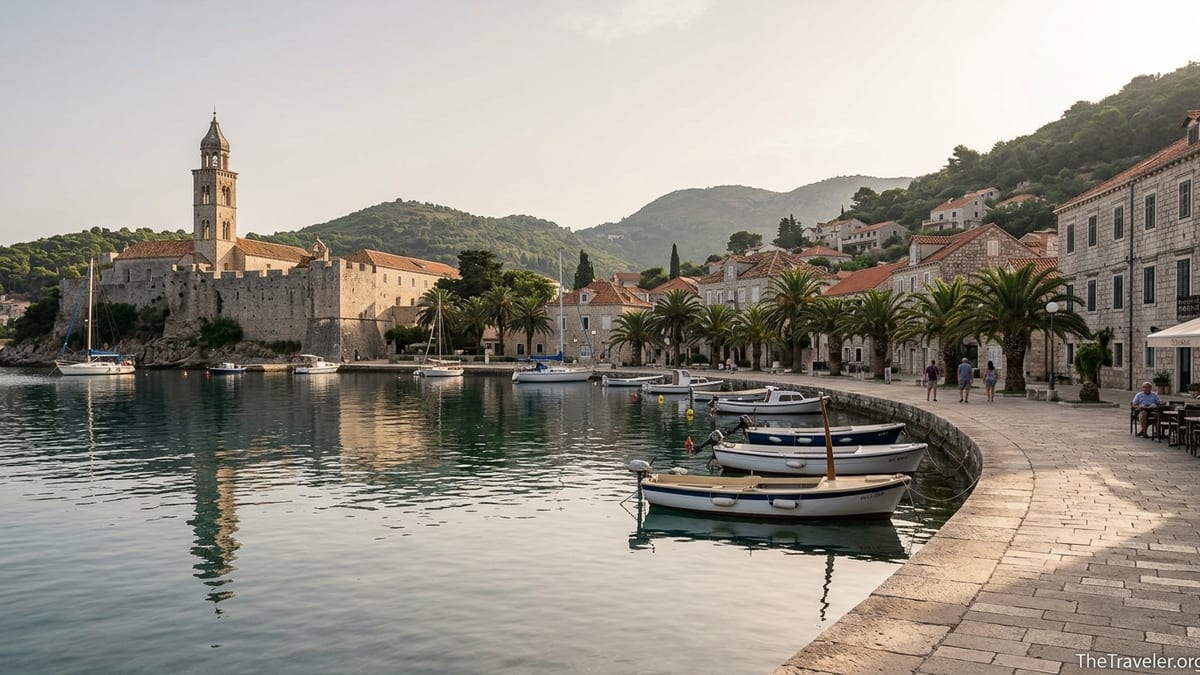
The first impression as the ferry glides into the bay is of a long stone waterfront backed by terracotta roofs, palm trees and the imposing walls and bell tower of the 15th century Franciscan monastery at the northern end of the harbor. The atmosphere is markedly quieter than in Dubrovnik: instead of traffic, you hear gulls, the slap of water against hulls and the murmur of conversations from café terraces.
Lopud is genuinely car free. There are a couple of small service vehicles and golf buggies used for luggage transfers and supplies, but visitors will not encounter private cars or buses on the island lanes. Distances are short: the main village curls around the bay, and the cross-island walk to Šunj Beach takes around 20 to 30 minutes at a relaxed pace. For most travelers, this compact scale is part of the appeal, replacing taxi rides with gentle strolls along stone paths shaded by pines and cypress.
Historically, Lopud was an important maritime and religious center during the era of the Republic of Ragusa, and traces of that prosperity survive in crumbling villas in the hills and in its monasteries and churches. Today the island’s economy leans heavily on tourism, with a mix of family-run guesthouses, small hotels and one modern resort clustered mainly around the harbor.
Lopud Village: Harborfront Life and Everyday Practicalities
Lopud village stretches in a gentle arc along the waterfront, with a narrow promenade running almost the full length of the bay. Immediately opposite the ferry pier, you will find a cluster of café-bars with outdoor seating just a few meters from the water. In peak season it is common to see day trippers from Dubrovnik nursing coffees or scoops of gelato here before heading to Šunj, while island regulars chat with the café owners and watch the ferries come and go.
Behind the front line of restaurants, stone alleys climb gently inland between houses draped in bougainvillea and vines. Many of these homes are now sobes (rooms for rent) or small apartments. A typical Lopud stay might be in a simple one-bedroom apartment with a balcony and partial sea view, some 3 to 5 minutes’ walk from the harbor, often with nightly rates in shoulder season that compare favorably with even modest rooms inside Dubrovnik’s walls.
For daily needs, the village has at least one small grocery shop, a bakery counter and kiosks that sell beach gear, water, snacks and basic toiletries. There is usually an ATM in or near the harbor area and several places take card payments, though it is practical to carry some cash for smaller family-run konobas or ice cream stands. There is no bank on the island, and medical facilities are limited to a local clinic and potentially visiting doctors, so serious needs require returning to Dubrovnik.
Staying in the village means you are never far from the sea. There are a handful of small pebble and shingle strips right along the promenade where locals and visitors swim. These are not as famous as Šunj, but if you are content with clear water and stone steps down into the sea, you can happily swim before breakfast and be back at your table for coffee within minutes.
Šunj Beach: Shallow Sands and Family-Friendly Swimming
Šunj Beach, on the island’s south side, is one of the most talked-about beaches near Dubrovnik because it is sandy, shallow and framed by low green hills. From the village, most visitors walk over the central ridge. The most direct path starts near the middle of the bay and climbs up a stone lane before descending through Mediterranean scrub to the beach. Even in high summer it is an easy walk for reasonably fit travelers, though the lack of shade on parts of the route makes a hat, water and sunblock essential.
The bay at Šunj is wide and gently curving, with light-colored sand both on the beach and underfoot in the shallows. The water stays waist deep for a long distance, which is ideal for children and for anyone who prefers to wade rather than plunge straight into deep water. The vibe is casual and family friendly, with volleyball nets sometimes set up on the sand and people floating on inflatables or playing in the shallows.
Facilities at Šunj typically include a couple of beach bars or simple restaurants set back from the sand under the pines. These serve classic Croatian beach fare: grilled fish, calamari, mixed salads, simple pasta dishes and cold drinks. Prices are usually a little higher than in the village because of the location, but still within typical Adriatic resort levels. Sunbeds and umbrellas can be rented by the day, often priced per pair with an umbrella, and there are basic changing cabins and outdoor showers.
For those who prefer not to walk, in summer there are often small electric buggies or local shuttles running between the village and Šunj for a modest fee per person. However, services can vary by season, and schedules may be informal, so it is wise to confirm availability on arrival rather than assuming a constant shuttle. Returning on foot later in the afternoon, when the sun is lower, is often the most pleasant way to end a beach day, with views back over the Adriatic and the Elafiti chain.
Walking Routes, Monasteries and Views
Although Lopud is small, it is well suited to low-key walking and exploring. Besides the main path to Šunj, several tracks climb up to ruined chapels, viewpoints and the remains of summer residences from the island’s more prosperous past. None of these routes are technically demanding, but they can be rocky and exposed, so sturdy sandals or light walking shoes are preferable to flip-flops if you want to roam beyond the main paths.
One of the most striking landmarks is the Franciscan monastery at the north end of the harbor, whose high walls and bell tower dominate the approach by sea. The complex was historically both a religious center and a defensive structure. Access arrangements can vary, with parts sometimes used for events or accommodation, but it is often possible to at least walk around the exterior and appreciate the architecture and views back across the bay.
Further inland, the remains of the Dominican monastery and several small churches dot the island. Reaching them involves following narrow lanes that wind between stone walls and small orchards. Even without a formal hiking map, you can construct short circular walks that might take an hour or two, combining chapel ruins, sea views and stretches of pine forest. In spring and early summer, wildflowers and the scent of herbs like rosemary and sage add to the atmosphere.
Sunset viewpoints are another reward for walkers. Climbing up behind the village gives a broad panorama over Lopud’s bay, the open sea to the south and Šipan and Koločep to the north and east. On clear evenings you can watch the ferries trace their routes in the fading light before strolling back down to the harbor for dinner.
Where to Eat and Drink: From Waterfront Konobas to Resort Terraces
Lopud’s dining scene is concentrated along the harborfront, where traditional konobas and more contemporary restaurants sit side by side. Menus on the island lean heavily toward seafood and Dalmatian classics: grilled whole fish, octopus salad, black risotto, pasta with seafood, and simple meat dishes like grilled lamb or steak, often accompanied by local wines from the Pelješac Peninsula and beyond.
Long-standing family restaurants such as Obala near the waterfront have built reputations over decades, combining fresh fish with tables almost at the water’s edge. A typical meal might start with marinated anchovies or a mixed seafood platter, followed by grilled sea bream with blitva (Swiss chard and potatoes), and a glass of chilled white wine. Prices are broadly in line with other Adriatic islands: not cheap, especially in high season, but usually more relaxed and less hurried than in Dubrovnik’s busiest streets.
At the western side of the bay, the modern Lafodia resort brings a different style, with several restaurants and bars set on terraces above the water. Here you might find Italian-style pizzas, burgers, salads and more international hotel fare alongside a pastry and bakery offering cakes and coffees. Even non-guests sometimes book a table at one of the resort’s à la carte venues for a change of scene and the elevated views over the bay.
Casual options include cafés serving espresso, beer and simple snacks throughout the day, as well as ice cream stands and bakeries selling burek and pastries in the morning. After dark, the waterfront remains low key: expect a few bars open late with background music and couples strolling the promenade, rather than clubs or loud nightlife. For many, that calm evening atmosphere is part of Lopud’s appeal.
Where to Stay: Hotels, Guesthouses and the Feel of the Island
Accommodation on Lopud is a mix of small hotels, private apartments and one larger resort. At the upscale end, the Lafodia Sea Resort occupies a prominent position facing west toward the open sea, with its own pool terraces, spa facilities and multiple restaurants. Rooms here tend to cost noticeably more than simple apartments elsewhere on the island, especially in July and August, but in return guests get resort-style services and on-site amenities that might appeal to those planning to stay several nights.
In the central and eastern parts of the bay, former stone villas and modernized buildings house boutique hotels and guesthouses. Many of these have only a handful of rooms, some with sea-facing balconies directly above the promenade. They often include breakfast on a terrace and operate with a personal, family-run feel rather than a corporate style. Booking early for high summer is advisable, as Lopud’s relatively small size means that peak-season availability can tighten quickly.
Private apartments and rooms are widely available and suit travelers who prefer more space or the option to cook. A typical self-catering apartment might offer a bedroom, small kitchen-living area and a terrace with partial sea views. These are popular with families and couples staying a week or more, and prices are often more accessible in shoulder seasons such as May, June and late September.
Wherever you stay, the island’s car-free nature shapes the experience. You will walk to dinner, to the ferry, to the beach and back. Luggage is usually moved by handcarts or electric buggies arranged by your host, so it is worth packing in a way that you can comfortably wheel or carry bags over a short distance along the waterfront and up occasional steps. Once settled, that same lack of vehicles means quiet nights and the gentle sound of waves replacing engine noise.
Is Lopud the Best Elafiti Base?
Among the three main Elafiti Islands, each has a slightly different character. Koločep is the closest to Dubrovnik and feels very quiet and green, with a single small resort and scattered houses. Šipan is the largest and has two villages, more agricultural land and some low-key development. Lopud sits in the middle in both geography and feel, with the liveliest village atmosphere of the three while still being car free and small-scale.
For many travelers, Lopud is the most practical base in the Elafiti group. Its ferry connections to Dubrovnik are regular in summer, its waterfront village offers enough choice in dining and accommodation to keep a several-night stay interesting, and Šunj Beach gives it a clear advantage if you prioritize easy sandy swimming. Families with younger children, couples seeking a gentle routine of walking, swimming and eating well, and anyone who values not needing a car gravitate naturally toward Lopud.
However, it is not the best fit for everyone. If you want utter seclusion and are happy with very limited facilities, Koločep might feel more off-grid. If you prefer a bit more space, rural scenery and do not mind that Šipan has some vehicles and a slightly more spread-out layout, then Šipan can be a better choice. Prices on Šipan can sometimes be a little lower than on Lopud, and its two harbors give different outlooks over the sea.
For most visitors with only a few days to spare and a desire to combine Dubrovnik with some island time, Lopud’s balance of convenience, atmosphere and pedestrian-friendly scale makes it the easiest recommendation. It is realistic to spend three or four nights on Lopud, taking day trips by ferry to Šipan or Koločep, then return to the island in the evening to a familiar harbor and your favorite restaurant table.
The Takeaway
Lopud Island distills many of the reasons people fall for the Adriatic into a very compact package: a stately harbor village, centuries of history visible in its monasteries and chapels, pine-scented hills with simple walking trails and a wide sandy bay at Šunj where the sea feels more like a giant paddling pool than a deep, rocky inlet.
The car-free nature of the island shapes both its rhythm and its charm. Days fall into a pattern of walking to the beach or up to viewpoints, lingering over seafood lunches by the water, and wandering home along the lamplit promenade. Against the bustle of Dubrovnik in peak season, Lopud offers a softer, slower counterpoint without requiring complex travel logistics or high-end budgets.
Whether it is the best Elafiti base depends on what you value most, but for travelers who like to do most things on foot, appreciate having a few restaurant and hotel options, and want a forgiving sandy beach within walking distance, Lopud stands out. Treat it as more than a quick day trip and allow enough time to explore its paths and corners, and the island rewards you with that rare combination of ease and escapism.
FAQ
Q1. How do I get to Lopud Island from Dubrovnik?
Passenger ferries run from Dubrovnik’s Gruž port to Lopud several times a day in the main season, usually taking around 50 minutes. Tickets are inexpensive and can be bought at the port or online in advance, but schedules change slightly each year, so it is wise to check current departure times shortly before you travel.
Q2. Is Lopud really car free?
Yes. There are no private cars or regular road traffic on Lopud. You may see a few small utility vehicles or golf carts used for luggage and supplies, but visitors walk everywhere. This creates a quieter, more relaxed atmosphere than on many other islands.
Q3. How long does it take to walk from Lopud village to Šunj Beach?
The walk from the harbor in Lopud village over the central ridge to Šunj Beach typically takes 20 to 30 minutes, depending on your pace. The path is straightforward but includes some uphill and downhill sections, and there is limited shade, so bring water and a hat in summer.
Q4. Are there sunbeds and facilities at Šunj Beach?
Yes. In the main season you can rent sunbeds and umbrellas, and there are simple beach bars or restaurants serving drinks and food. Expect basic changing cabins and outdoor showers rather than full-scale beach clubs, and keep some cash handy for rentals and small purchases.
Q5. What kind of accommodation is available on Lopud?
The island offers a mix of options, from a larger resort with pool and spa facilities to small boutique hotels and family-run apartments. Many guesthouses are in converted stone houses near the harbor, while the resort sits on the western side of the bay. It is wise to book well ahead for July and August.
Q6. Is Lopud a good choice for families with children?
Generally yes. The car-free environment, short walking distances and shallow water at Šunj Beach make it attractive for families. Parents should still be mindful of sun exposure and bring suitable footwear, but many find the island’s scale and calm pace ideal for a relaxed family holiday.
Q7. Can I visit Koločep and Šipan easily from Lopud?
Yes, regular ferries link Dubrovnik, Lopud and Šipan, and some boats also stop at Koločep. With a bit of schedule checking, it is possible to take day trips from Lopud to one or both neighboring islands, returning in the afternoon or evening, especially in the higher-summer timetable period.
Q8. What should I pack for a stay on Lopud?
Focus on comfortable walking shoes or sturdy sandals, swimwear, a hat and strong sun protection. Because you will likely walk from the ferry to your accommodation, a wheeled suitcase that you can handle over short stretches of uneven ground or a backpack-style bag is practical.
Q9. Is Lopud suitable to visit outside the main summer months?
Spring and early autumn can be excellent, with milder temperatures and fewer visitors. Some restaurants and accommodations close in the quietest months, especially late autumn and winter, so if you are visiting then you should confirm what will be open and expect a very tranquil stay.
Q10. Is Lopud the best Elafiti Island to stay on?
For many travelers it is, because it combines a lively enough village, a good choice of places to stay and eat, car-free streets and the sandy Šunj Beach. However, if you prefer a more remote feel, Koločep might suit you better, while Šipan may appeal if you like a larger island with a more rural atmosphere and do not mind limited vehicle traffic.