


Just beyond Dubrovnik’s stone walls, the Elafiti Islands offer pine forests, car free lanes and quiet bays that feel a world away from the summer crush. The easiest way to reach them is the local Jadrolinija ferry that shuttles between Dubrovnik, Koločep, Lopud and Suđurađ on Šipan. This guide explains exactly how that ferry works today, from finding the right pier and reading the timetable to buying tickets, handling luggage and planning a smooth day trip in peak season.
Get the latest updates straight to your inbox!
Understanding the Dubrovnik to Elafiti ferry route
The main public boat link between Dubrovnik and the Elafiti Islands is the Jadrolinija passenger-only line that serves Koločep, Lopud and Suđurađ on Šipan in both directions. On Jadrolinija timetables this route is listed as line 807 and runs year round, with more departures in the summer season and slightly reduced service off season. The ferry is used heavily by island residents as well as visitors, so it feels like a genuine local commute rather than a packaged excursion.
Boats depart from Dubrovnik’s Gruž port, the working harbour about 3 kilometres from the Old Town. This is also where cruise ships and long-distance ferries dock, but the Elafiti ferry usually uses a smaller pier section with a clear sign for the line and destination. You should arrive at the waterfront area, look for the white Jadrolinija boats or catamarans, and check the electronic board or paper posters for “Koločep – Lopud – Suđurađ” or “linija 807.” Staff at the small Jadrolinija ticket office can confirm you are boarding the correct sailing.
The route itself usually runs Dubrovnik – Koločep – Lopud – Suđurađ on the outbound leg and reverses on the way back. Not every departure stops at all three islands, and sailing times vary with the boat type and how many stops are scheduled, so always check the specific run you plan to use. For example, a morning departure may stop at all islands and take around 1 hour 15 minutes to reach Suđurađ, while an evening boat that only calls at Lopud can be significantly faster for that one island.
When planning, think of the line as a coastal bus on water. Locals use it to commute to work or school in Dubrovnik, run errands or connect between islands. That means that peak demand is often early in the morning towards Dubrovnik and late afternoon or evening coming back. For visitors, the most convenient sailings for day trips are usually the mid-morning departures from Dubrovnik and the late afternoon or early evening returns, which allow several hours on one island without an overnight stay.
Current timetables and how to read them
Jadrolinija publishes an official PDF timetable for line 807 that separates sailings by day of the week and by season. On the schedule you will usually see one column for Monday to Saturday and one for Sundays and holidays, with the ports listed vertically and departure times from each port shown horizontally. Morning runs often start around 7.00 from Dubrovnik in summer, with additional mid-morning and early afternoon departures, while the last boat back from Suđurađ to Dubrovnik typically leaves in the early to mid evening. Exact times can shift slightly year to year, so always check the current year’s table before you travel.
As a practical example, in the 2026 summer season a common pattern on weekdays is a morning boat from Dubrovnik that leaves around breakfast time and stops first at Koločep, then Lopud, then Suđurađ, followed by a midday or early afternoon sailing with the same pattern. There is usually at least one evening return that departs Suđurađ, calls at Lopud and Koločep and reaches Dubrovnik in good time for dinner. On Sundays, the frequency may be slightly reduced, with departures pushed a little later in the morning to match lower commuter demand.
On the physical timetable boards at Gruž, you will see each departure listed with its time from each port. For example, a row might show Dubrovnik 10:00, Koločep 10:35, Lopud 10:55 and Suđurađ 11:15. This means that if you are starting in Dubrovnik and aiming for Lopud, you simply board at 10:00 and get off when the boat arrives at Lopud about 55 minutes later. If you are island hopping, you can also use those times to plan a change, such as getting off at Koločep in the morning and boarding a later boat from Koločep to Lopud in the afternoon.
Because schedules can occasionally be adjusted for weather, maintenance or local holidays, it is wise to reconfirm the day before you sail. The most reliable options are checking the printed timetable at the Jadrolinija office in Gruž or asking your hotel reception or apartment host to confirm the latest times. Online timetables are useful for planning, but during high winds or rough seas in late autumn and winter, departures can be delayed or cancelled at short notice and local information becomes essential.
Tickets, prices and where to buy
Tickets for line 807 are sold per segment between ports, with different prices depending on how far you travel. For 2026, typical adult fares from Dubrovnik are a few euros each way per person, making the ferry one of the best value experiences around Dubrovnik. A one way ticket from Dubrovnik to Koločep, for instance, is usually in the low single digits in euros, while Dubrovnik to Lopud or Suđurađ costs slightly more but still less than many city bus rides in Western Europe. Children between 3 and 12 years old pay a reduced fare, and under 3s typically travel free or almost free.
You can buy tickets in several ways. The most straightforward is to use the Jadrolinija ticket office at Gruž harbour. In summer this office opens early in the morning and stays open through the main departure times, with a numbered counter system during busy periods. Many travellers simply walk up 20 to 30 minutes before departure, purchase a same day ticket to their chosen island and then wait on the quay. On the islands themselves there are also smaller points of sale or, for some quieter sailings, staff may sell tickets directly as you board if the office is closed.
Online purchase is also possible for many Jadrolinija lines, and for peace of mind in July and August some travellers prefer to buy their outbound ticket in advance via the official channels before arriving in Dubrovnik. Keep in mind that the ferry is primarily a local service, not a tourist day-cruise, so you are not usually selecting a reserved seat. Instead, you are simply holding a valid ticket for a specific departure. If you change plans, staff can advise whether you need a new ticket or whether your existing one can be used on a different sailing on the same day.
When returning from the islands in the late afternoon or evening, watch the time and buy your ticket early if there is an open office. On hot August days, the last ferry from Lopud and Suđurađ back to Dubrovnik can be crowded with day trippers and locals heading home. In practice, visitors report that everyone with a ticket is taken on board, but boarding can be slow and standing room only on deck is common. If you absolutely must be back in Dubrovnik for a specific dinner reservation or flight, consider choosing the second to last ferry rather than the final one of the day.
Boats, luggage and what it is like on board
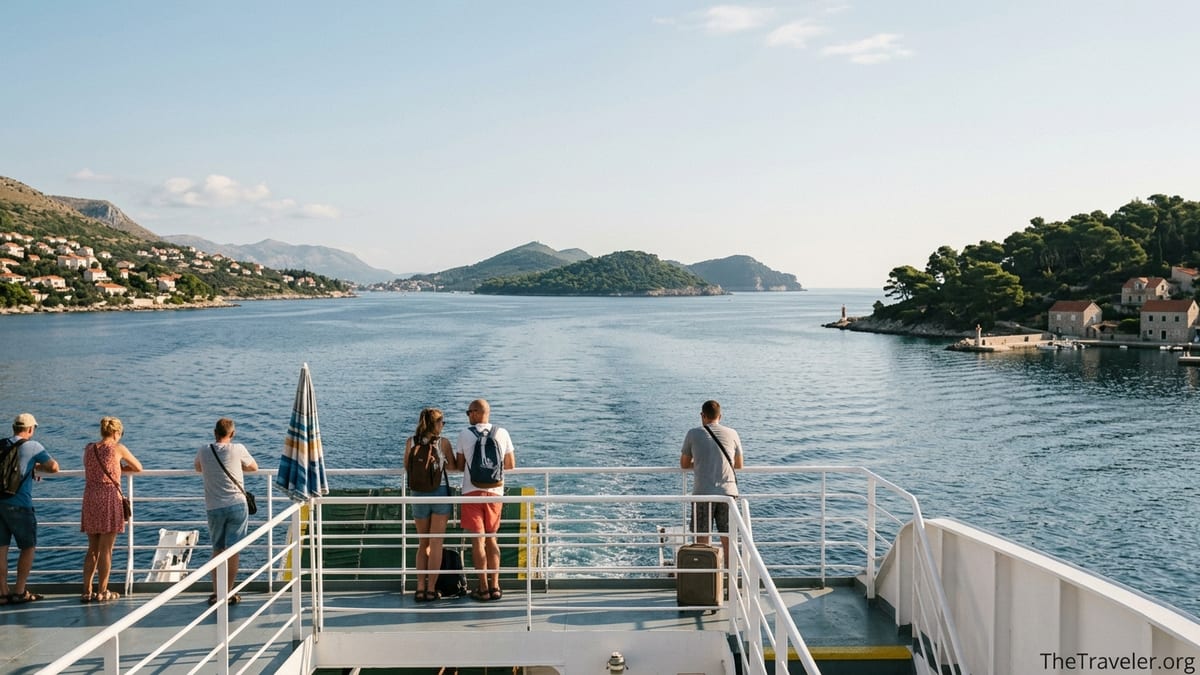
The Elafiti ferries are passenger ships rather than large car ferries. Depending on the season and day, you might find yourself on a classic white coastal ferry with an indoor lounge and simple outdoor upper deck, or on a slightly faster catamaran. Seating is unassigned: people spread out between the air conditioned interior, outdoor benches and railings around the sides. In summer, the upper deck fills quickly with travellers keen to photograph Dubrovnik’s walls shrinking behind them and the pine clad shapes of Koločep and Lopud coming into view.
Luggage policies are fairly relaxed. Hand luggage up to around 20 kilograms per person is generally carried free of charge, with an expectation that normal suitcases and travel backpacks fall into this category. You simply wheel or carry your bags on board, where you will usually find a luggage rack or open area in the lower deck where larger suitcases are stacked. Locals heading back with crates of groceries and supplies sometimes use the same space. If you are unsure whether your oversized sports gear or heavier items require a separate charge, ask at the ticket office when you buy your ticket, as tariffs for freight above a certain total weight are published separately.
On board, facilities are basic but perfectly adequate for the short crossing. Most boats have toilets, simple plastic or metal seating and sometimes a small kiosk or vending machine for drinks and snacks. It is sensible to bring your own water and perhaps a pastry or sandwich from a bakery near Gruž before boarding, especially if you are taking the early morning departure. Many travellers pass the time on deck, watching kayakers around Dubrovnik’s shoreline and the small lighthouses that mark the entrances to Koločep and Lopud harbours.
If you are travelling with strollers or mobility limitations, boarding involves a gangway and a narrow step or two from quay to ship. Crew members are used to assisting local families and older residents, and will normally offer an arm or help with lifting a stroller. Once on board, movement between decks can involve staircases, so if you need to stay on the lower level, arrive a little early to secure a comfortable spot there rather than climbing up to the open deck.
Summer crowds, timing and day-trip strategies
Between late June and early September, Dubrovnik is one of the busiest destinations on the Adriatic, and that pressure spills onto the Elafiti ferries. The key to an enjoyable day is timing. In high summer, the most popular sailings for visitors are the mid-morning boats out and the late afternoon ferries back. Those are precisely the departures that can feel most crowded, with lines of people on the quay and every seat taken soon after boarding begins. If you are happy to start early, aim for the first or second departure of the day, which is often noticeably quieter and delivers you to your chosen island before the main wave of day trippers.
A simple strategy for a relaxed day-trip is to choose one island and commit to it. For example, you might take a morning ferry from Dubrovnik to Lopud, walk over the hill to the sandy Šunj Beach before midday, linger over a grilled fish and salad lunch in the shade, and then return on an early evening sailing. With this plan you avoid constantly watching the clock and calculating connections, and you are less stressed if one ferry runs a little late. Trying to see Koločep, Lopud and Suđurađ all in one day using only the public ferry is theoretically possible in shoulder season, but in July and August the risk of cutting it too fine with the last return sailing is high.
If you are set on visiting more than one island in a single day, a common compromise is to combine the public ferry with a small group boat tour or water taxi. For instance, some travellers base themselves on Lopud, use the morning Jadrolinija ferry from Dubrovnik, then hire a small boat on the island for a few hours to visit Šipan’s coves before returning from Suđurađ on the scheduled evening ferry. Others join a day-long Elafiti boat excursion from Dubrovnik, which typically includes swimming stops and lunch, and then return to one favourite island later in the week on the local ferry for a quieter afternoon.
Weather can also shape your strategy. On very hot days, the early morning crossings are cooler and the sea is often calmer. By late afternoon, high summer winds such as the maestral can pick up, making the ride choppier on the open sections between islands. If you are prone to seasickness, sit lower and towards the centre of the boat, and avoid reading during the choppier sections. Outside of peak season in May, early June, late September and October, ferries are generally less crowded, and you have more flexibility to decide island plans on the day based on mood and weather.
Planning the perfect Elafiti day from Dubrovnik
Before you start your Elafiti day, check the timetable and choose your outbound and return ferries. Then sketch a simple plan around them. If you choose Koločep, you might step off the boat at Donje Čelo, follow the coastal path through shaded pines to Gornje Čelo on the south side, swim at one of the rocky coves, and have a relaxed lunch in a konoba overlooking the harbour. With ferries typically spaced a few hours apart, you can complete that loop at an easy pace before returning in the late afternoon.
On Lopud, the most popular day-trip idea is to walk or take a small electric cart from the harbour across the island to Šunj, one of the few sandy beaches in the region. Arriving by late morning in July gives you a better chance of finding a spot before it becomes shoulder to shoulder with sun loungers by mid-afternoon. You can rent a lounger and umbrella for a half or full day, buy ice creams and drinks from the beach kiosks and return to the harbour in time to enjoy a gelato or coffee while you wait for your ferry back.
Šipan, by contrast, rewards a slightly slower rhythm. From Suđurađ you can stroll past old stone houses and Renaissance summer villas, or head inland among olive groves and vineyards. Many visitors choose to have a long lunch under the vines at a family run restaurant, then wander back to the harbour as the sun lowers, catching the evening ferry to Dubrovnik as fishing boats head out to sea. If you are staying overnight, you can use the later ferries more flexibly, and experience the islands after the last day trippers have left and the waterfront promenade returns to a local pace.
In all cases, bring essentials. That means plenty of drinking water, high SPF sunscreen, a hat that will not blow off on the ferry deck, a light cover-up for breezy crossings, and cash for small purchases at island cafes or for renting beach loungers. While card acceptance is improving every season, some of the more modest beach bars and bakeries still prefer cash, and there are limited or no ATMs on the smaller islands. Charge your phone fully before leaving Dubrovnik so you can photograph the views and still have battery to check your timetable or call your accommodation if plans change.
Alternatives to the public ferry and who they suit
The Jadrolinija ferry is the backbone of Elafiti transport, but it is not the only way to reach the islands. A wide range of private boat tours operates from Dubrovnik in high season, from simple wooden excursion boats that include lunch and drinks to faster speedboats with small groups and flexible itineraries. Typical full day group tours that visit all three main islands start at roughly several dozen euros per person, often including grilled fish, salad and local wine served on board. They suit travellers who want a mostly carefree, social day on the water without thinking about timetables.
Private boat rentals with a skipper are another option, suited to families or small groups of friends who want maximum flexibility. In 2026, for example, renting a mid sized motorboat with skipper for a full Elafiti day typically costs a few hundred euros plus fuel, depending on the size and comfort of the boat. Many Dubrovnik marinas and tour desks offer these services. You can still use the public ferry in one direction and a private transfer in the other, such as taking a speedboat back to Dubrovnik after a late dinner on Šipan when scheduled ferries have stopped for the day.
Water taxis based on the islands themselves are useful for short hops, such as travelling from Lopud to Šunj beach if you want to avoid the uphill walk, or connecting between Lopud and Šipan outside the fixed ferry times. Prices for these short rides are usually posted at the harbour kiosks, and it is sensible to confirm the total fare with the skipper before you get in. For some visitors, a mix of public ferry, water taxi and an occasional organised boat trip gives the best balance between budget and convenience.
When deciding between the public ferry and alternatives, consider your priorities. If you want to travel like a local and keep costs low, line 807 is ideal and more than sufficient. If your time in Dubrovnik is very limited, or if you are travelling in a large family group with children and older relatives, then a small group excursion or private boat can reduce logistical stress by bundling transport, swim stops and lunch into a single package with a clear schedule.
The Takeaway
The Elafiti Islands are one of the easiest and most rewarding escapes from Dubrovnik, and Jadrolinija’s ferry line 807 is the simplest way to reach them. Operating between Gruž harbour and the islands of Koločep, Lopud and Šipan, the ferry functions like a coastal bus on water, with year round service and extra departures in summer. For just a few euros each way, you can swap Dubrovnik’s stone alleys for shaded pines, small harbours and some of the region’s quietest swimming spots.
To make the most of the route, plan around the current timetable, buy tickets a little in advance in peak season and, where possible, aim for earlier sailings to beat the heaviest crowds. Travel light, allow for a relaxed pace on board and on the islands, and resist the urge to squeeze all three main islands into a single day purely by public ferry during high summer. Whether you choose Koločep’s short coastal paths, Lopud’s sandy Šunj Beach or Šipan’s olive groves and stone villas, the experience is richer when you give yourself time.
For travellers who want more flexibility, the public ferry pairs well with private boat tours, water taxis and island based stays. Many visitors fall for one island so strongly that a planned day trip turns into an overnight or longer. However long you stay, understanding how the Dubrovnik to Elafiti ferry works puts the islands firmly within reach and turns what could be a confusing timetable into one of the most enjoyable local journeys of your Croatian trip.
FAQ
Q1. Where exactly does the Elafiti ferry leave from in Dubrovnik?
The Jadrolinija ferry for Koločep, Lopud and Suđurađ departs from Gruž port, Dubrovnik’s main harbour area, a short bus or taxi ride from the Old Town.
Q2. Do I need to book tickets for line 807 in advance?
In most months you can buy tickets on the day at the Jadrolinija office in Gruž, but in July and August it is wise to purchase earlier in the day or the day before for popular morning sailings.
Q3. How long does the ferry take from Dubrovnik to each island?
Typical journey times are around 30 to 40 minutes to Koločep, 50 to 60 minutes to Lopud and about 70 to 80 minutes to Suđurađ on Šipan, depending on the specific sailing and stops.
Q4. Can I visit all three islands in one day using only the public ferry?
It is technically possible in shoulder season, but in peak summer the timetable and crowds make it rushed. Most travellers enjoy the experience more by focusing on one island per day.
Q5. Are the ferries suitable for travellers with luggage or strollers?
Yes, the boats regularly carry suitcases, backpacks and strollers. There is usually an area for larger bags on board, and crew often help families and passengers who need extra assistance.
Q6. Is there food and drink available on the ferry?
Some boats have a small kiosk or vending machine, but the choice is limited. It is best to bring your own water and snacks from Dubrovnik, especially for early morning crossings.
Q7. What happens if the weather is bad on the day of my trip?
In strong winds or rough seas, ferries can be delayed or cancelled for safety reasons. Check with the Jadrolinija office or your accommodation on the morning of travel and have a flexible backup plan.
Q8. Can I use the same ticket to get on and off at multiple islands?
No, tickets are sold per segment between ports. If you plan to travel, for example, Dubrovnik to Koločep and later Koločep to Lopud, you will need a separate ticket for each leg.
Q9. Are there toilets on board the Elafiti ferries?
Yes, most ferries on this line have basic toilet facilities. Still, many travellers prefer to use restrooms at cafés or the terminal before boarding when possible.
Q10. Is the Jadrolinija ferry a good option for families with young children?
Yes, the short crossing times, relaxed onboard atmosphere and car free islands make the route very family friendly. Just bring sun protection, water and simple entertainment for the time on board.