


Airport lounges can turn a stressful travel day into something almost pleasant, but the price of that quiet corner and free buffet is not always obvious. LoungeKey, which connects premium bank cards to more than a thousand lounges worldwide, is a prime example. Many travelers assume their card means “free lounge access,” only to discover charges on their statement weeks later. Understanding how LoungeKey fees really work before you join can save you from expensive surprises at the end of your trip.
Get the latest updates straight to your inbox!
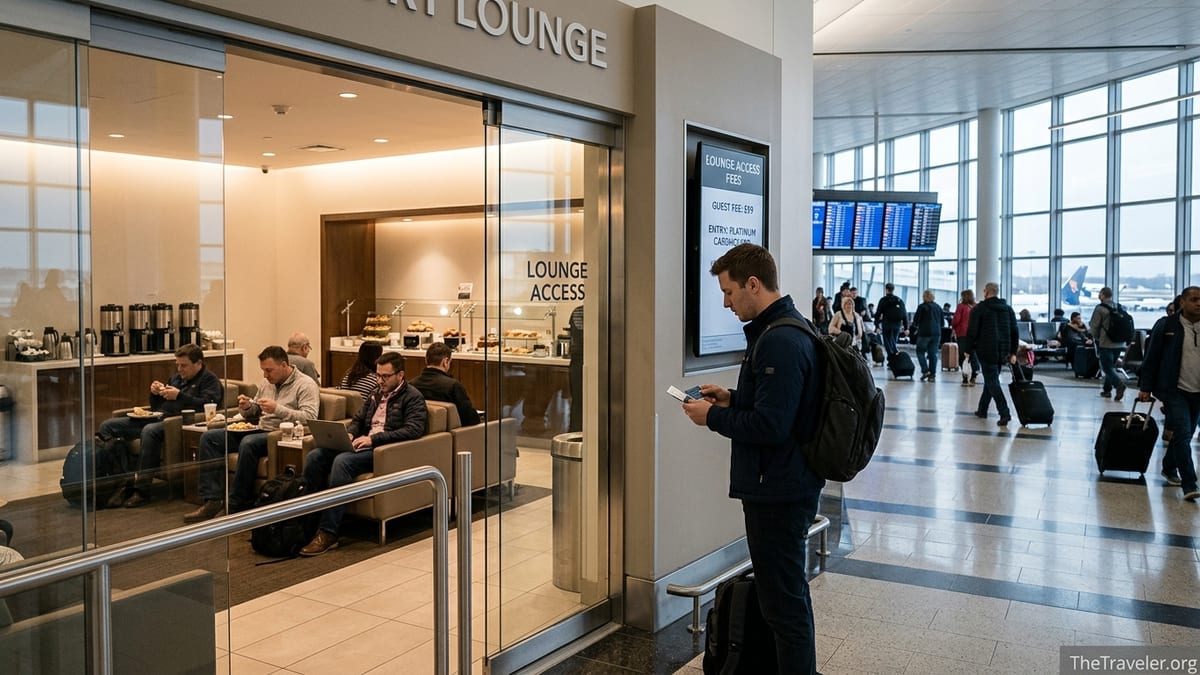
What LoungeKey Is (and How It Differs From Priority Pass)
LoungeKey is an airport lounge access program operated by Collinson, the same company behind Priority Pass. The key difference is how you join. With Priority Pass you can buy a membership directly. With LoungeKey you cannot. Access is only available through an eligible payment card, typically a World Elite Mastercard or premium Visa Infinite issued by a bank or fintech.
In practice, that means you might never see the word “LoungeKey” on your physical card. Instead you find a line in the benefits guide for your HSBC, HDFC, or Revolut premium card mentioning lounge access via LoungeKey. Once your card is enrolled, you simply present it at a participating lounge, or generate a digital pass in the LoungeKey app, and your visit is recorded against that card.
Another important distinction is where the rules live. With Priority Pass, membership tiers and standard guest fees are widely advertised. With LoungeKey, the core platform charges a per-person, per-visit fee to your card issuer, but what you actually pay depends on the specific agreement your bank has negotiated. Two travelers standing at the same lounge desk, both using LoungeKey, can be charged completely different amounts for the exact same visit.
Because of this, you should think of LoungeKey less as a membership you buy and more as a payment rail your bank uses to deliver whatever lounge benefit it has chosen to fund. The fee story starts and ends with your card issuer rather than with LoungeKey itself.
How LoungeKey Visit Fees Are Structured Behind the Scenes
At the technical level, LoungeKey works very simply. Each visit is registered as a per-person charge, and that charge is billed to the payment card you used to enter. The official conditions of use describe visits as subject to a per-person, per-visit charge that is debited to the customer’s card by LoungeKey or the card provider at the rates and terms the card provider has set. In plain language: every person you bring into a lounge generates a billable event tied to your card.
The base cost that card issuers see is fairly consistent worldwide, often quoted around 25 to 35 US dollars or the local equivalent per person per visit. For example, documentation for some European bank LoungeKey programs references a 24 euro guest fee per visit, while several Asian banks list guest or excess-visit charges of 27 to 35 US dollars per person. Many issuers mirror these figures directly to cardholders, either in the original currency or after conversion.
What changes from card to card is who pays that underlying cost. A mid-tier Visa Infinite in Asia might include four complimentary LoungeKey visits per year for the primary cardholder, with any extra visits charged at 32 US dollars. A premium Mastercard Black in Latin America might cover unlimited cardholder visits but still charge 32 to 35 dollars for each guest. At the extreme top end, some private-banking cards cover both the cardholder and several guests with no out-of-pocket fee, but those cards come with very high annual fees or asset requirements.
For travelers, the important takeaway is that there is almost always a real cash cost per LoungeKey visit somewhere in the system. Whether you see that cost directly on your statement, indirectly in your annual fee, or not at all because a private bank is eating the bill, depends entirely on the card product you hold.
What You Will Typically Pay: Real-World Fee Examples
Because LoungeKey is bundled with so many different cards, the most useful way to understand fees is through concrete examples. Consider a corporate Mastercard program from a major Indian bank. Its LoungeKey benefit information, updated in 2026, explains that each lounge visit will be charged at 32 US dollars per person, per visit, directly to the card, unless the company has negotiated complimentary visits. If your employer has not pre-purchased visits, every time you step into a lounge with that card you should expect roughly a 32 dollar charge to appear later.
Another example comes from a Sri Lankan bank’s World and World Elite Mastercard range. Its LoungeKey FAQ describes a limited number of complimentary visits per year, usually tied to meeting a spending threshold on the card. Any visit beyond that annual entitlement is charged at about 35 US dollars. The same 35 dollar figure appears again as the guest fee: bring a colleague into the lounge, and that extra person will cost 35 dollars, even if your own entry is still within your free quota.
European issuers publish similar numbers but often in euros. A wealth-management program from a Swiss bank quoting LoungeKey lists guest costs at 24 euros per visit. In practice, that means a family of four using a single cardholder’s LoungeKey access could generate close to 100 euros in guest charges for one two-hour stay, even if the primary cardholder’s entry is complimentary.
The pattern repeats across regions. A Southeast Asian Visa Infinite card might advertise “unlimited LoungeKey access” in marketing headlines, but the accompanying fine print specifies that visits are free only for the primary cardholder. Each guest is billed at roughly 27 to 32 US dollars through LoungeKey. If you routinely travel with your partner and two children and use the lounge on both the outbound and return legs, the guest fees alone can easily exceed 200 dollars on a single round trip.
Guest Fees, Children, and Other Easy-to-Miss Charges
Guest pricing is where most LoungeKey bill shocks begin. Many lounge agents do not proactively explain the cost structure at the desk for a simple reason: they do not know your specific card benefit. Their job is to swipe your card, enter the number of guests, and present a slip for you to sign or confirm. The lounge never sees the actual amount your bank will later charge you for those extra people.
Bank FAQs illustrate how widely guest fees can vary. Some premium cards in Asia set guest visits at 35 US dollars each, explicitly noting that this applies to children and even infants unless the lounge itself publishes an age-based exception. Other programs use a slightly lower figure around 27 dollars, but apply it starting from very young ages. That means a couple traveling with a three-year-old might find that all three entries were billable guest visits.
There are also less obvious fee scenarios. Some fintech products using LoungeKey structure the benefit as a “discounted day pass” at participating restaurants and cafes in the departures area rather than classic lounge access. For instance, a digital bank in Europe has marketed LoungeKey-powered credits such as 23 euros off the bill in a specific airport restaurant. Behind the scenes, this redemption still counts as a lounge visit in LoungeKey’s system and can burn one of your free entries or trigger a per-visit charge, depending on the card’s rules.
Another easy-to-miss detail is what happens when you exceed your complimentary visit allowance. A bank might promote eight free LoungeKey visits per year across all cardholders on the account. The ninth and subsequent visits are then charged at the standard 27 to 35 dollar rate, which may not show up until weeks later on your statement. If you do not track how many times you have swiped your card at lounges or partner restaurants, you can burn through your free quota quickly on a couple of busy travel months and only notice when a cluster of lounge charges posts after you are home.
How Banks Package LoungeKey: From “Free” Perk to Pay-Per-Use Tool
Because LoungeKey is only delivered through payment cards, the cost structure is tightly tied to card strategy. Banks essentially decide whether to use LoungeKey as a headline “free lounge access” perk to justify a higher annual fee, or as a pay-per-use add-on that generates extra revenue from frequent travelers. The exact same lounge network can feel like a luxury gift or a quiet tax on your airport routine, depending on which approach your bank has taken.
At the premium end, private banking cards in markets like Brazil or the Middle East sometimes offer unlimited complimentary LoungeKey access for both the primary and additional cardholders, plus several guests. In those cases the bank effectively buys a bulk package of visits from LoungeKey and absorbs the per-visit charges. The cost is recovered indirectly through relationship profitability rather than explicit fees for each lounge entry.
More commonly, especially for mass-affluent products, banks offer a hybrid model. A Mastercard Black issued by a major Brazilian bank might grant ten free LoungeKey visits per year that can be shared between the primary and supplementary cardholders. After those ten visits are used, further entries are permitted but billed at around 32 US dollars per person. Another bank in the same market could structure its Visa Infinite card to include just two or four free LoungeKey visits a year, with all extra visits billed immediately at about 32 to 35 dollars.
Corporate card issuers often default to a purely pay-per-use model. An HDFC corporate Mastercard, for example, describes LoungeKey access as an innovative benefit while clearly stating that lounge visits will be charged at 32 US dollars per person, per visit to the corporate account. Companies can then choose whether to reimburse employees for those charges. In that environment, LoungeKey essentially functions like an optional expense-itemized airport upgrade rather than a complimentary perk.
Currency Conversions, Holds, and When Charges Actually Post
Even when you know the headline pricing for your card’s LoungeKey benefit, the way the charge appears can still be confusing. Many programs place a temporary authorization hold around the expected visit cost at the time you enter the lounge. For example, some Indian bank cards note that travelers should have at least 35 US dollars equivalent available on the card because a pre-authorization of that amount per person will be placed for about two weeks.
For international travel, currency conversion adds another layer. If your card is denominated in US dollars but the underlying LoungeKey transaction happens in euros at a rate set by your bank, a published guest fee of 24 euros can translate into a slightly higher or lower dollar amount depending on the day’s exchange rate and any foreign transaction loading. When you look back at your statement, the charge might therefore appear as 26 or 28 dollars and not match the rounded figures you saw in the benefit guide.
The timing can also be delayed. LoungeKey aggregates visit data from thousands of lounges, and card issuers batch process those transactions. It is common for charges not to post until several days or even a couple of weeks after the actual lounge visit. That lag is why travelers sometimes see a cluster of 32 or 35 dollar transactions appear long after a trip has ended and have to mentally reconstruct which airport and which family member each fee corresponds to.
Occasionally, you may also encounter small additional processing or service fees. Some users of crypto-linked cards and niche fintechs that rely on LoungeKey have reported seeing a few extra dollars added on top of the expected lounge charge, reflecting the provider’s internal fee structure or rewards scheme. The core LoungeKey visit fee remains within the usual 25 to 35 dollar band, but your final out-of-pocket cost can be a little higher after proprietary markups.
How to Check and Control Your LoungeKey Costs Before You Travel
The easiest way to avoid unwanted LoungeKey fees is to treat the benefit like any other bank product and read the specific terms tied to your card, rather than relying on generic LoungeKey information. Your cardholder agreement or benefits brochure will usually spell out how many complimentary visits you receive per year, which cardholders are covered, what each additional visit costs, and how much you will pay per guest. If you cannot find these details in print, a call or secure message to your bank before your trip is worth the effort.
Using LoungeKey’s own tools can also help. Once your card is registered, the LoungeKey website and mobile app allow you to search for participating lounges by airport. When you tap into a specific lounge, you will typically see notes on whether children are admitted free up to a certain age, whether there are time limits on stays, and if there are capacity controls that may restrict entry during busy periods. While the app will not show what your bank charges per visit, it will clarify how many people the lounge is willing to accept under a single LoungeKey swipe and what counts as a separate visit.
On travel day, make a habit of confirming the number of guests entered on the lounge terminal before you sign or approve the visit. Because the staff cannot see your underlying fees, they will not warn you if adding a third guest converts what you assumed would be a free visit into more than 100 dollars in guest charges. Watching the screen yourself and asking the agent to correct any mistakes on the spot is the best protection you have at the door.
After the trip, check your statement for lounge transactions and match them to your records. If a visit appears to have been misbilled, contact your bank promptly with the lounge name, airport, and time of visit. Official LoungeKey FAQs advise travelers who dispute charges to go through their card issuer rather than the lounge, since only the bank can see exactly how the visit was priced under your particular program.
The Takeaway
LoungeKey can be an excellent way to turn crowded terminals into a quieter, more comfortable experience, but only if you understand how the money flows. Unlike a flat-fee membership you buy directly, LoungeKey sits in the background as a billing system that banks use to deliver very different types of lounge benefits, from fully complimentary unlimited access to tightly rationed pay-per-visit schemes.
For most travelers, the realistic visit cost hovers between 25 and 35 US dollars per person when you step outside your complimentary allowance or start adding guests. A single family visit can quietly add more than 100 dollars to your trip if you are not paying attention, and restaurant-style credits at the airport can burn through your free quota just as quickly as a traditional lounge.
Before you lean on LoungeKey as part of your travel routine, take the time to read your card’s specific terms, count how many free visits you truly have, and decide when lounge access is actually worth the money. Used strategically on long layovers, very early departures, or with cards that genuinely cover the costs, LoungeKey can deliver excellent value. Treated as an unlimited free buffet without checking the fine print, it can turn into one of the priciest line items on your post-vacation statement.
FAQ
Q1. Is LoungeKey itself free, or do I always pay a fee per visit?
LoungeKey as a platform is not something you pay for directly. The cost is built into your credit or debit card. Depending on your card, you may receive a set number of complimentary visits, unlimited free access for the cardholder, or pay a per-visit fee of roughly 25 to 35 US dollars every time you enter a lounge. Your bank’s card terms tell you which model applies.
Q2. How much do LoungeKey guest visits usually cost?
Guest visits are commonly priced around 25 to 35 US dollars or the local equivalent per person, per visit, although some banks use slightly different figures. A European wealth-management program, for instance, cites a 24 euro guest fee, while several Asian issuers list 27 to 35 US dollars. Always check your own card’s guest pricing, especially if you travel with family.
Q3. Are children and infants charged as guests with LoungeKey?
Often yes, unless the specific lounge publishes a different policy. Many card FAQs state that guest charges apply to children and even infants when they enter via LoungeKey, with fees in the same 25 to 35 dollar range. Some lounges choose to waive charges below a certain age, but that is at the lounge’s discretion, so it is safest to assume children will be billed.
Q4. How do I know how many free LoungeKey visits I get with my card?
The number of complimentary visits is decided by your card issuer and should be listed in your card benefits guide or welcome pack. A card might offer four, eight, or ten free LoungeKey visits per year, or unlimited access for the primary cardholder. Once you exceed that allowance, standard per-visit charges apply. If you are unsure, contact your bank before you travel and ask for your current visit balance.
Q5. Why did I get charged weeks after my LoungeKey visit instead of at the airport?
LoungeKey visits are processed in batches. Your card is normally swiped or scanned at the lounge to register the visit, and the actual transaction is submitted later to your bank. It is common for the associated 25 to 35 dollar charge to post days or even a couple of weeks after travel, which is why you may see multiple lounge fees appear on your statement some time after you return home.
Q6. Can lounge staff tell me exactly what I will be charged for a LoungeKey visit?
Usually not. Lounge employees can see how many people are entering under your LoungeKey access, but they do not see your card’s specific pricing or visit allowance. Official LoungeKey guidance notes that lounges cannot access information about the charges that will be levied. For precise costs and remaining free visits, you must rely on your bank or your card’s benefit documentation.
Q7. Do restaurant or cafe credits in the LoungeKey app count as a lounge visit?
In most programs, yes. When you use LoungeKey to claim a discount or credit at an airport restaurant or cafe, that redemption is treated like a lounge visit in the system. It can deduct one of your complimentary visits or trigger a per-visit fee in the usual 25 to 35 dollar range. Check how your card defines a “visit” and track these redemptions carefully.
Q8. What happens if I exceed my complimentary LoungeKey visit allowance?
Once your free visit quota is used, additional entries are still allowed but billed at your card’s standard LoungeKey rate. For many cards that will be around 27 to 35 US dollars per person, per visit. Because charges can post with a delay, it is wise to keep your own count of visits rather than waiting to see when your statement starts showing lounge fees.
Q9. How do foreign currency and exchange rates affect LoungeKey fees?
If the underlying LoungeKey transaction is billed in a foreign currency, your bank will convert it to your card’s currency at its prevailing exchange rate and may add a foreign transaction margin. A published 24 euro guest fee might therefore show up as 26 or 28 US dollars, depending on market rates and your bank’s policies. The underlying per-visit cost is the same, but the final amount on your statement can vary slightly.
Q10. What should I do if I think I have been wrongly charged for a LoungeKey visit?
Start with your card issuer, not the lounge. Gather your boarding pass, the date and time of the visit, and the lounge name, then contact your bank’s customer service or disputes department. LoungeKey’s own FAQs instruct travelers who believe they were mischarged to raise the issue directly with their card provider, since only the bank can see your exact benefit configuration and adjust or reverse fees if necessary.