


Airport lounges have shifted from being an exclusive perk for first class passengers to something any savvy traveler can access with the right card or membership. One of the names that keeps popping up in bank marketing and fine print is LoungeKey. It often appears as a line item benefit on premium Visa or Mastercard products, yet many travelers are not sure if it is truly useful, how it compares to rival programs like Priority Pass, or if it is even legitimate in day to day use. Here is a clear look at what LoungeKey is in 2026 and whether it is a reliable way to get into lounges worldwide.
Get the latest updates straight to your inbox!
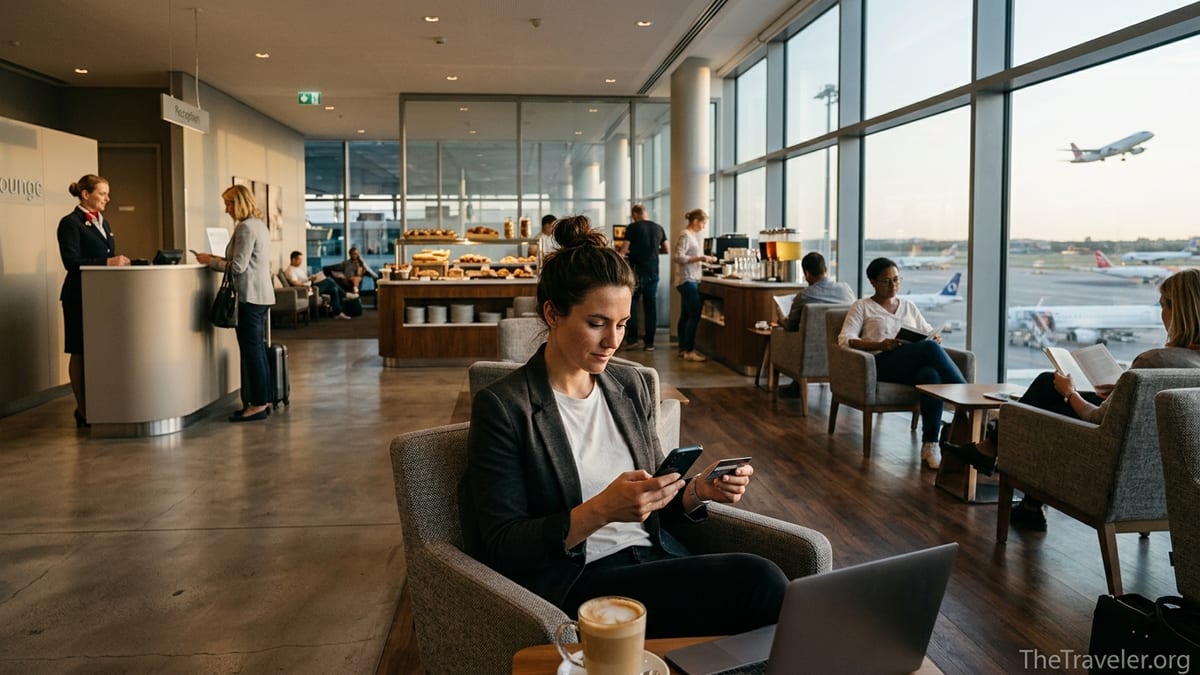
What Exactly Is LoungeKey and Who Runs It?
LoungeKey is an airport lounge access program that lets eligible cardholders enter participating lounges by using their payment card or a digital membership in the LoungeKey app. Unlike Priority Pass, which sells standalone memberships directly to travelers, LoungeKey is bundled into specific credit and debit cards. If you carry the right Visa, Mastercard, or certain bank branded cards, you may already have LoungeKey access without ever having signed up for it separately.
Both LoungeKey and Priority Pass are operated by the Collinson Group, a large loyalty and travel services company that works with banks, airlines, and insurers around the world. Collinson negotiates contracts with individual lounges and then connects them to banks on one side and travelers on the other. In practice, this means LoungeKey is not some small unknown startup but part of one of the largest lounge aggregator networks globally, sitting alongside more familiar brands like Priority Pass.
In mid 2026, industry comparison sites and aviation blogs generally describe LoungeKey’s network as running to roughly 1,100 to 1,200 lounges worldwide, while Priority Pass advertises more than 1,300 locations. The exact counts shift as lounges open, close, or change partners, but it is clear that LoungeKey is part of the top tier of global lounge programs in terms of coverage. The program is particularly prominent in Europe, the Middle East, and parts of Asia through wide adoption by regional banks.
Many travelers first encounter LoungeKey through a premium card such as a World Elite Mastercard or a bank issued travel rewards card. In India, for example, several HDFC Bank and Axis Bank products include LoungeKey for international lounges, while in Scandinavia and parts of the Gulf region, LoungeKey is a common inclusion on high tier Visa or Mastercard offerings. That quiet distribution model means LoungeKey tends to be less visible in marketing than Priority Pass but still reaches millions of cardholders.
How LoungeKey Works in Real Life
Using LoungeKey on the road is relatively straightforward, but the details matter. At the simplest level, you need three things: an eligible card, a same day boarding pass, and a listed participating lounge at your airport. The cleanest experience is when your bank encourages you to download the LoungeKey app, register your card, and generate a digital membership or QR code to show at reception together with your physical card and boarding pass.
Imagine you are flying from London Heathrow to New York with a standard economy ticket. You hold a premium World Elite Mastercard from a European bank that includes LoungeKey. Before your trip, you open the LoungeKey app, search for Heathrow, and see several participating options such as generic pay per use lounges in Terminals 2, 3, and 5. At the airport you go straight to, say, a general contract lounge in T3, show your boarding pass and the QR code from your app, and your visit is logged. If your card includes a certain number of free visits per year, this visit will count against that pool. If not, a fixed entry fee, often around 30 to 35 US dollars per person, is charged automatically to your card account.
The process is similar in other popular hubs. A traveler with a Middle Eastern bank’s World Mastercard might use LoungeKey at Dubai International to enter a generic business class style lounge while holding an economy ticket on a low cost carrier. In Istanbul, a user with a Revolut Ultra or another fintech card tied to LoungeKey can gain entry to independent lounges like IGA Lounge, shared with Priority Pass members. In practice, desk staff are often more familiar with the Priority Pass brand but their scanners recognize LoungeKey digital cards and QR codes because the same Collinson backend sits underneath both programs.
The key operational point is that access is always subject to capacity. Because LoungeKey shares space with airline elites, business class passengers, and members of other aggregators, you can still be turned away during peak hours, particularly at busy airports such as New York JFK, Los Angeles, Singapore, or major European hubs. This is not a sign that LoungeKey is not legitimate, but rather that lounges limit crowding by temporarily pausing all walk in access programs when they are full.
Is LoungeKey Legit? Looking at Operators and User Experiences
In terms of corporate structure and contracts, LoungeKey is unquestionably a legitimate program. It is backed by Collinson, relies on formal agreements with airport lounges, and is widely used by major banks like HDFC Bank in India and regional lenders across Europe and the Middle East. Banks publish formal LoungeKey terms and conditions, and many list exact usage fees in their tariff guides, such as per visit charges that are automatically billed in local currency after each lounge entry.
Where doubts often creep in is at the consumer level. Travelers read scattered online posts about being denied at a lounge or seeing an unexpected charge and understandably wonder if LoungeKey is unreliable. Browsing recent customer reviews on large feedback sites shows a mixed pattern. There are plenty of reports of smooth experiences in cities like Frankfurt, Doha, or Kuala Lumpur, where travelers simply tapped their card or scanned their app and entered without issue. There are also complaints from users in crowded airports who were turned away because the lounge was full or because the front desk could not find their card in the system.
These negative experiences are typically tied to three scenarios. First, capacity restrictions at peak times. When a lounge is near full with airline passengers, it may temporarily stop accepting third party programs, including LoungeKey and Priority Pass. Second, misunderstandings about benefits. Some cardholders assume “unlimited access” applies automatically to authorized users or guests, when in reality their bank limits free visits, charges for each guest, or requires a minimum spend before perks activate. Third, inconsistent communication between banks, LoungeKey, and the lounges themselves, particularly when programs are migrated or replaced.
Despite these frustrations, the existence of occasional access issues does not mean LoungeKey itself is a scam. It reflects the underlying reality that any mass market lounge access product balances three interests: the lounge wants to control crowding, the bank wants to manage its costs, and the traveler wants reliable access. LoungeKey sits in the middle, and when expectations are misaligned, it is often the program that takes the blame. The most realistic assessment is that LoungeKey is broadly legitimate and functional but not a magic key that guarantees entry every time.
LoungeKey vs Priority Pass and Other Lounge Programs
Because LoungeKey and Priority Pass share a parent company and overlap heavily in their lounge networks, travelers often ask which program is better. Recent comparison guides published in 2025 and 2026 generally agree on a few points. Priority Pass has a larger total network, frequently cited as more than 1,300 lounges across around 148 countries, versus roughly 1,100 to 1,200 for LoungeKey. That extra coverage tends to appear in secondary airports in Asia, Latin America, and smaller European cities, while the two programs often share the same lounges in major hubs like London Heathrow or Frankfurt.
Another difference is how you obtain membership. Priority Pass sells three tiers of direct membership, with an annual fee and a set number of free or discounted visits. It is also bundled with popular premium cards like the Chase Sapphire Reserve and various American Express products in some markets. LoungeKey, by contrast, is never bought directly. Instead, it is integrated into specific payment cards, from Scandinavian fintech cards to Gulf region travel cards and selected Mastercard World Elite products. For a traveler who already qualifies for one of those cards, LoungeKey can be effectively free.
Benefit design also varies. Priority Pass sometimes includes restaurant credits at participating airport eateries, a feature that can be valuable at airports where dedicated lounges are weak or overcrowded. LoungeKey generally focuses on traditional lounges and does not usually extend benefits to airport restaurants in the same way. On the other hand, some banks sweeten LoungeKey benefits for their own cardholders, such as offering complimentary guest access or a fixed number of free visits per year before standard lounge fees apply.
Outside these two, travelers may encounter competing aggregators like DragonPass or local networks such as Dreamfolks in India. A frequent flyer trying to stitch together near global coverage sometimes ends up with a mix of products: for instance, a U.S. based traveler might rely on Priority Pass from a credit card, a separate airline lounge membership for a preferred carrier, and LoungeKey access baked into a secondary international card that covers occasional trips through smaller airports in Europe or the Middle East.
Costs, Fees and the Fine Print That Matter
From a cost perspective, LoungeKey can be very attractive because there is usually no separate membership fee. The financial commitment sits in the annual fee or spending requirements of the underlying card. A bank might position its premium card at, say, the equivalent of 150 to 300 US dollars per year in fees, highlighting unlimited or fixed visit LoungeKey access as a headline benefit alongside travel insurance and higher reward earn rates.
The real variable cost comes from how visits and guests are billed. In many markets, banks offer a small number of complimentary LoungeKey visits per year, for example four or eight, often only for the primary cardholder. Beyond that quota, each visit may be charged to your card at a flat rate per person. Documented terms from partner banks in Asia and Europe show per visit fees typically in the range of about 30 to 35 US dollars, sometimes higher in local currency equivalents. Guest visits are commonly billed at similar rates and may not be covered by any free visit allowance unless your card explicitly states this.
One practical example: a traveler holding a mid tier travel credit card might receive four free international LoungeKey visits per year. On a family trip, they access a lounge at Dubai International with their spouse and one child. The primary cardholder’s visit uses one free entry. The spouse and child are treated as guests, each triggering a separate lounge charge that appears on the next statement. The traveler then expresses surprise online, but from the bank’s perspective, the charges followed the published schedule.
It is also important to note that some banks introduce spend based conditions. A regional bank might require that you reach a certain quarterly or annual spend level before complimentary visits activate, or it may tie the number of free visits to how much you spent in the previous period. Another nuance is that some issuers only cover domestic lounges via separate arrangements while using LoungeKey strictly for international locations. Because these details vary widely, the legitimacy question often becomes a transparency question: the program is valid, but you must read your specific card’s rules carefully to avoid surprises.
Where LoungeKey Works Well and Where It Falls Short
From real world travel patterns, LoungeKey tends to shine in certain scenarios. It can be excellent for occasional leisure travelers who hold a premium card for reasons beyond lounge access, such as better foreign transaction terms or enhanced rewards on travel and dining. For such a traveler, using LoungeKey a handful of times per year at busy hubs like Istanbul, Doha, Dubai, or major European airports can make long layovers far more pleasant without needing a separate, paid lounge membership.
In markets where local banks have heavily embraced LoungeKey, such as parts of Scandinavia, the Gulf, and India, coverage at key international airports is often solid. A Norwegian traveler might use LoungeKey at Oslo Gardermoen before flying to London, then again at Heathrow in a shared contract lounge. An Indian traveler holding a global travel card might find LoungeKey useful in international terminals at Mumbai or Delhi while flying economy on a Middle Eastern carrier.
Where LoungeKey is less compelling is for very frequent international travelers who value maximum coverage or specific perks like restaurant credits. A digital nomad bouncing between secondary airports in Southeast Asia or South America might find that Priority Pass, or occasionally DragonPass, reaches more of the smaller local lounges than LoungeKey does. Similarly, a U.S. based road warrior who already has access to airline operated lounges, independent networks, and Priority Pass through a high end credit card may see little incremental value in a duplicate LoungeKey benefit.
Another weak spot is inconsistency in lounge quality and acceptance. Because LoungeKey partners with a mix of airline, independent, and third party lounges, the experience in a brand new flagship lounge at a hub airport can be vastly different from a cramped facility in a smaller regional terminal. While this variation is not unique to LoungeKey, feedback from travelers suggests that quality swings and occasional confusion at the reception desk can be frustrating when someone expects a uniform premium experience every time.
Practical Tips to Make LoungeKey Work for You
If you decide to rely on LoungeKey, a bit of planning can make a big difference. First, confirm exactly which card in your wallet carries LoungeKey and what your bank includes. This means reading your card’s benefits guide rather than assuming “unlimited” or “free guests” based on quick marketing blurbs. Look for details on how many visits are complimentary per year, whether guests are covered, and what per visit charges apply once you cross your allowance.
Second, use the LoungeKey app or your bank’s travel benefits app to check participating lounges before every trip. Search by airport code and terminal, note opening hours, and pay attention to any capacity or time restrictions listed. For instance, some lounges accept LoungeKey only during off peak hours or limit length of stay to three hours. If you discover that your departure terminal has no LoungeKey partner, you can adjust expectations or consider pay per use alternatives.
Third, have a backup plan for peak travel times. Around major holidays, large events, or busy morning and evening banks of flights, it is common for lounges in hubs like Heathrow, Dubai, or Singapore to refuse walk in access from all third party programs. In those situations, knowing in advance that missed access is a realistic possibility helps reduce disappointment. You might time your arrival earlier, be prepared to try a second participating lounge in another part of the terminal if permitted, or simply treat lounge access as a bonus rather than a guarantee.
Finally, monitor your card statements after each trip. If you see lounge charges that you did not expect, contact your bank promptly and refer to the published terms. In some cases, banks will provide a courtesy refund if the misunderstanding is reasonable. In others, they will at least clarify how visits and guest entries are counted so you can manage your quota more precisely on future journeys.
The Takeaway
So, is LoungeKey legit for airport lounge access in 2026? Yes, in the sense that it is a large, established program backed by a major travel services company, widely used by banks, and accepted at hundreds of lounges around the world every day. Travelers routinely use LoungeKey to turn long layovers into a more comfortable experience, especially when flying economy and transiting through major international hubs.
At the same time, LoungeKey is not flawless. Its network is somewhat smaller than that of Priority Pass, quality and availability vary by airport, and many frustrations stem from unclear communication about visit limits, guest fees, and capacity restrictions. You cannot treat it as an all access pass that guarantees entry to any lounge at any time.
If you already hold a card that includes LoungeKey and your usual routes are well covered, it can be an excellent, low friction way to enjoy lounges without buying a separate membership. If you are a very frequent global traveler, or you prioritize maximum coverage and restaurant credits, then a robust Priority Pass membership or an airline specific lounge program might serve you better, with LoungeKey acting as a secondary perk rather than your primary solution.
Ultimately, the legitimacy of LoungeKey is not really in doubt. The more relevant question for travelers is whether its specific mix of coverage, cost structure, and card integration lines up with their own travel patterns. Answer that honestly, and LoungeKey can either become a valuable part of your airport routine or a nice but nonessential extra.
FAQ
Q1. Is LoungeKey a real lounge program or a scam?
LoungeKey is a genuine airport lounge access program operated by the Collinson Group, the same company behind Priority Pass. It works through partnerships with banks and thousands of lounges worldwide, but access is always subject to capacity and your card’s specific terms.
Q2. How do I know if my credit card includes LoungeKey access?
Check your card’s benefits guide or your bank’s website and look for “airport lounge access” or references to LoungeKey, Mastercard airport experiences, or similar wording. You can also try registering your card in the LoungeKey app. If it is eligible, you will usually see your membership activated automatically.
Q3. Does LoungeKey give unlimited free lounge visits?
Unlimited free visits are rare. Most banks provide a set number of complimentary visits per year and then charge a flat fee per visit once you go over that limit. Some premium cards offer more generous allowances, but the exact rules depend entirely on your bank and card product.
Q4. Can I bring guests with LoungeKey, and what do they pay?
In most cases you can bring guests, but their entry is either deducted from your free visit allowance or charged separately at a fixed per person rate. The typical guest fee is roughly similar to the standard per visit charge for cardholders, often around the equivalent of 30 to 35 US dollars unless your card states otherwise.
Q5. Why was I denied entry to a lounge even though I have LoungeKey?
The most common reasons are that the lounge was at capacity, your specific card did not support that lounge, or your benefits had not yet activated or were exhausted. Staff may also refuse access if your boarding pass is for a different terminal or if you arrive outside the lounge’s operating hours.
Q6. Is LoungeKey better than Priority Pass?
Neither program is universally better. Priority Pass generally has a larger network and sometimes offers extras like restaurant credits, while LoungeKey is convenient if it comes bundled with a card you already pay for. Your choice should depend on where you fly, which airports you use, and which cards you hold.
Q7. Does LoungeKey work at U.S. airports?
LoungeKey does operate at selected U.S. airports, often in shared contract lounges that also partner with Priority Pass. Coverage is more limited than airline specific lounges or some Priority Pass options, so you should always check the app for your departure airport rather than assuming access.
Q8. Do I need a physical membership card for LoungeKey?
No separate membership card is usually required. Your eligible payment card acts as your key, and many lounges accept a digital LoungeKey membership or QR code from the app along with that card and your boarding pass.
Q9. Can I use LoungeKey if I am flying in economy?
Yes. One of the main advantages of LoungeKey is that it is independent of airline and cabin class. As long as you have an eligible card, a same day boarding pass, and a participating lounge, you can usually access the lounge even when traveling in economy.
Q10. How can I avoid unexpected LoungeKey charges on my statement?
Read your card’s lounge access terms carefully, track how many complimentary visits you have used, confirm guest prices in advance, and always review your statements after a trip. If something looks wrong, contact your bank quickly while the visit details are still fresh.