


Airport lounge access has quietly become one of the most sought-after travel perks. If you hold a premium Mastercard or Visa, there is a good chance you have LoungeKey access without ever signing up for it. Yet many travelers only discover the limitations of LoungeKey when they are standing at a lounge desk and being turned away. After comparing LoungeKey side by side with rivals like Priority Pass and DragonPass, and looking at how major banks now package these benefits, a more nuanced picture emerges of what LoungeKey really offers in 2026.
Get the latest updates straight to your inbox!
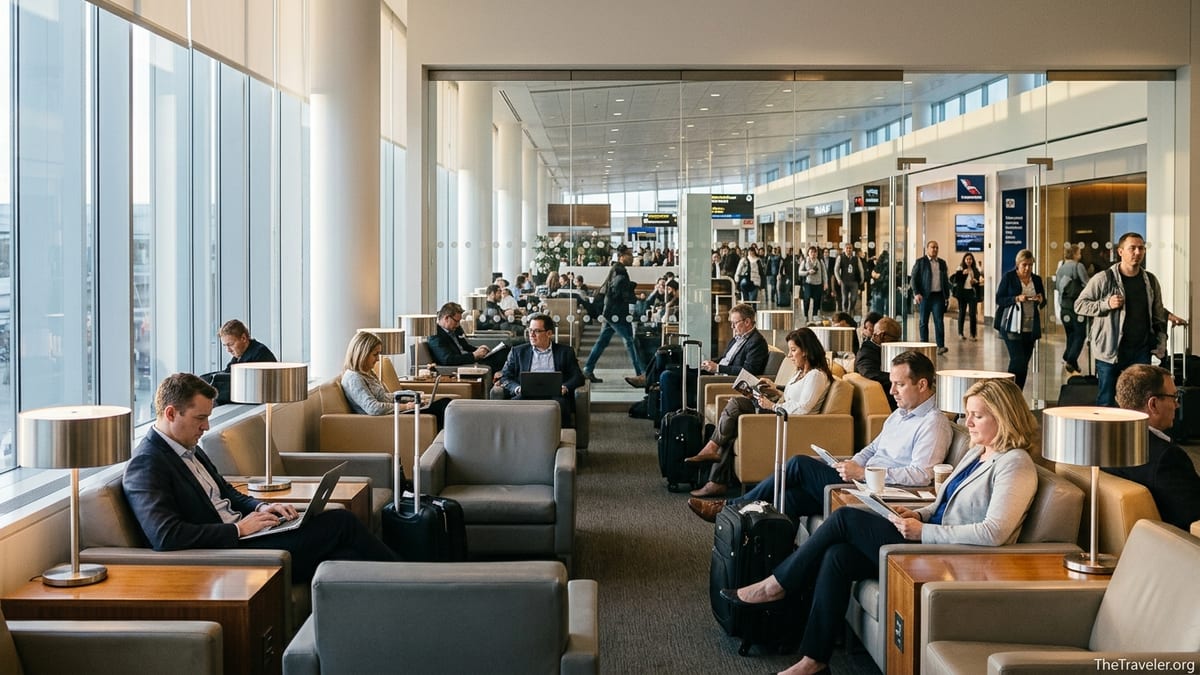
What LoungeKey Actually Is in 2026
LoungeKey is not a traditional standalone membership you buy directly. It is an airport lounge access platform that sits in the background of many premium credit and debit cards, particularly World and World Elite Mastercard products and some high-tier Visa cards. Instead of issuing its own plastic card, LoungeKey uses your payment card as the key. If your bank has enrolled that card in the LoungeKey program, you show the card or a QR code from the LoungeKey app at a participating lounge and the system bills any visit fees back to your card according to your card’s conditions.
In practice, this means that two travelers can both say they “have LoungeKey” but enjoy very different benefits. A Santander World Elite Mastercard customer in the UK, for example, currently gets unlimited complimentary LoungeKey visits for the primary and additional cardholder, while guests pay around 24 pounds per visit. A different bank’s World Elite card might offer only two free LoungeKey visits per year and then charge a similar fee per visit thereafter. The underlying network is the same, but the experience depends heavily on what your card issuer has negotiated.
The core LoungeKey network claims access to more than a thousand lounges worldwide in over one hundred countries. In many airports that translates into generic third-party spaces such as Aspire, Plaza Premium, or VIP Club lounges, plus a scattering of independent bars and restaurants that offer a set discount per visit. At some hubs, particularly in Europe, Latin America and parts of Asia, LoungeKey can be the only realistic way economy-class travelers access a quiet space for a few hours without buying a full business-class ticket.
What confuses many cardholders is that they never explicitly enrolled in LoungeKey. A Qonto business customer in Europe or an HDFC Bank corporate cardholder in India, for instance, may simply receive an email saying their card now includes LoungeKey and be invited to download the app to browse lounges. There is no additional membership fee to LoungeKey itself; the commercial relationship exists between LoungeKey and the issuing bank, which may or may not then charge you visit fees or an annual card fee to cover the cost.
How LoungeKey Works at the Airport
The mechanics of using LoungeKey are simple on paper. Before you travel, you open the LoungeKey app or web portal, type in your departure airport, and see a list of participating lounges or restaurants. Each listing shows the location (for example, Terminal 2, airside, near Gate 20), opening hours and any special rules such as maximum stay, dress code or age limits. You then walk to the lounge, present your card or QR code, and the agent processes the visit through the LoungeKey system. Depending on your card’s rules, that visit is either complimentary or billed as a charge, often around 25 to 35 US dollars per person.
Real-world experiences can be more mixed. Recent traveler reviews on consumer sites in 2025 and 2026 frequently mention arriving at an Aspire or contract lounge that technically participates in LoungeKey, only to be told access is temporarily suspended due to “overcapacity.” One traveler departing Amsterdam Schiphol described being placed on an informal waiting list for a LoungeKey-partnered lounge, watching seats visibly empty while staff prioritized airline business-class customers who had advance reservations. This is not a bug in the LoungeKey system but a consequence of how shared lounges allocate capacity among airline contracts, Priority Pass, LoungeKey, DragonPass and walk-up customers.
Another practical nuance is that not every lounge listed will accept LoungeKey at all times of day. At some airports, a contract lounge may dedicate the morning peak to airline premium passengers and only open a small number of spots to program members in the afternoon. In other cases, such as at London Gatwick or Sydney, a restaurant partnership might offer a set credit per person, typically around the equivalent of 20 to 30 US dollars off your bill when the LoungeKey QR code is scanned. A traveler connecting through Houston reported having 28 dollars deducted from a restaurant check simply by asking the staff to scan their LoungeKey access, reducing their meal cost to just a few dollars.
Payment behavior also matters. For standard bank-issued credit cards, the lounge visit charge is usually preauthorized like a normal purchase when the card is swiped. Some prepaid or crypto-linked cards that carry LoungeKey benefits may require a minimum balance because the system performs a temporary hold to verify the card. Travelers who run very low balances on such cards sometimes find their lounge access denied even though the card still works for small point-of-sale purchases.
LoungeKey vs Priority Pass: Where It Shines and Where It Falls Short
Priority Pass remains LoungeKey’s most direct competitor. Both are operated by the same parent company and both have networks of more than a thousand lounges, plus some airport restaurants and spas. Yet they differ in how travelers typically sign up and how consistent the benefit is. Priority Pass is usually a standalone membership that you buy directly, or that is bundled with premium cards like the Chase Sapphire Reserve or the Capital One Venture X. The membership tier is clear: a full Priority Pass Select membership through a US premium card normally includes unlimited visits for the cardholder and sometimes guests, with published guest fees when applicable.
LoungeKey, by contrast, rarely presents itself directly to the consumer. It is almost always bundled quietly into bank products. That can be a strength if your card offers truly unlimited complimentary visits. An HSBC Premier World Elite Mastercard customer in some markets, for instance, can access the LoungeKey network as often as they travel without paying per-visit fees, effectively turning their card’s annual fee into a flat subscription for lounge access. For someone flying out of London, Madrid, Dubai and Singapore several times a year, that can represent substantial value.
On the other hand, many mid-tier cards offer LoungeKey with strings attached. A World Mastercard issued by a regional bank might advertise “airport lounge access” prominently in marketing material, but the fine print limits the cardholder to two complimentary LoungeKey visits per year, then charges around 25 to 30 US dollars per visit thereafter. A traveler who believes they have unlimited lounge access could easily rack up 100 dollars or more in unexpected charges during a busy family holiday if they bring guests into a lounge at a major hub.
Network differences are also worth noting. In some airports, the Priority Pass and LoungeKey apps list exactly the same lounges, while in others one program has a stronger presence. At certain Middle Eastern hubs, for example, Priority Pass cards issued by American firms may have access to a particular contract lounge that is not visible in the LoungeKey directory, while at secondary Brazilian or Eastern European airports, LoungeKey might have one or two local partners that Priority Pass does not list. DragonPass, another global competitor, complicates this picture further by partnering with different local operators in markets like China and parts of Europe, which means no single program dominates everywhere.
Real-World Comparisons: LoungeKey, DragonPass and Airline Lounges
To understand where LoungeKey fits in the broader lounge ecosystem, it helps to look at how a typical long-haul trip might play out across multiple airports. Consider a traveler flying economy from New York to Lisbon via London. At New York JFK, they may find that none of the major US airline-branded lounges accept access programs at all; entry is restricted to passengers holding business-class tickets or high elite status. Their LoungeKey benefit is effectively useless here unless there is a third-party club like the Wingtips lounge participating on the day of travel.
At London Heathrow, the picture improves. Third-party lounges such as Plaza Premium and certain Aspire lounges in Terminals 2, 3 and 5 often partner with LoungeKey, Priority Pass and DragonPass. If that traveler holds a premium Mastercard with LoungeKey included and has not yet exhausted any annual visit allocation, they can present their card and enjoy a shower, buffet and workspace for a few hours between flights. A Priority Pass member arriving at the same desk would be treated almost identically, aside from different back-end billing rules.
Now compare this with DragonPass. At some European airports studied in recent guides in early 2026, DragonPass and LoungeKey shared a high percentage of lounges, but each also had unique locations, particularly in Asia. A traveler based in Paris but flying frequently to Shanghai or Guangzhou for work might find that DragonPass offers better coverage and more stable acceptance in Chinese domestic terminals than LoungeKey or Priority Pass, thanks to local partnerships. If that same traveler also relies heavily on London, Madrid and Frankfurt, however, LoungeKey through a European World Elite Mastercard may still cover most of their needs.
Side by side with airline-operated lounges, all three independent programs have a structural disadvantage: they rarely get priority when space is tight. A passenger flying Qatar Airways business class into Doha or Singapore Airlines business into Changi will almost certainly be directed to the airline’s own lounge, with guaranteed entry. Someone holding only a LoungeKey-eligible card may see a generic contract lounge listed in the app but find the doors closed at peak times because airline premium passengers have already filled the space. This dynamic explains many of the “hit and miss” comments travelers make about LoungeKey on public review platforms.
The Hidden Downsides: Crowding, Inconsistent Rules and Customer Service
On paper, LoungeKey offers a neat proposition: use the card you already carry to unlock a quiet space at more than a thousand airports. In practice, several recurring themes emerge from recent reviews and traveler anecdotes. The first is crowding and access denials. As air travel demand has recovered strongly, many lounges have become busier than they were pre-2020. At flagship European hubs such as Amsterdam Schiphol or Frankfurt, it is increasingly common to encounter waiting lists or outright refusals around morning and evening peaks, even when the lounge still has a few empty seats.
The second is a lack of transparency around charges. Some cardholders assume that if their bank advertises “free airport lounge access” then every LoungeKey visit is complimentary. In reality, the bank might only cover a limited number of visits per year and then automatically bill subsequent entries at a fixed fee per person. Those charges often appear on the credit card statement days or weeks later with obscure descriptors, leaving occasional travelers puzzled. In the UK, for example, a Barclaycard Avios Plus customer does not receive unlimited free access, but rather discounted entry through LoungeKey at roughly the mid-twenties in pounds per person per visit.
A third pain point is customer service. When things go wrong, it is often unclear who is responsible. If a lounge’s card reader shows an error code and denies entry, the traveler may be told to contact their bank, while the bank claims the issue lies with LoungeKey or the local lounge operator. Public reviews in 2025 and 2026 describe months-long attempts to resolve disputes over denied entries or overcharges at airport restaurants that participate in LoungeKey. Because the service is embedded within the card rather than purchased directly, travelers rarely have a single clear support channel to escalate complaints.
There are also some smaller operational quirks. Not all lounges admit children on the same terms as adults; some charge a full adult visit fee through LoungeKey even for young teenagers, while others have minimum age limits. A family of four hoping to relax together might discover that the only participating lounge in a terminal restricts access to passengers aged sixteen and above, effectively nullifying the benefit for families traveling with younger kids. Similarly, some contract lounges impose strict three-hour maximum stays and may refuse reentry on the same day, limiting the value for long layovers.
Where LoungeKey Delivers Solid Value
Despite its drawbacks, LoungeKey can be very compelling in certain scenarios. One of the strongest use cases is for frequent travelers whose bank genuinely offers unlimited complimentary access. A corporate traveler based in São Paulo, for instance, might hold a high-tier Mastercard that grants unlimited LoungeKey entries at domestic and international terminals. If they regularly depart from São Paulo Guarulhos, they might rely on a LoungeKey-partnered space in Terminal 2 between long-haul flights and use smaller partner lounges in cities like Brasília, Recife or Fortaleza on shorter routes. Over the course of a year, the value of those visits can far exceed the card’s annual fee.
LoungeKey is also powerful when combined with a bank account or card that you already need for unrelated reasons. A European entrepreneur who uses Qonto or a similar fintech platform for business banking might receive LoungeKey access on their premium debit card without paying extra beyond the account subscription. In that case, even two or three comfortable lounge visits per year before client meetings can justify the incremental cost of choosing a higher-tier plan, especially when factoring in Wi-Fi, drinks and basic meals that would otherwise be purchased in the public terminal at inflated prices.
Another strength is geographic breadth. While no single program covers every lounge in the world, LoungeKey’s network reaches many secondary and regional airports that still lack airline-branded clubs. In parts of Eastern Europe, the Middle East and South America, small independent lounges often rely on traffic from access programs to survive. For a traveler hopping between such cities, LoungeKey can serve as a kind of safety net, ensuring at least one quiet space exists somewhere in the terminal more often than not.
Finally, the simplicity of not carrying an extra card matters for some. Travelers who dislike thick wallets may appreciate that their existing payment card or a QR code on their phone is all they need to enter lounges, instead of juggling a separate Priority Pass plastic card. For digital-first users who keep boarding passes, hotel confirmations and payment cards in their phone, a LoungeKey QR code in the app fits neatly into that ecosystem.
Choosing Between LoungeKey and Its Competitors
For travelers trying to decide between LoungeKey, Priority Pass, DragonPass or simply paying for airline lounge memberships, the most honest answer is that none of the programs is universally best. The right choice depends on your home airport, your typical routes, and which bank cards you realistically want to carry. If you are a US-based traveler who mostly flies on one major airline such as Delta or United, an airline-branded credit card that includes that carrier’s own lounge membership may deliver more consistent access at your usual hubs than any independent program, including LoungeKey.
If you are a global traveler who uses multiple airlines and lives near an airport with robust third-party lounges, the calculation shifts. Priority Pass remains the most transparent for those willing to pay a membership fee or hold a premium card like the American Express Platinum or Chase Sapphire Reserve, since the access rules and guest fees are clearly spelled out. DragonPass can be particularly attractive to those with frequent travel to China or certain parts of Europe where it has strong relationships with local operators and rail lounges.
LoungeKey makes the most sense when it is effectively “free” on a card you would carry anyway or when it genuinely offers unlimited complimentary access. A UK-based professional who already maintains a Santander World Elite Mastercard for its insurance benefits and foreign exchange perks, for example, might view the unlimited LoungeKey access as a bonus that saves them from buying a separate lounge membership. In contrast, a traveler whose bank only includes two free LoungeKey visits per year would likely be better served by a dedicated Priority Pass membership if they intend to visit lounges monthly.
One pragmatic strategy many frequent travelers adopt is to layer benefits. A traveler might rely on their airline status or airline card for access at their home hub, keep a Priority Pass through a premium credit card for broad global coverage, and treat any LoungeKey access on a Mastercard as a backup option. In that context, LoungeKey becomes an extra doorway rather than the sole solution, which helps blunt the frustration when a particular lounge denies entry due to capacity constraints.
The Takeaway
The truth about LoungeKey, after comparing it with Priority Pass, DragonPass and airline lounges, is that it is neither a scam nor a silver bullet. It is a flexible, behind-the-scenes access platform that can be excellent value in the right circumstances and distinctly underwhelming in the wrong ones. Because it is tied so closely to specific credit and debit cards, its real-world usefulness depends more on your bank’s small print and your travel patterns than on any single headline number of lounges.
If you hold a card that offers unlimited complimentary LoungeKey access and you frequently travel through airports with participating lounges, the program can quietly transform your airport experience, turning long waits into productive or restful time. If your card only grants a couple of visits per year and charges steep fees thereafter, or if you mostly use airports where airline lounges dominate, LoungeKey is better seen as an occasional perk than a core benefit.
The most important step is to treat lounge access like any other travel product: verify the details before you rely on them. Check your card’s exact LoungeKey terms, look up specific lounges in the app for your upcoming trip, and have a backup plan in case capacity is restricted. Used with realistic expectations, LoungeKey can still earn its place in a modern traveler’s toolkit, but it works best as one part of a broader lounge access strategy rather than your only line of defense against crowded departure halls.
FAQ
Q1. Is LoungeKey the same as Priority Pass?
LoungeKey and Priority Pass are sister programs with overlapping lounge networks, but they are not identical. Priority Pass is usually a standalone membership or bundled with premium cards and uses its own physical or digital card for access. LoungeKey is embedded into specific payment cards, mainly World and World Elite Mastercards and some Visa products, and uses your payment card or a QR code instead of a separate membership card.
Q2. How do I know if my card includes LoungeKey and what it costs?
The only reliable way is to check your bank or card issuer’s benefits guide and then cross-check in the LoungeKey app or website. Marketing material that mentions “airport lounge access” may hide important details such as a limited number of free visits, guest fees or geographic restrictions. Do not assume that access is unlimited or free until you see the exact conditions in writing.
Q3. Why was I refused entry to a LoungeKey lounge even though it showed in the app?
Most refusals are due to capacity limits or time-of-day restrictions. Shared lounges give priority to airline business-class customers and may cap the number of program members admitted during peak hours. Even if a lounge appears in the LoungeKey directory, staff can temporarily suspend access for members when the space is too busy, or when a particular airline has reserved most of the seats.
Q4. Are LoungeKey visits really free with my credit card?
Sometimes, but not always. Some premium cards offer unlimited complimentary LoungeKey visits, while others include only a small number of free entries per year and then bill extra visits at a fixed fee per person. A few cards offer only discounted rates rather than free entry. Always check how many visits are included and what the per-visit charge will be once you exceed that allowance.
Q5. Is LoungeKey worth it compared with paying for an airline lounge membership?
It depends on your travel pattern. If you mainly use one airline and one or two hubs, a paid membership in that airline’s own lounge program may provide more consistent access and better facilities. If you fly multiple airlines and pass through a variety of airports, complimentary or unlimited LoungeKey access on a premium card can be more flexible. For heavy travelers, combining an airline lounge membership with an independent program can offer the best overall coverage.
Q6. Does LoungeKey give access to airline-branded lounges?
Only in some cases. LoungeKey mostly partners with third-party contract lounges and independent clubs. A few airline-branded lounges participate, often when they operate as hybrid spaces serving several airlines and programs. Many flagship airline lounges at major hubs do not accept LoungeKey, so you should check the app for each airport rather than assuming entry to any lounge with an airline logo.
Q7. Can I take guests or children into a LoungeKey lounge?
Guest policies vary by lounge and by card. Some lounges allow guests for a fee that is charged through LoungeKey to your card, while others limit or prohibit guests at busy times. Children may be admitted either free or at the same rate as adults, and some lounges set minimum age limits. Always review the specific lounge listing for guest rules and be prepared that bringing a family of four can quickly multiply visit fees if they are not complimentary.
Q8. How does LoungeKey compare with DragonPass?
Both programs offer global lounge networks and are commonly bundled with premium bank cards. In Europe and parts of the Middle East their coverage often overlaps, while DragonPass may have an edge in some Asian markets, particularly in China, where it partners with more local operators and even rail lounges. LoungeKey may be easier to access if your main bank card already includes it, while DragonPass can be more attractive for travelers whose routes align closely with its strongest regions.
Q9. Do I need to download the LoungeKey app to use my benefit?
In many cases you can access lounges simply by presenting your enrolled payment card, because the card itself acts as your membership identifier. However, the LoungeKey app is useful for checking which lounges participate at a given airport, reviewing opening hours and seeing any access restrictions. Some issuers also provide single-use QR codes or digital passes that must be shown via the app or email.
Q10. What is the best way to avoid unexpected LoungeKey charges?
The safest approach is to treat every lounge visit as potentially chargeable unless your card terms explicitly say otherwise. Before traveling, log in to your bank account or benefits portal and confirm how many free visits, if any, you have and what the per-visit fee is for additional entries or guests. After each trip, review your statement for lounge transactions so you understand exactly how your issuer is billing LoungeKey visits.