


More news on this day
The announcement of a new high speed TGV link between Brussels and Basel, running via Strasbourg and several French Grand Est stations from July 2027, has sparked renewed frustration in Luxembourg, where travellers and politicians see the route choice as another missed chance to anchor the Grand Duchy on Europe’s high speed rail map.
Get the latest news straight to your inbox!
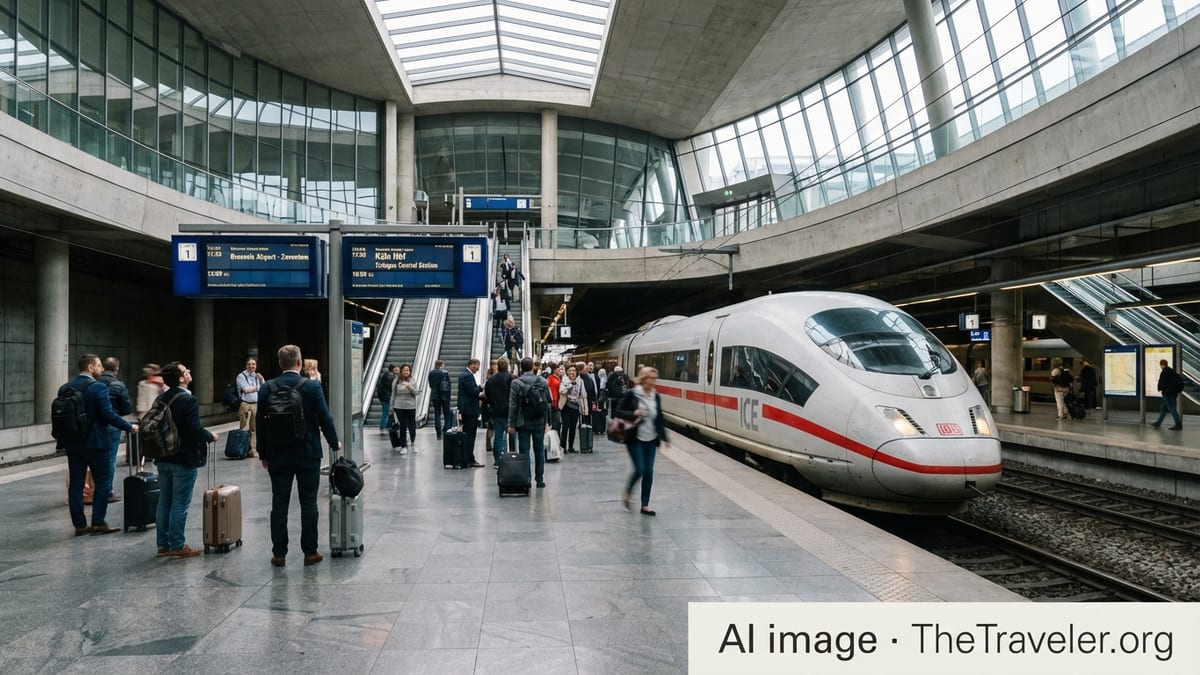
A Flagship Link That Skips a European Capital
Belgian, French and Swiss rail operators plan to extend the existing Brussels–Strasbourg TGV INOUI into Basel as a weekend pilot service from summer 2027, creating a direct daytime connection between the three countries’ major rail hubs. Timetables published by the companies and summarised by European travel media indicate a morning departure from Brussels Midi, with intermediate stops at Lille Europe, Charles de Gaulle Airport TGV, Champagne Ardenne TGV, Meuse TGV, Lorraine TGV and Strasbourg, before arriving in Basel around midday.
For passengers in Switzerland, the new service is promoted as a gateway to northern Europe, with easy same day connections in Brussels towards the Netherlands and new rail options towards London via Lille. For travellers in Belgium, it offers a rare direct daytime link into Switzerland, complementing existing overnight services planned by other operators.
Conspicuously absent from the stop list is Luxembourg. The Grand Duchy sits geographically close to the corridor between Brussels and Basel and hosts key European Union institutions, yet the new high speed service will pass far to the west, using existing French high speed lines that were designed to link Paris and Strasbourg and to connect regional TGV stations in Champagne and Lorraine.
The decision has revived an old debate in Luxembourg about whether the country is being sidelined in the roll out of Europe’s high speed network, particularly when new international routes are framed as tools for shifting travellers from air to rail.
Memories of the Jean Monnet and the Lost Brussels–Basel Route
The discontent is sharpened by the fact that a Brussels–Basel train via Luxembourg once existed. The conventional EuroCity service known as the Jean Monnet linked Brussels and Strasbourg via Luxembourg for years and was later extended onward to Basel. The route, frequently highlighted in historical rail overviews, was seen as symbolically important because it linked the three cities that share core European Union institutions.
That daytime service was withdrawn in the 2000s as operators reoriented traffic towards high speed lines through France and as rail companies consolidated cross border operations. Subsequent policy discussions in Brussels and Luxembourg floated the EuroCap Rail concept, a proposed high speed axis between Brussels, Luxembourg City and Strasbourg that would have modernised the corridor and preserved a direct link between the three “European capitals.” Although funds were earmarked to upgrade sections of track between Brussels and Luxembourg, the full high speed project never materialised.
The absence of a modern successor to the Jean Monnet means that today travellers wishing to go from Brussels to Basel via Luxembourg must piece together multiple regional and intercity services, often with tight connections in Luxembourg City and eastern France. Publicly available journey planners show travel times considerably longer than the projected five and a half hours for the future TGV link via Strasbourg.
For long time rail users in the region, the return of a Brussels–Basel direct train, this time using French high speed lines and bypassing Luxembourg entirely, is emblematic of how the Grand Duchy has slipped from the main international map despite its central location.
Political Questions in Luxembourg’s Chamber
News of the Brussels–Basel pilot has already reached Luxembourg’s political arena. Parliamentary documents published by the Chamber of Deputies and commentary from the Green Party indicate that lawmakers have submitted questions about why the country was omitted from the project and what steps the government has taken in discussions with neighbouring rail operators.
One line of questioning draws attention to the historic Brussels–Basel route through Luxembourg and asks whether the new TGV could have followed a similar path if infrastructure upgrades had been prioritised. Another focuses on potential economic and environmental impacts, arguing that faster cross border rail connections could support both cross frontier commuting in the Greater Region and the European Union’s objective of shifting medium haul journeys from planes to trains.
The government has in parallel been highlighting domestic mobility initiatives, including plans for a “tram rapide” and ongoing upgrades to the conventional Brussels–Luxembourg rail line. Publicly available government material emphasises capacity improvements and better reliability rather than a step change to genuine high speed operations. For critics, these incremental investments fall short of what would have been required to place Luxembourg on the routing of a new international TGV.
The parliamentary exchanges underline a broader tension between national investments focused on internal mobility and the cross border infrastructure needed to attract international high speed services that are planned and operated at a multinational level.
Economic Stakes for a Small but Strategic Hub
Beyond symbolism, the bypass has potential economic implications. Luxembourg functions as a financial hub and administrative centre with a workforce and visitor base drawn heavily from neighbouring countries. Strong rail links are seen by business groups and regional planners as a key factor in maintaining the country’s appeal and in managing congestion on already busy motorways.
International rail connectivity also shapes tourism flows. Travel forums and regional coverage frequently note that journeys between Basel, Luxembourg and Brussels currently require several changes, with some would be visitors deterred by long travel times or late night departures. A direct Brussels–Basel TGV using high speed tracks in France may further incentivise passengers to route their trips through Strasbourg, Lille or Paris instead of stopping in Luxembourg.
Advocates of stronger rail integration argue that missing out on flagship services risks reinforcing a perception of Luxembourg as a cul de sac on Europe’s rail map rather than a through route. They contend that such perceptions can slowly influence where international conferences, corporate events or new cross border commuting patterns develop, even if the immediate passenger numbers on a single TGV are modest.
Others counter that the country’s small size and the high cost of building high speed lines through its hilly terrain make a dedicated TGV corridor economically challenging, suggesting that targeted upgrades to conventional lines and good connections into nearby high speed hubs in France and Belgium may be a more realistic strategy.
What the Bypass Reveals About Europe’s High Speed Priorities
The routing of the Brussels–Basel TGV through France rather than via Luxembourg reflects wider trends in European rail planning. High speed networks are often constructed along corridors where dedicated infrastructure already exists or can be added in relatively straight alignments, linking major population centres that offer strong demand. In this case, developers can rely on the existing TGV Est line, intermediate regional TGV stations and the role of Strasbourg as both a political centre and a gateway to eastern France and Germany.
Technical studies by European institutions and transport agencies have repeatedly highlighted the constraints on the Brussels–Luxembourg corridor, including curving alignments, environmental considerations and local opposition to new high speed tracks. Upgrading the existing line to full high speed standards would require significant investment and prolonged disruption, with uncertain returns compared with strengthening already successful high speed routes in France.
As a result, the new Brussels–Basel TGV can be positioned as a relatively low risk extension of an existing high speed service, fitting neatly into current operating patterns and timetables. For the rail companies involved, the pilot format, with one return trip on weekends, allows them to test commercial performance and adjust without the complexity of introducing a new trunk route through multiple infrastructure managers.
For Luxembourg, the episode reinforces the challenge of translating its symbolic status as an EU capital into concrete transport infrastructure. As discussions about the future of EuroCap Rail and broader European high speed corridors continue in Brussels and national capitals, the Grand Duchy faces a familiar task: making the case that inclusion in such projects is about more than prestige, touching on climate goals, regional cohesion and the everyday travel choices of residents across the heart of Europe.