


More news on this day
Once marketed as an offbeat, budget friendly capital with striking Soviet boulevards and café culture, Minsk now sits in a grey zone for Western travelers, where everyday urban safety contrasts sharply with some of the starkest government travel warnings in Europe.
Get the latest news straight to your inbox!
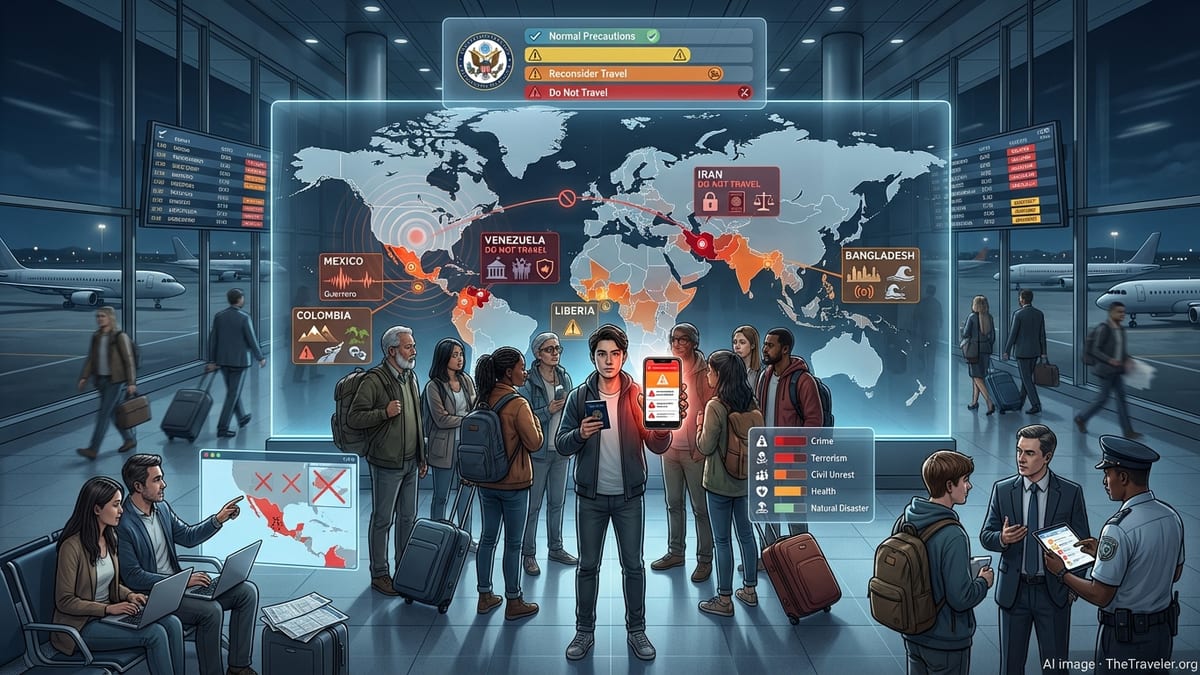
Severe Government Advisories Shape the Risk Picture
For Western travelers, the most important development is not crime in Minsk, but politics and geopolitics. The United States currently assigns Belarus its highest advisory level, “Level 4: Do not travel,” citing unrest, the risk of arbitrary detention and the extremely limited ability of U.S. officials to assist citizens in the country. The latest update to that advisory, dated December 29, 2025, maintains this top tier warning and specifically highlights concerns related to the war in Ukraine and the internal security climate in Belarus.
European governments have followed a similar path. The United Kingdom’s Foreign, Commonwealth & Development Office advises against all travel to Belarus, noting that travelers could face a significant risk of arrest if they have ever engaged in activity now deemed illegal by the Belarusian authorities. The guidance, current as of mid 2026, also warns that direct conflict from Russia’s war against Ukraine could, in a low probability scenario, spread onto Belarusian territory.
Other European foreign ministries, including those of Belgium and several EU partners, echo this broad “avoid travel” stance. Publicly available advisories emphasize that a decision to ignore such guidance may invalidate travel insurance, leaving visitors without coverage if they face medical emergencies, disruption or evacuation costs while in Minsk.
These high level warnings do not claim that violent street crime in Minsk is out of control; instead, they frame the primary risks as political and legal. For Western tourists, this means the formal risk profile is less about being mugged outside a bar and more about the consequences of being caught up in a system where due process and consular access cannot be assumed.
On the Ground in Minsk: Low Street Crime, High Political Sensitivity
Available accounts from recent independent travelers describe a capital that feels outwardly calm and, in many ways, orderly. Minsk’s broad avenues, extensive CCTV coverage and visible police presence contribute to a perception of low petty crime, particularly in central districts popular with visitors. Comparative data compiled before the current crisis already placed Belarus on the lower end of the violent crime spectrum in Eastern Europe, and travelers in 2025 and 2026 continue to report that they felt physically safe walking around main boulevards and parks.
However, specialists point out that Belarus is an authoritarian state with a track record of politically motivated detentions. The U.S. advisory cites the possibility of arbitrary enforcement of laws and warns that dual nationals, or visitors with historic ties to Belarus, have in some cases been prevented from leaving the country. The UK’s guidance similarly notes that social media posts, activism abroad or participation in protests related to Belarus can attract attention from security services if a traveler’s identity becomes known.
Publicly available information suggests that tourists who keep a low profile are unlikely to be targeted, but the margin for miscalculation is narrower than in most European capitals. Photography of certain government buildings, participation in demonstrations, or even carrying symbols associated with opposition movements can draw scrutiny that would be unimaginable in cities such as Warsaw or Prague.
The result is a paradox for Western visitors considering Minsk: day to day life in the city can appear relaxed, prices remain relatively low by regional standards, and the urban core feels safe in conventional terms, yet the overarching environment is tightly controlled. Security, in this context, is maintained by a state that places a premium on monitoring and limiting dissent, and this shapes the nature of risk for foreign guests.
Access, Connectivity and Insurance Challenges
Even for travelers willing to accept the political and legal risks, getting to Minsk and around Belarus is more complicated than it was a few years ago. Following Belarus’s support for Russia’s invasion of Ukraine and the 2021 forced diversion of a Ryanair flight to Minsk, airspace restrictions led Western carriers to pull out of the Belarusian market. The U.S. Federal Aviation Administration has issued a notice restricting U.S. operators from using the Minsk flight information region, and most direct connections from the European Union have disappeared.
As a result, Western travelers now typically enter Belarus via third countries, most often through land borders with Latvia, Lithuania, or by flying via hubs in countries that maintain air links with Minsk. These routes have periodically been disrupted by diplomatic disputes and sanctions, creating a fluid situation in which crossings that are open one month may be heavily restricted the next.
Insurance is another practical obstacle. UK and EU based comparison sites and travel insurers frequently exclude cover for destinations where a traveler’s government advises against all travel. The UK’s own guidance explicitly warns that a decision to visit Belarus against official advice can invalidate standard policies. Travelers from North America encounter similar clauses, meaning that anyone choosing to visit Minsk may need specialist high risk coverage, often at significantly higher premiums than mainstream holiday insurance.
Connectivity inside the country also raises questions. Some Western embassies advise visitors to consider limiting the electronic devices they carry, to log out of social media accounts before arrival and to assume that digital communications could be monitored. This advice reflects wider concerns about surveillance, and while it does not prevent a trip, it adds another layer of preparation for travelers used to freely posting and messaging while abroad.
Who Is Still Going, and Under What Conditions?
Despite the layered warnings, Minsk has not disappeared from travel itineraries entirely. Reports from online travel communities in 2025 and 2026 describe visits by individual tourists, including from the UK, Switzerland and other Western countries, often motivated by interest in Soviet era architecture, Cold War history, or family ties. These travelers generally portray Minsk as clean and calm, with friendly local interactions and no overt hostility toward foreign guests.
At the same time, these accounts usually acknowledge that their experiences conflict with the severity of official advisories. Many emphasize that they avoided political discussions, refrained from photographing sensitive sites, limited nightlife to mainstream venues and carefully managed their border crossings. Some note that friends or family were uneasy about their decision to go, precisely because of the Level 4 and “avoid all travel” language used by their governments.
Travel professionals who track risk trends argue that this gap between individual anecdote and state level warning is not unique to Belarus. Similar patterns appear in other countries where everyday crime is low but the potential consequences of political or legal trouble are extreme. In such contexts, a trip may proceed without incident for most visitors, yet the downside scenario is far more serious than in a typical city break destination.
For Western tourists weighing Minsk against alternative city trips in the region, this distinction matters. Neighboring capitals like Vilnius, Warsaw or Riga offer comparable cultural and architectural interest without the same level of consular limitations, sanctions related complications or elevated risk of arbitrary detention. That comparison increasingly shapes how tour operators and individual travelers assess whether a visit to Minsk is acceptable, or simply a step too far in 2026.
How Western Travelers Can Interpret the Minsk Risk Debate
The central question for Western visitors is not whether Minsk has attractions; it clearly does, from monumental avenues and war memorials to emerging café districts and Soviet modernist housing estates. The real issue is whether the combination of political risk, travel disruption and limited consular protection is acceptable compared with the potential rewards of an off the beaten path experience.
Government advisories, by design, take a conservative view. A “do not travel” designation is reserved for destinations where officials judge that life threatening or liberty threatening risks justify broad avoidance. For Belarus, these judgments are tied to its role in the Ukraine conflict, its internal crackdown on dissent and its record on detentions, rather than to any surge in urban crime.
Individual travelers, especially those with experience in higher risk environments, sometimes adopt a different calculus. They may weigh visible calm on the streets of Minsk, relatively low prices and cultural curiosity more heavily than remote but serious risks. Others, particularly less experienced tourists or those dependent on standard insurance, may conclude that as long as similarly interesting and culturally rich alternatives exist in neighboring countries, the prudent choice is to postpone Belarus.
For now, Minsk remains a city where the visual normality of European cafés and wide boulevards coexists with some of the strongest travel warnings issued anywhere on the continent. Western visitors contemplating a trip in 2026 are navigating not only maps and timetables, but also a layered debate about safety that stretches from consular notices to first hand traveler accounts.