


More news on this day
France and key cruise regions from the Mediterranean to the Caribbean are seeing a surge in demand for luxury sailings, as a new generation of high-end ships enters service and cruise lines expand longer, more immersive itineraries for affluent travelers.
Get the latest news straight to your inbox!
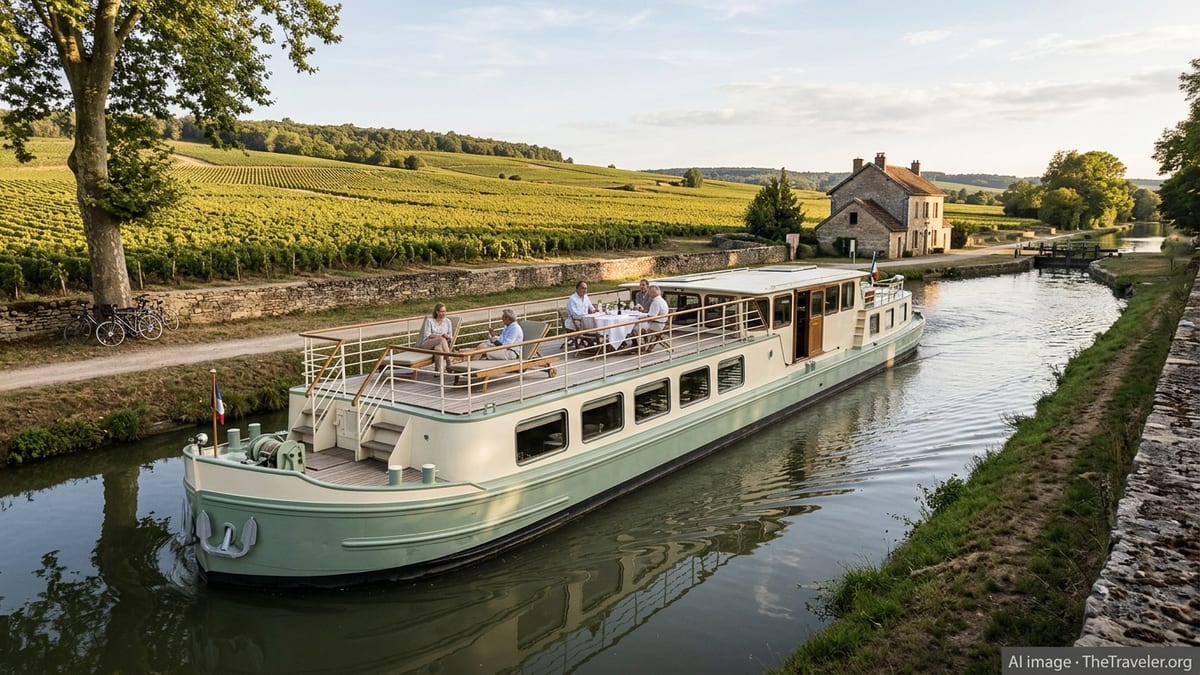
Luxury Demand Climbs in Europe and the Mediterranean
Recent industry data indicate that Europe has become a focal point for the global luxury cruise rebound, with passenger numbers and cruise line spending rising steadily after the pandemic. A 2024 economic impact report from Cruise Lines International Association (CLIA) shows cruise line purchases in Europe reached 13.7 billion euros in 2024, up more than 20 percent year over year, reflecting higher deployment and stronger demand across the region.
France is benefiting directly from this momentum. Forecasts from France’s Mediterranean maritime authorities for 2025 point to continued growth in calls at major ports including Marseille and Nice, with several hundred cruise calls scheduled and a rising share from newer, more efficient ships targeting premium and luxury markets. Public port statistics highlight not only more calls but a shift toward vessels with higher per-passenger spending, particularly on boutique and ultra-luxury itineraries.
Operators are responding by concentrating capacity in the Mediterranean for longer seasons and by promoting shoulder-season sailings that appeal to high-end travelers seeking fewer crowds and milder weather. Marketing materials for the main luxury brands emphasize extended stays in marquee ports, small-ship access to historic harbors and curated shore programs in wine regions and coastal villages in France, Italy and Spain.
As a result, Mediterranean luxury cruising is increasingly framed as a land-focused travel experience delivered from a ship, rather than a traditional sea-focused voyage. France’s ports and nearby destinations, from Provence to the Riviera, are positioned as primary beneficiaries of this trend.
New Ultra-Luxury Ships Anchor Growth
The upturn in demand is closely linked to a wave of new high-end tonnage being deployed on European and global routes. Shipyard order books compiled in CLIA’s European market study list 25 new vessels scheduled for delivery in 2025 and 2026, including several aimed at the ultra-luxury segment with smaller capacities, suite-only accommodation and enhanced space per guest.
Among the most prominent is Silversea Cruises’ Nova-class series. The line took delivery of Silver Ray in May 2024 from the Meyer Werft yard, following sister ship Silver Nova, with both designed for high-end, low-capacity operations and advanced environmental performance. According to ship specifications published by Silversea and independent vessel registries, Silver Ray carries just over 700 guests at full occupancy and features a horizontal layout that maximizes open decks and panoramic lounges.
Silver Ray’s maiden program was centered on Europe, with a summer 2024 and 2025 season in the Mediterranean that includes calls in Spain, Italy, Greece and France. Voyage calendars released by Silversea and trade media show itineraries featuring ports such as Saint-Tropez and other Riviera destinations, as well as Spanish and Italian coastal cities, before the ship repositions to the Americas for winter deployments.
Other brands are moving in the same direction. Explora Journeys, the luxury offshoot of MSC Group, launched its second ship Explora II in 2024, complementing Explora I on itineraries across the Mediterranean, Caribbean and transatlantic routes. The company’s regional journey planner for 2024 to 2026 highlights a strategy built around longer, slow-paced “journeys,” often between marquee ports in France, Italy and Spain or between Europe and North America.
France Emerges as a High-End Cruise Gateway
French ports are emerging not only as popular ports of call but increasingly as gateways and turnaround hubs for high-yield itineraries. Official cruise activity tracking for the Mediterranean region shows Marseille on course for nearly 700 cruise calls in 2025, up from the low 600s just two years earlier, while Nice and neighboring Riviera ports continue to expand their share of small-ship and luxury traffic.
The fleet profile calling in these ports is changing alongside the volume growth. Regulatory monitoring indicates that newer, more efficient vessels now account for a growing majority of cruise calls in the French Mediterranean, with ships under 10 years of age representing a particularly strong share of scheduled 2025 calls. This newer subset includes ultra-luxury vessels such as Silver Nova and Silver Ray, along with other small and mid-sized ships in the high-end segment.
Itinerary brochures from luxury lines also underscore France’s rise as a gateway. Silversea’s 2026 Mediterranean program, for example, promotes “slow cruise” itineraries of 10 to 12 days that combine marquee ports and smaller harbors across Italy, France and Spain, often with overnight or late departures. Promotional materials describe extended time in coastal French destinations as central to the appeal for guests seeking gastronomy, vineyard excursions and culture-heavy city breaks.
This positioning is mirrored on the premium-luxury side. Explora Journeys’ open-jaw voyages regularly pair French and Italian ports, offering embarkation or disembarkation options in cities such as Marseille, Nice and Barcelona. The brand’s planning tools highlight the ability to link multiple journeys into longer “grand journeys,” effectively turning France into a launchpad for extended high-end cruising around the Mediterranean and beyond.
Global Voyages Extend Beyond Europe
The surge in luxury demand is not confined to Europe, and the newest ships are being deployed globally to balance strong Mediterranean seasons with long-haul itineraries. Schedules published by Silversea and summarized by trade media show Silver Ray operating a full summer in the Mediterranean before crossing the Atlantic in December 2024 to serve the Caribbean, Central and South America, with voyages between ports such as Fort Lauderdale, Rio de Janeiro, Bridgetown and Buenos Aires.
These repositioning voyages, often running two weeks or more, appeal strongly to repeat luxury cruisers who favor sea days, extended time on board and port-intensive sequences at each end of the crossing. The pattern is echoed by Explora Journeys, whose journey planner details a series of transatlantic and transoceanic trips linking Europe with the Caribbean and North America between 2024 and 2026, frequently using Western Mediterranean ports as starting or ending points.
Beyond the Atlantic, the latest generation of luxury ships is being scheduled across Alaska, Asia, the South Pacific and South America. Silversea’s broader fleet, including its expedition vessels, now spans all seven continents, while Explora Journeys has mapped out itineraries to regions such as Northern Europe, Iceland and Greenland. This global reach allows lines to respond quickly to shifting demand while maintaining strong coverage for core source markets in Europe, North America and emerging luxury markets.
For travelers boarding in France or elsewhere in Europe, these developments translate into more options for long, one-way journeys that combine Mediterranean sailing with far-flung destinations. It also reflects a clear strategic emphasis by cruise operators on using their newest and most luxurious hardware to anchor multi-region deployment plans.
Sustainability and Design Shape the High-End Offer
Environmental performance and onboard design are becoming defining features of the new luxury segment, as operators seek to differentiate their products while aligning with evolving regulations in Europe and beyond. Technical documentation and shipyard announcements for the Nova-class ships point to hybrid energy systems, including liquefied natural gas as a primary fuel, batteries and shore power connectivity where available, all aimed at significantly reducing emissions compared with previous generations.
Silver Ray and Silver Nova are also marketed around their open architecture, with expansive outward-facing public spaces, large balconies and glass-wrapped lounges designed to keep the destination in view. Trade and consumer coverage notes that this approach is particularly suited to scenic cruising in regions such as the Mediterranean and the fjords, but is equally relevant for relaxed days at sea on longer repositioning voyages.
Explora II and its sister ship adopt a similar philosophy, emphasizing generous outdoor space, multiple pools and an array of indoor-outdoor dining venues. According to technical and promotional information released by Explora Journeys and its shipbuilder, the vessels are built to a relatively low guest density, a key selling point for travelers seeking privacy and space in the ultra-premium tier.
As more of these high-end ships enter service, industry forecasts suggest that France and other key European gateways will see continued growth in luxury and ultra-luxury cruise traffic. With more capacity, longer seasons and increasingly global itineraries, the segment is positioned to remain one of the most dynamic corners of the cruise market over the next several years.
CLIA Europe 2024 Cruise Industry Economic Contribution Report
French Mediterranean Cruise Activity 2025 Overview