


More news on this day
Flight disruption across the United Kingdom is continuing into a second day after a major technical issue in the country’s air traffic control system forced airlines to cancel and delay hundreds of services at the height of the summer travel season.
Get the latest news straight to your inbox!
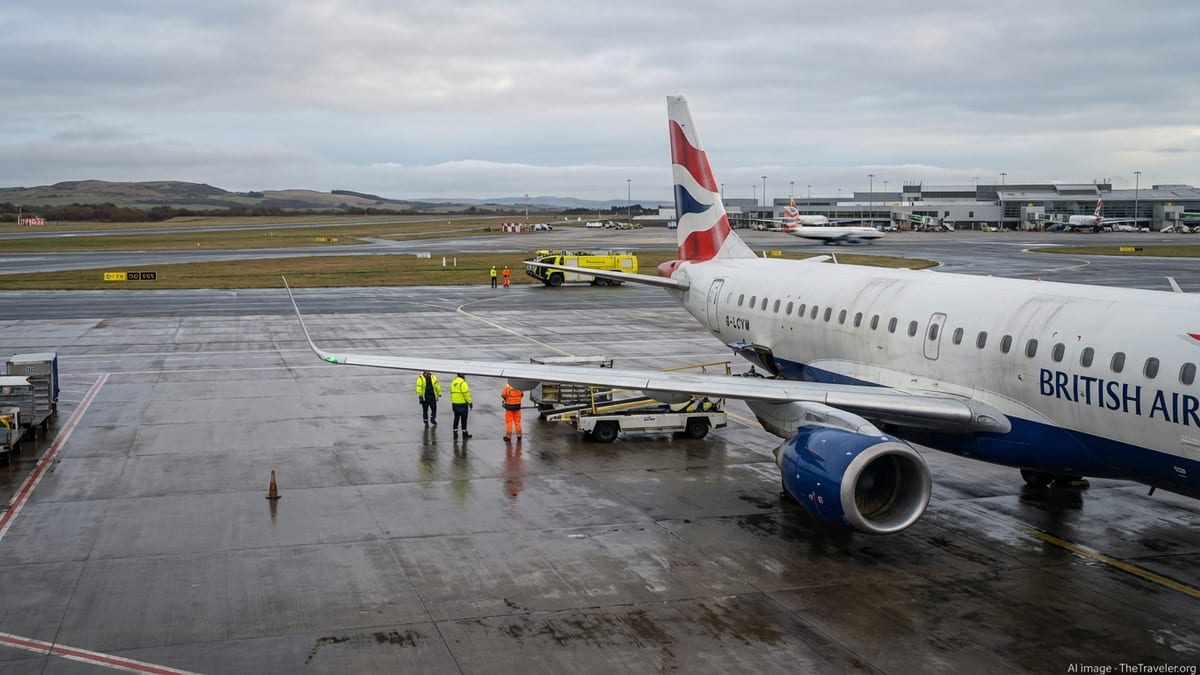
Technical failure triggers nationwide restrictions
Publicly available information shows that the disruption began on 28 August 2023 when National Air Traffic Services (NATS), the UK’s main air navigation provider, experienced a fault in its automated flight planning system. The problem affected the processing of flight plans used to safely manage aircraft in UK airspace, prompting controllers to move to manual procedures.
Reports indicate that the system failure did not affect the safety of aircraft already in the sky, but it significantly reduced the number of flights that could be handled at any one time. To keep traffic at manageable levels, severe restrictions were placed on departures and arrivals, causing long delays and widespread cancellations at major hubs including London Heathrow, London Gatwick and airports across the country.
According to published coverage from flight-tracking services and broadcasters, more than 600 flights to and from UK airports were cancelled on the first full day of disruption, with hundreds more heavily delayed. Airlines reported aircraft and crew becoming out of position, creating knock-on problems that extended beyond the period of the initial fault.
NATS later stated via public updates that engineers had “identified and remedied” the technical issue, but confirmed that controllers continued to enter flight plans manually for a period while the system recovered. This created a backlog of flights that could not be cleared immediately, even after the root problem was addressed.
Knock-on delays for airports and airlines
Airports across the UK and surrounding regions have warned travellers that disruption is likely to continue while schedules are reset. London Luton Airport advised passengers through social media and website updates that flights could be subject to delay or cancellation as a result of the air traffic control problems, urging travellers to check directly with their airline before leaving for the airport. ([aerotime.aero](https://www.aerotime.aero/articles/atc-disruptions-continue-uk?utm_source=openai))
Heathrow and other major hubs issued similar notices stating that some services would continue to be disrupted even after the technical issue was resolved. Publicly available information from these airports described aircraft and crew being out of position, meaning certain routes could not resume normal operation until planes were returned to their regular rotations. ([aerotime.aero](https://www.aerotime.aero/articles/atc-disruptions-continue-uk?utm_source=openai))
Regional airports and island gateways have also reported difficulties. Coverage from the Channel Islands detailed ongoing delays and cancellations to and from Jersey and Guernsey, where passengers faced queues, rebookings and overnight stays as airlines attempted to recover their schedules. ([itv.com](https://www.itv.com/news/channel/2023-08-28/flights-delayed-to-and-from-channel-islands-due-to-technical-issue-in-uk?utm_source=openai))
Airlines have been adjusting operations to manage the fallout, adding so called recovery flights on certain routes and consolidating lightly booked services where possible. Industry reports highlight that these measures may take several days to stabilise timetables, especially on busy leisure routes at the end of the summer holiday period.
Scale of impact and regulatory scrutiny
Early assessments from regulators and industry bodies point to one of the most significant system failures to affect UK air traffic management in recent years. A summary of events published in an overview of 2023 in the United Kingdom notes that hundreds of flights were delayed on 28 August after the technical problem hit NATS systems, with subsequent reviews confirming severe knock-on disruption. ([en.wikipedia.org](https://en.wikipedia.org/wiki/2023_in_the_United_Kingdom?utm_source=openai))
Data released by the UK government following the incident indicated that more than 1,500 flights were eventually cancelled and many more delayed over several days as airlines worked through the backlog. Public statements from the Department for Transport characterised the event as a major disruption for thousands of passengers, prompting a call for detailed explanations from the air traffic service provider and the aviation regulator. ([gov.uk](https://www.gov.uk/government/news/statement-following-publication-of-nats-report-into-last-weeks-air-traffic-control-technical-failure?utm_source=openai))
The UK Civil Aviation Authority (CAA) has since published an independent review into the August 2023 NATS flight planning system failure. The report describes how an anomaly in a single flight plan triggered a shutdown of the automated processing system, forcing a reversion to manual handling and sharply reducing capacity. Among its recommendations, the review calls for improvements to contingency planning, engineering resourcing and earlier notification to airlines and airports when similar problems arise. ([caa.co.uk](https://www.caa.co.uk/newsroom/news/aviation-regulator-publishes-independent-review-into-august-2023-nats-flight-planning-system-failure/?utm_source=openai))
Further documents released via the regulator and deposited in Parliament set out additional technical and governance recommendations, including a detailed review of NATS contingency arrangements to maintain as much airspace capacity as possible in any future incident. These publications underline the scale of attention now focused on the resilience of the UK’s air traffic infrastructure. ([data.parliament.uk](https://data.parliament.uk/DepositedPapers/Files/DEP2026-0251/August_2023_Flight_Planning_System_Failure_Status_Report.pdf?utm_source=openai))
Advice for affected passengers
Consumer guidance published by the CAA in the days after the failure notes that passengers whose flights were cancelled or heavily delayed as a result of the air traffic control issue retain standard rights to care and assistance from their airline, such as refreshments and, where necessary, accommodation. However, compensation payments for delays may not apply in this case because the underlying cause is considered outside the airlines’ control. ([gov.uk](https://www.gov.uk/government/news/statement-following-transport-secretarys-meeting-with-aviation-industry-on-air-traffic-control-disruption?utm_source=openai))
Travel organisations and passenger research commissioned by the regulator highlight that many travellers first learned of problems through social media or airport departure boards, sometimes after arriving at the terminal. Surveys carried out after the event point to significant frustration about limited or late information from some carriers, as well as confusion over rebooking options and entitlements. ([caa.co.uk](https://www.caa.co.uk/publication/download/23338?utm_source=openai))
Current advice from airports and airlines is for passengers to monitor flight status closely before setting out, use official apps and websites rather than third party trackers when possible, and allow extra time at the airport while operations gradually return to normal. Travellers with flexible dates are being encouraged to consider rebooking away from peak periods to ease pressure on remaining capacity.
As the review process continues, aviation regulators and industry stakeholders are expected to track how effectively recommendations are implemented in order to strengthen resilience of the UK’s air traffic systems and limit the extent of any future disruption for travellers.
Wider implications for aviation resilience
Analysts note that the incident illustrates how a single technical fault in a highly automated environment can rapidly cascade into widespread operational disruption, even when safety is not compromised. With UK airspace handling close to two million flights a year, the capacity gap between automated and manual control creates a particular vulnerability when critical systems fail. ([news.sky.com](https://news.sky.com/story/air-traffic-control-nats-boss-says-rogue-flight-data-caused-widespread-travel-disruption-12950468?utm_source=openai))
Industry commentary following the August 2023 outage has raised questions about the balance between system complexity and resilience. While layers of redundancy are built into modern air traffic management platforms, the independent review suggests that rare but foreseeable anomalies in flight data still have potential to trigger disproportionate consequences if not fully anticipated in system design.
For travellers, the latest disruption is a reminder that air traffic control problems can affect journeys far beyond the immediate window of a technical fault. Aircraft and crew displaced by cancellations can take days to return to normal rotations, with knock on effects for holiday plans, business trips and connecting itineraries across Europe and beyond.
Airlines, airports and regulators are now under pressure to demonstrate that lessons from this and earlier incidents are being implemented, including clearer communication protocols, faster recovery planning and enhanced testing of critical systems. As peak holiday periods and major events continue to place heavy demand on UK airspace, the performance of these measures will remain under close scrutiny from travellers and the wider aviation industry.
UK Civil Aviation Authority – Independent review into August 2023 NATS failure
UK Government – Statement on NATS air traffic control technical failure
The Guardian – UK air traffic control hit by network-wide failure
ITV News – UK flights restricted after air traffic control fault
AP News – Travel chaos at UK airports after air traffic control issue