


More news on this day
A years-long residential world cruise billed as a floating home for its passengers has come to an abrupt halt in Cambodia, where hundreds of guests have been told to disembark after the operator suspended operations citing soaring fuel costs linked to global energy turmoil.
Get the latest news straight to your inbox!
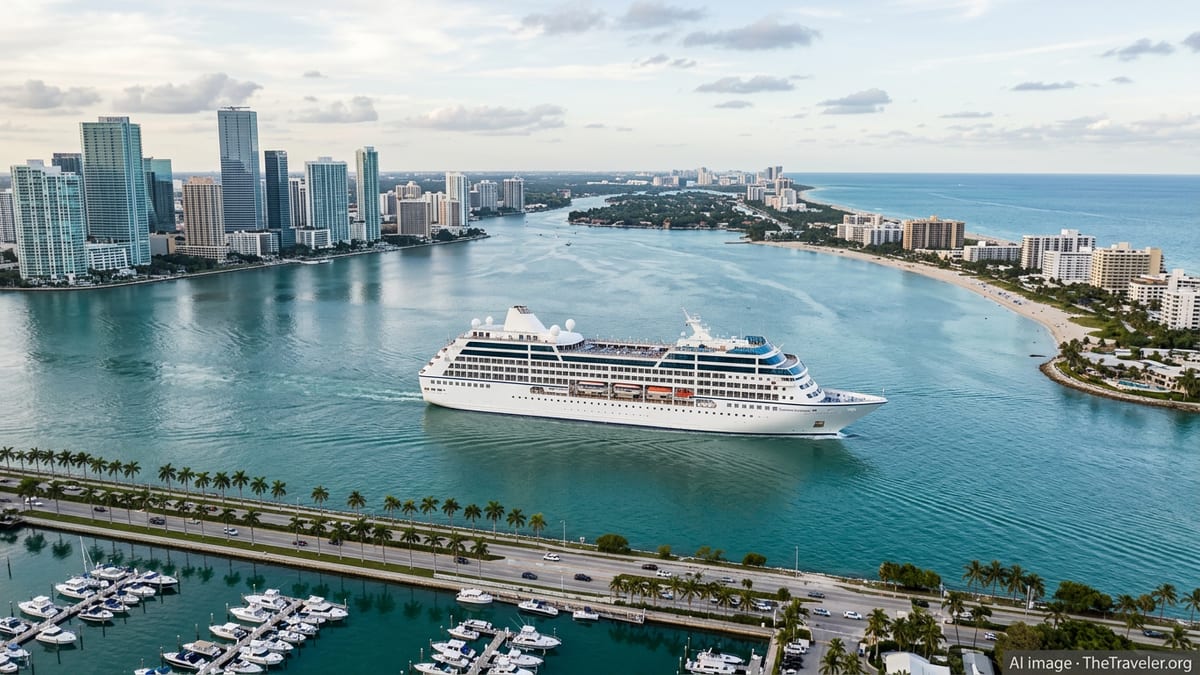
Residential “cruise for life” ends abruptly in Sihanoukville
Publicly available information indicates that the Bahamas-flagged Villa Vie Odyssey, marketed as a residential ship for long-term and “cruise for life” stays, arrived in the Cambodian port city of Sihanoukville after sailing from Thailand in late October. Around 200 to 203 paying residents and more than 150 crew members were on board, according to multiple news reports.
Coverage from regional and international outlets describes how passengers, some of whom had sold homes or downsized their land-based lives for the promise of years of continuous travel, were informed that the voyage would not continue. Instead, they were instructed to gather their belongings and leave the vessel in Sihanoukville, a coastal hub in Preah Sihanouk province that serves both container and occasional cruise traffic.
Reports suggest that guests were given only a few hours’ formal notice to disembark after the company determined it could not continue buying marine fuel at current prices. Some passengers were on organized excursions away from the port when the decision was announced, adding to confusion about collecting luggage and personal effects from their cabins before operations were scaled back on board.
The ship, which has capacity for several hundred residents, is now understood to be in lay-up at or near Sihanoukville while the operator assesses options. Passengers have been left to reorganize lives that, in many cases, had been restructured around the idea of permanent residence at sea.
Fuel price surge and regional tensions hit cruise economics
According to published coverage, Villa Vie Residences cited “extraordinary increases” in fuel costs as the primary reason the current business model became unsustainable. Media reporting links the spike in operating expenses to the broader rise in oil prices following the war involving Iran and resulting disruption and uncertainty across global energy markets.
Accounts compiled from maritime industry commentary and passenger forums indicate that monthly fuel-related charges per cabin on the Odyssey reportedly rose from around 1,800 dollars to between 6,000 and 8,000 dollars on certain stretches of the Asia itinerary. For a residential concept that relies on predictable, relatively stable running costs spread across long-term contracts, such increases appear to have undermined financial projections.
The wider cruise sector has long acknowledged its vulnerability to energy prices, with large ships consuming significant quantities of marine fuel on multi-week itineraries. Unlike conventional seasonal cruises, residential voyages that aim to operate almost continuously have limited flexibility to pause or radically shorten itineraries without eroding their core value proposition.
In Southeast Asia, those pressures are compounded by fluctuating local supply conditions, infrastructure differences between ports, and longer repositioning voyages between favored destinations. The Odyssey’s sudden halt in Cambodia highlights how quickly theoretical risk described in corporate disclosures can become a direct, consumer-facing crisis when energy markets tighten.
Limited assistance as passengers navigate exit options
Public statements from the operator and media reports indicate that Villa Vie has committed to covering short-term hotel accommodation and local transportation for affected guests in Sihanoukville and, in some cases, Phnom Penh. However, there is no consistent indication that the company is covering international flights or long-distance onward travel, leaving many residents to fund their own journeys home or to their next destination.
Travelers now find themselves in a Cambodian port city that, while increasingly familiar with regional shipping and occasional cruise calls, is not a major long-haul aviation hub. Sihanoukville’s airport has limited scheduled connections, so many passengers are routing via Phnom Penh or international gateways such as Bangkok, Ho Chi Minh City, or Singapore, adding complexity and cost just as global airfares have also been influenced by higher jet fuel prices.
Reports from passenger blogs and social media suggest that individuals are adopting a range of strategies: some are booking immediate flights back to their home countries, while others are choosing to remain in Cambodia or nearby countries for a period, turning the forced disembarkation into an unplanned overland or regional journey. Travel insurers may play a role, but coverage can vary significantly depending on policy wording for insolvency or operational suspensions.
Local tourism providers in Sihanoukville and Phnom Penh appear to be absorbing a sudden influx of longer-stay visitors seeking mid-range hotels, serviced apartments, and short-term rentals, at least temporarily cushioning the shock for those who need time to reorganize finances and future living arrangements.
Cambodia’s cruise profile and regional travel implications
Cambodia has appeared in global cruising headlines before, most notably when it allowed a separate cruise vessel to dock during the early phase of the COVID-19 pandemic after that ship had been turned away by several other ports. Sihanoukville’s role as the final port for the Odyssey now places the country once again at the center of an international cruise incident, although the cause this time is economic rather than health-related.
The port city, known primarily for its deep-water cargo facilities and as a gateway to nearby islands, receives far fewer large cruise calls than established hubs in Thailand or Vietnam. As a result, the local ecosystem of cruise-specific services is comparatively limited, though general tourism infrastructure such as hotels, restaurants, and regional transport links is developed enough to absorb short-term demand.
For Southeast Asia as a whole, the Odyssey episode underscores how fuel volatility and regional geopolitical tensions can rapidly affect complex itineraries. Routes that depend on long ocean segments between relatively small ports are more exposed to sudden swings in marine fuel prices and availability, especially when operators have narrow financial buffers or ambitious expansion plans.
Travel analysts are noting parallels with other disruptions affecting ships and tours across the broader Middle East and Asia in recent months, where changing risk assessments and operating costs have forced last-minute itinerary changes, re-routings, or cancellations. Residential and ultra-long cruises, which require particularly high levels of operational certainty, may face closer scrutiny from prospective buyers as a result.
Questions for the future of residential cruising
The situation in Cambodia raises wider questions about the resilience of the residential cruising model, which has grown in visibility in recent years as an alternative lifestyle for retirees, remote workers, and long-term travelers. These products often promise stable, all-inclusive costs over multi-year periods, a proposition that may be difficult to honor during episodes of intense fuel price volatility.
Published reports show that some prospective residents on similar concepts have previously endured delays, ship changes, or cancellations before even boarding, reflecting the high capital and operating costs involved. The Odyssey’s lay-up in Sihanoukville is the first time one of the latest wave of residential projects has come to a halt mid-voyage in a developing country port with hundreds of people effectively between homes.
Regulators and consumer advocates may look more closely at financial safeguards, escrow arrangements, and disclosure requirements for companies selling “live aboard” packages that resemble real estate commitments as much as conventional cruise bookings. Prospective residents are also likely to examine contractual details around fuel surcharges, itinerary changes, and what happens if a company suspends operations while they are at sea.
For now, the immediate focus for those affected is practical rather than structural: securing accommodation, arranging flights, and deciding whether to resume land-based lives or seek another life at sea once circumstances stabilize. The abrupt end of the Odyssey’s voyage in Cambodia has turned a marketing promise of endless travel into a case study in how global energy shocks can reshape even the most carefully planned journeys.