


More news on this day
Luxury hotel brands are rapidly launching their own yacht-style ships, and travel industry data indicates these floating resorts are persuading many loyal hotel guests to try cruising for the first time.
Get the latest news straight to your inbox!
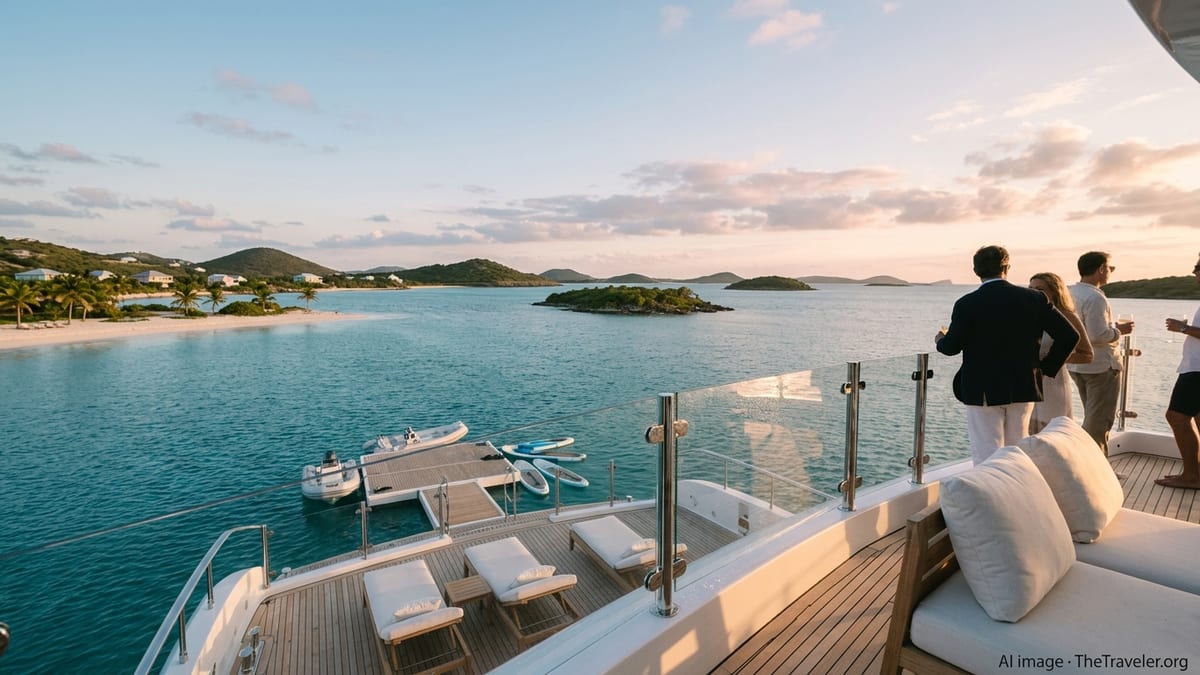
Hotel names on the funnel, resort standards on the water
Over the past few years, a cluster of prominent luxury hotel groups has moved into the cruise market with small, design-led ships that they prefer to describe as yachts. The Ritz-Carlton Yacht Collection, which debuted Evrima in 2022 and added Ilma in 2024, has been joined by new entrants from Four Seasons, Orient Express and the forthcoming Aman at Sea. Publicly available information from brand sites and trade coverage shows that these vessels are built to resemble private superyachts more than traditional cruise ships, typically carrying a few hundred guests instead of several thousand.
Analysts and hospitality researchers describe this as a strategic push at the very top of the cruise market. A recent briefing from Florida International University’s luxury leadership forum characterizes the arrival of Ritz-Carlton, Four Seasons, Aman and Orient Express at sea as one of the most significant developments in modern cruising, noting that these brands see an opportunity in ultra-high-end travelers who have historically avoided large cruise ships.
Reports from travel media and advisor networks indicate that the core promise is familiarity. Hotel-branded lines aim to replicate, at sea, the service style, culinary partnerships and suite aesthetics that guests already know from flagship properties in cities and resort destinations. Staterooms are marketed as suites with residential design, while public spaces lean heavily on signature restaurants, expansive spas and indoor-outdoor lounges rather than casinos or large theaters.
This approach appears to be resonating with travelers who have never cruised before. Cruise industry outlooks published in 2024 and 2025 highlight a notable rise in “new-to-cruise” guests, and luxury hotel-branded yachts are frequently cited by travel advisors as a key driver, particularly among affluent clients more accustomed to villas and penthouse suites than to balcony cabins.
New-to-cruise guests follow their favorite hotel brands
Industry research suggests that the broader cruise sector is already in a period of expansion, with tens of millions of passengers expected to sail in 2024 and 2025. Within that growth, however, a specific pattern is emerging at the top end of the market: affluent travelers are stepping onto ships for the first time because the brand over the gangway matches the one on their preferred hotel keycard.
A 2024 global travel outlook from a major travel marketing firm notes that hotel-branded vessels, along with newer lifestyle cruise concepts, are targeting travelers who previously chose high-end resorts or private villa stays. Travel agencies specializing in luxury itineraries report a similar trend. At Global Travel Collection, executives recently told partners that land-to-sea products from Ritz-Carlton, Four Seasons, Orient Express and other hotel groups already account for around 5 percent of their future cruise bookings, with expectations that the share will double in the near term.
Several trade publications describe a common booking pattern: clients who are loyal to a hotel brand’s loyalty program or properties first encounter the seagoing product while researching their next land vacation. In some cases, hotel-branded yachts are sold as part of combined itineraries that pair a few nights in a flagship city property with a one-week Mediterranean or Caribbean sailing on the associated yacht.
Travel advisors quoted in industry coverage say that the recognizable branding lowers psychological barriers for first-timers who might feel uncertain about conventional cruise lines. For these guests, a week on a Ritz-Carlton, Four Seasons or Orient Express yacht is framed less as “going on a cruise” and more as extending a familiar resort experience across multiple destinations.
Designing ships for resort loyalists, not cruise veterans
Observers note that hotel-branded yachts are being designed from the keel up with resort guests in mind. Instead of water slides and sprawling pool decks, these ships typically emphasize large suites, terraces and a high ratio of outdoor space per guest. Restaurant concepts mirror successful venues on land, and spa and wellness areas occupy significantly more square footage than is common even on traditional luxury cruise vessels.
Industry comparisons compiled by luxury travel agencies show that Ritz-Carlton’s ships carry fewer than 500 guests, while upcoming Four Seasons and Aman vessels are expected to operate at similarly intimate scales. Per-guest space and staffing ratios are closer to those of small ultra-luxury cruise ships, but the branding and décor aim to evoke flagship hotels, with warm residential palettes, curated art collections and discreet service rather than overt maritime motifs.
Cruise reviewers and trade journalists who have toured or sailed on these ships often highlight how they feel more like boutique hotels at sea than cruise liners. Reports describe quiet, uncrowded public areas, extended overnight stays in ports and flexible dining schedules, all of which align closely with resort norms. This environment can be especially appealing for first-time cruisers who worry about crowds, rigid dining seatings or the sense of being herded on and off large ships.
By tailoring product design to hotel loyalists, these brands are not necessarily competing head-on with long-established ultra-luxury cruise lines, but they are reshaping expectations about what an entry point into cruising can look like for high-net-worth travelers. For many, the choice is no longer between a sprawling resort and a massive ship, but between a stationary suite and one that moves overnight to the next harbor.
Premium pricing, high expectations and limited capacity
The appeal of hotel-branded yachts comes with premium price tags. Publicly available pricing and travel advisor commentary suggest that per-night rates on these ships are generally higher than on many traditional luxury cruise lines, and in some cases rivals or exceeds the cost of top-tier suites at flagship hotels on land. Early comparisons circulating in travel forums and advisor materials highlight that entry-level suites on some sailings can still be within reach of affluent resort guests, while top-category accommodations rise into ultra-exclusive territory.
Despite the cost, capacity on these vessels is limited. Industry lists of cruise lines and their market share indicate that the Ritz-Carlton Yacht Collection, for example, represents only a fraction of total cruise passengers worldwide. Similar capacities are expected for Four Seasons Yachts, Orient Express Corinthian and the forthcoming Aman at Sea, meaning that even rapid growth in this niche will leave it as a relatively small slice of global cruise traffic.
Analysts point out that scarcity is part of the strategy. Constrained berth counts create a sense of exclusivity and help support pricing, while also aligning with the personalized service levels that luxury hotel guests expect. However, they also pose a test for these brands: maintaining consistent service and product quality at sea is more operationally complex than running a hotel, and several early reviews of hotel-branded ships have noted growing pains during their first seasons.
For first-time cruisers, these dynamics translate into high expectations. Guests arriving from top-tier suites on land are often less forgiving of service lapses or logistical hiccups. As a result, travel advisors recommend that newcomers considering a hotel-branded yacht understand both the benefits of the intimate, resort-style experience and the realities of sailing on relatively new products that are still refining their operations.
Blurring lines between cruising, yachting and resort travel
As more luxury hotel names debut on the sides of ships and yachts, industry observers say the traditional categories of “cruise” and “resort” are becoming less distinct. Coverage in business and consumer travel media emphasizes that many hotel groups are careful with terminology, frequently marketing “yacht experiences” or “residential-style voyages” rather than cruises, in an effort to appeal to travelers who might otherwise dismiss ship-based vacations.
At the same time, the success of hotel-branded yachts appears to be influencing how long-established cruise operators think about product development. Recent newbuilds and refits among luxury and premium cruise lines increasingly showcase larger suite inventories, extended overnight calls in ports and collaborations with well-known culinary and wellness brands, suggesting that competition for the same high-spending guests is intensifying.
For destination communities, the arrival of smaller, ultra-luxury ships adds another layer to the visitor mix. These vessels tend to visit secondary ports and yachting harbors that are not on the itineraries of mega-ships, bringing in guests who often book private tours, fine dining and high-end shopping. Local tourism boards and port authorities tracking ship calls report that these hotel-branded vessels, while small in passenger numbers, can deliver significant per-visitor spend.
Whether this model remains a niche or grows into a sizable segment of luxury travel will depend on economic conditions, traveler sentiment and the ability of hotel brands to deliver consistently at sea. For now, evidence from research firms, travel advisors and early guest reports suggests that luxury hotel-branded lines have already succeeded in one important goal: persuading a new wave of first-time cruisers to step aboard.