


More news on this day
Air travel across the United States faced another bruising day as a fresh wave of disruptions led to at least 141 cancellations and more than 3,195 delays, with passengers in Colorado, Georgia, Virginia, Wisconsin and several other states bearing the brunt of the latest nationwide turbulence.
Get the latest news straight to your inbox!
Disruptions Ripple Across Key US Hubs
Flight-tracking data and airport status boards on Thursday indicated widespread operational strain stretching from the Rocky Mountains to the Mid-Atlantic, with multiple hubs reporting clusters of cancellations and rolling delays through the afternoon and evening peaks. The combined impact added up to 141 flights canceled and well over 3,000 delayed across the domestic network, creating missed connections, overcrowded terminals and long customer-service lines.
Colorado’s Denver International, a major connecting hub for both low-cost and legacy carriers, saw a wave of late departures and scattered cancellations as thunderstorms and congestion slowed aircraft movements. Similar patterns emerged at busy Southeastern and Mid-Atlantic airports serving Georgia and Virginia, while regional fields in Wisconsin reported a smaller but still disruptive share of the day’s grounded or heavily delayed flights.
Publicly available information shows that the disruptions were not confined to one airline, airport or region. Instead, they reflected a web of interlocking pressures, including convective weather, high summer schedules and tight margins for crew and aircraft repositioning. Once early departures fell behind schedule, knock-on effects spread into subsequent rotations, amplifying delays into the evening.
Travel industry analysts note that the volume of affected flights aligns with a broader trend this summer in which relatively modest weather systems or airspace constraints can quickly translate into hundreds of delayed departures nationwide, particularly when schedules are already operating near capacity.
Southwest, Delta, JetBlue and Others Under Pressure
Among individual airlines, the latest disruption hit a cross-section of major and mid-sized carriers, including Southwest Airlines, Delta Air Lines, JetBlue Airways and several regional operators flying under big-brand banners. Real-time tracking boards showed these carriers contending with a mix of outright cancellations and late departures at larger hubs and secondary airports alike.
Southwest, which runs dense point-to-point networks through airports such as Denver and Atlanta-area fields, saw selected services scrubbed and many more running behind schedule as storms and ground delays intersected with high passenger volumes. Delta, heavily exposed at hubs in Atlanta, the New York area and Washington-region airports, faced its own pockets of cancellations and lengthy delays, particularly where weather and traffic-management initiatives tightened available takeoff and landing slots.
JetBlue’s network, concentrated on East Coast corridors and transcontinental routes, also registered elevated delay counts as congestion and aircraft flow restrictions slowed operations along the busy eastern seaboard. Regional affiliates operating flights on behalf of the major carriers absorbed a share of the cancellations, especially on shorter routes that can be trimmed or consolidated when airlines attempt to stabilize their overall schedules.
Historically, federal transportation statistics show that these carriers rank among the largest players in the US domestic market, meaning even a modest percentage of their schedules disrupted on a single day can translate into thousands of affected passengers spread across dozens of airports.
Weather, Heat and Tight Schedules Create a Volatile Mix
While the day’s exact cancellation and delay totals varied by airport and time of day, the underlying drivers remained familiar to frequent flyers. Summer weather systems moving across the Rockies and Plains into the Midwest, combined with periodic thunderstorms in the Southeast and Mid-Atlantic, forced traffic-management measures that reduced airport throughput and slowed en route traffic.
In recent weeks, airlines have also had to navigate bouts of extreme heat in parts of the country, including the Northeast, which can affect aircraft performance, runway operations and crew scheduling. Travel exception bulletins published by major carriers in June and early July highlighted both severe weather and high-heat events as recurring triggers for schedule changes, giving a preview of the vulnerabilities now materializing in day-to-day operations.
Operational data and industry commentary point to another factor: tight summer schedules that leave little slack when the system comes under strain. When a single flight is delayed or canceled because of weather at one airport, the aircraft and crew assigned to it may arrive late for subsequent legs, compounding disruption in cities hundreds or even thousands of miles away.
Analysts emphasize that this interconnectedness is particularly pronounced on days with midlevel disruption, when airlines continue operating most of their schedules but must constantly adjust routing, aircraft assignments and crew pairings in real time to keep the network moving.
Airports From Denver to Dulles and Milwaukee Feel the Strain
The geographic spread of the latest disruption was notable, with reports indicating meaningful impacts from Colorado through Georgia and Virginia to Wisconsin and beyond. In the Mountain West, Denver’s role as a key junction for both eastbound and westbound traffic meant local slowdowns quickly translated into missed connections and rebookings for travelers traversing the country.
In the Southeast, airports serving the Atlanta metro area continued to see heavy pressure as convective weather and tight turnaround times forced airlines to build buffers into schedules or cancel select frequencies. Further north, Virginia’s Washington-region airports contended with the familiar combination of congestion, summer storms and constrained airspace around the nation’s capital.
In the Upper Midwest, Wisconsin airports such as Milwaukee and regional fields reported fewer total flights but a disproportionately high impact when cancellations did occur, leaving passengers with limited alternative options. For travelers at these smaller airports, a single canceled departure can mean multi-hour waits or long drives to larger hubs with more frequent service.
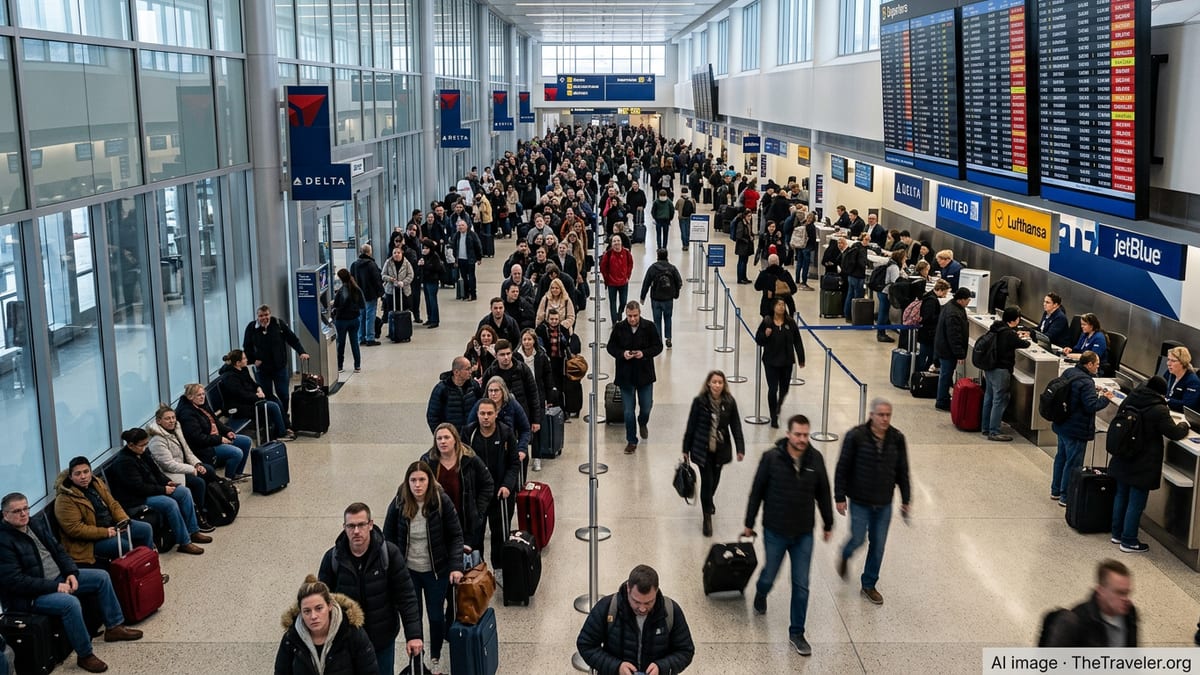
Across all of these regions, crowded concourses, rebooked itineraries and baggage backlogs underscored how even scattered cancellations can feel like a systemwide breakdown to those caught in the wrong place at the wrong time.
What Travelers Can Expect in the Coming Days
With peak summer travel in full swing, the latest tally of 141 cancellations and 3,195 delays serves as another reminder that the US aviation system remains vulnerable to compounding shocks. Forecasts for the next several days indicate the potential for additional thunderstorms across central and eastern states, alongside continued high demand for leisure and family travel.
Published coverage and airline advisories suggest that carriers may continue to adjust schedules proactively, trimming select frequencies or retiming flights to reduce the risk of cascading disruptions. Travelers can expect ongoing use of flexible travel policies when weather or operational issues trigger widespread changes, particularly at major hubs.
Passenger advocacy groups and legal resources continue to highlight the importance of understanding airline-specific rules for rebooking, vouchers and refunds, as well as the limited but important protections available under federal regulations for lengthy delays and cancellations within a carrier’s control. Observers note that recent high-profile disruption days have led many travelers to build extra flexibility into their plans, including longer connection windows and backup options when itineraries involve tight same-day transfers.
As airlines, airports and regulators work to navigate another intense summer travel season, the latest wave of cancellations and delays illustrates how quickly conditions can change. For those traveling through affected states from Colorado to Georgia, Virginia and Wisconsin, patience and contingency planning are likely to remain essential parts of any itinerary.