


Few travel experiences match the moment you glide into the roar and spray of Niagara Falls aboard the Maid of the Mist. This classic boat tour on the American side of the border has been operating in some form since the 19th century and remains one of the most iconic ways to experience the falls up close. For first-time visitors, though, practical questions quickly arise: Is it worth the money, how wet will you actually get, and how do you avoid the longest lines? This detailed review walks you through what to expect, how to plan, and whether Maid of the Mist is the right choice for your Niagara itinerary.
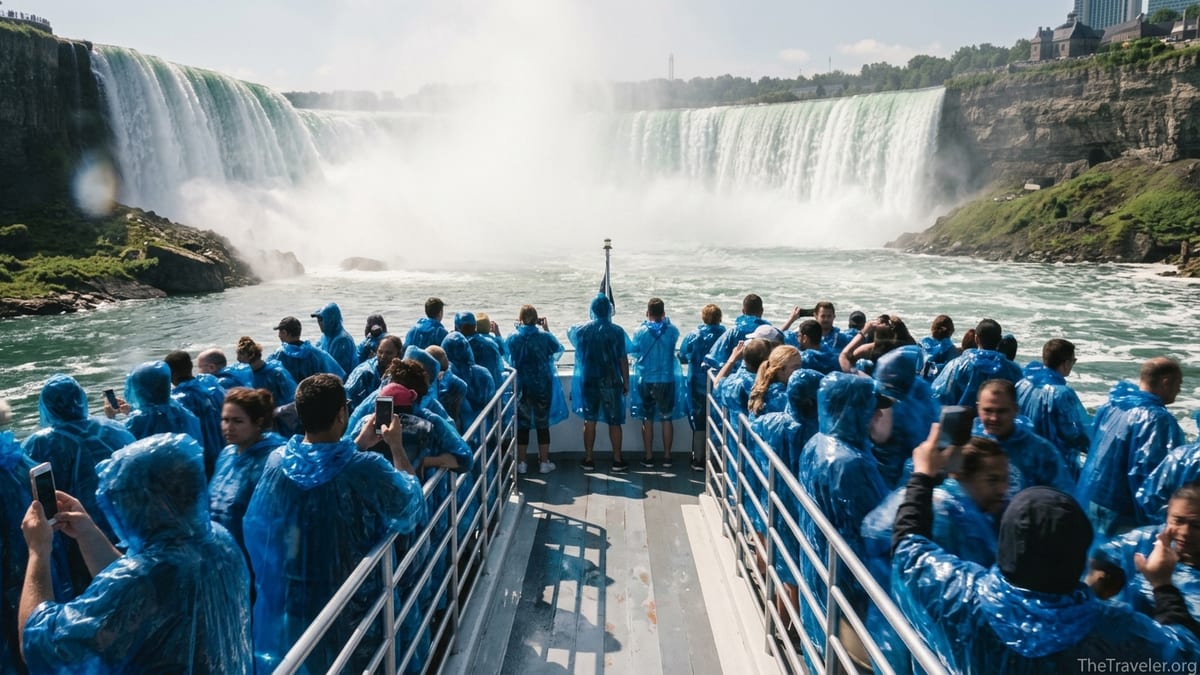
What Exactly Is Maid of the Mist?
Maid of the Mist is a short but intense boat tour that takes you from the base of the American Falls into the dense spray at the foot of Horseshoe Falls, departing from Niagara Falls State Park in Niagara Falls, New York. The company has run passenger boats here in various forms since the mid-1800s, which makes it one of the longest continually operating tourist attractions in North America and a defining part of the Niagara Falls experience.
The tour begins at the Observation Tower at Prospect Point in Niagara Falls State Park. After buying or scanning your ticket at street level, you descend by elevator to the base of the gorge, receive a souvenir blue poncho, and walk a short gangway to board one of the all-electric boats. The trip itself typically lasts around 20 minutes from departure to return, but you should expect your total time commitment, including lines and elevators, to be closer to 60 to 90 minutes during busy periods.
Once on board, the captain traces a route along the base of the American Falls and Bridal Veil Falls before angling into the powerful mist in front of Horseshoe Falls. You are never literally under the main curtain of water, but when the captain turns the bow toward the falls and holds position in the spray, visibility drops, the sound becomes a thunderous roar, and it feels briefly like being inside a storm. For many visitors, especially first-timers, this is the emotional high point of their Niagara trip.
It is important to understand that Maid of the Mist operates only from the United States side of the river. If you are staying on the Canadian side without a car or without the documents needed to cross the border, the roughly equivalent experience is Niagara City Cruises (often still casually called Hornblower) from Niagara Falls, Ontario. The experiences are similar in length and intensity, but the departure points, views, and border formalities differ.
Tickets, Prices, and How to Avoid the Longest Lines
For 2024, Maid of the Mist adult tickets are listed at about 28 dollars for ages 13 and up, with children 6 to 12 around 18 dollars and children 5 and under riding free with an adult. Prices can change each season, so consider these ballpark figures rather than fixed rates, but they are useful for budgeting. Compared with other Niagara experiences like helicopter rides, zip lines, or some combination bus tours, Maid of the Mist is one of the more accessible major attractions in terms of cost.
You can purchase tickets online in advance or at the ticket booths near the Observation Tower entrance in Niagara Falls State Park. Same-day in-person purchase is common and usually fine on ordinary weekdays, but on peak summer weekends, holiday periods, and during large events, pre-purchasing online helps reduce uncertainty. Even with online tickets, however, you still join the boarding line based on arrival time, so advance purchase mostly saves you from ticketing lines, not from the main boarding queue.
To avoid the longest waits, timing is crucial. On busy July and August weekends, visitors regularly report waits of 45 to 90 minutes in the middle of the day from the moment they join the line to stepping on the boat. By contrast, travelers who arrive at Niagara Falls State Park just before opening, typically around 9 or 10 in the morning depending on the season, often board the first or second boat with minimal delays. Another strategy is to come later in the afternoon, after the tour bus groups begin to thin out, although this can be risky on particularly crowded days.
Consider a concrete example: a family of four visiting on a Saturday in late July. If they arrive at Lot 1 parking at 10:30 a.m., they might find the closest lot full and spend extra time being redirected to Goat Island parking, then join a line that snakes back and forth across the Observation Tower plaza. By contrast, if the same family arrives at 8:45 a.m., parks in Lot 1 near Prospect Point, walks directly to the ticket booth right after opening, and heads straight down to the boarding area, they may board within 20 to 30 minutes and then have the rest of the morning free for the Cave of the Winds or viewpoints.
Season, Hours, and Weather: When Is the Best Time to Go?
Maid of the Mist operates seasonally, typically from early April to early November, with exact dates varying slightly each year based on river ice and conditions. For 2024, for example, the season opened on April 4 and is scheduled to run through November 3, with departures starting mid-morning and running through late afternoon, then extending hours into the evening during the height of summer. Travelers planning visits outside these months should not expect the boats to be running, as ice and winter conditions on the river make operations impractical.
Within that season, daily hours adjust as daylight length and demand change. Early in the season and in fall shoulder months, departures may run roughly 10 a.m. to 5 p.m. on weekdays and slightly longer on weekends. By mid-summer, first boats often depart earlier, around 9 a.m., and the last boats may go out early in the evening. Schedules are always subject to weather and operational needs, so treat any specific timing as approximate and check close to your travel dates.
Weather is a major factor in your experience. On a hot July afternoon, the heavy spray can feel wonderfully refreshing, and many visitors step off the boat laughing, their ponchos dripping but comfortable. On a chilly April morning or a windy October day, the same mist can feel bone-cold, especially if you are wearing absorbent cotton or sandals. Families visiting in the shoulder season often report that the kids love the excitement but adults who come unprepared with light jackets or waterproof shoes feel uncomfortably cold afterward.
As for crowd patterns, peak days are usually summer weekends, long holiday weekends like Memorial Day and Labor Day, and school vacation periods. If your schedule is flexible, a midweek visit in late May, early June, or late September can be ideal, combining relatively warm weather with lighter crowds. Even in high season, arriving early in the day remains the single most effective way to reduce line time and enjoy cooler temperatures on the exposed decks.
Getting There, Parking, and Crossing the Border
Maid of the Mist departs from the American side of Niagara Falls at Prospect Point inside Niagara Falls State Park. Drivers in the United States often navigate directly to the park’s Lot 1 near Prospect Point, which is the closest official parking area to the ticket booths and Observation Tower. Parking fees vary by season, but as a rough guideline you can expect to pay around 10 to 15 dollars for state park lots, with higher rates more likely on summer weekends.
When Lot 1 fills, which it often does by late morning in July and August, park staff redirect vehicles to Goat Island’s Lots 2 and 3. These lots are a short drive further into the park and involve either a 10 to 15 minute walk back toward Prospect Point or a ride on the Niagara Scenic Trolley, which makes a loop through key viewpoints and attractions. This can surprise first-time visitors who assumed “closest lot” meant guaranteed convenience, so building in extra time is wise, especially if you have timed plans later in the day.
Visitors coming from the Canadian side have two options. If they have proper travel documents, they can cross into the United States via the Rainbow Bridge by car or on foot and then walk 10 to 15 minutes to the park entrance and ticket booths. This is common for Canadian or international visitors staying at hotels along Fallsview Boulevard or near Clifton Hill who specifically want the historical Maid of the Mist experience. If they do not have passports or visas required to enter the United States, they must instead ride Niagara City Cruises from the Canadian side, which offers a very similar boat experience but boards from the base of the gorge in Ontario.
For travelers who prefer not to drive or deal with parking at all, some regional bus and tour companies operate day trips from cities like Toronto, Buffalo, or Rochester that include Maid of the Mist tickets and park transport. For instance, a typical full-day small-group tour from Toronto might combine round-trip transportation, a stop at Whirlpool Rapids, Maid of the Mist tickets, and free time in the park. These tours usually cost significantly more than buying your own ticket and parking, but they simplify logistics for travelers who do not want to navigate across the border or city traffic.
What the Ride Really Feels Like (And How Wet You Get)
For first-time visitors, the central question is often simple: what does the ride actually feel like? Once you board, you can move around freely on the open decks. The top deck offers more panoramic views and more exposure to the mist, while the lower deck and interior sections provide partial shelter. As the boat pulls away from the dock, you get a striking view back toward the Observation Tower and American Falls, which helps you appreciate how deep the gorge is.
The boat first passes along the base of the American Falls and Bridal Veil Falls. At this stage, you will feel light spray and hear the falls on one side, but you can still take clear photos and talk comfortably. This is where many families pose for group shots with the blue ponchos catching the light and the wall of water behind them. Then, as the boat approaches Horseshoe Falls, the character of the trip changes: the sound rises to a roar, the wind picks up, and the mist thickens until everything around you becomes a gray-white curtain.
How wet you get depends on where you stand and the wind direction that day. Visitors on the front rail of the upper deck are typically drenched from about the shoulders down by the time the boat turns back. Their ponchos keep torsos mostly dry, but hoods sometimes blow back, leaving hair soaked, and shoes and pant legs often end up squishy. Those who remain near the center of the lower deck or under partial cover may get only moderate spray on their faces and forearms, with shoes sprinkled but not flooded.
The crew gives basic safety instructions and remains visible on deck, but the atmosphere is informal and energetic rather than scripted. Teenagers often shout over the roar and laugh at the intensity of the spray, while many adults alternate between snapping a few quick photos and simply leaning into the experience. The captain typically holds the boat in the mist for a few minutes, turning slightly so both sides of the vessel get dramatic views of the curved Horseshoe Falls wall, before retreating back along the calmer section of the river.
What to Wear, What to Bring, and Camera Tips
Clothing choices can make the difference between a thrilling, comfortable ride and half an hour of shivering. The company provides a thin, disposable blue poncho to every passenger included in the ticket price, but this poncho is best considered a splash guard, not full rain gear. It covers your torso and most of your arms but does not fully protect feet, lower legs, or items you carry outside the poncho.
In warm summer weather, quick-dry shorts, a T-shirt, and sandals or water-friendly shoes are generally fine, especially for visitors willing to get wet. In cooler months or on windy days, most locals recommend a light waterproof jacket or fleece under the poncho and closed-toe shoes that can handle getting damp. Travelers who wore heavy denim jeans on a cold April visit often report feeling chilled and uncomfortable for hours afterward, since thick cotton dries slowly in the gorge’s humid environment.
For cameras and phones, a bit of preparation goes a long way. The mist near Horseshoe Falls can be heavy enough to soak unprotected electronics within seconds. Many visitors slip their phones into simple clear plastic pouches with lanyards, bought inexpensively before the trip or from souvenir shops near the park. Others use a small dry bag or stash cameras under the poncho until the boat reaches the most dramatic section, then pull them out briefly for a few shots before tucking them away again.
Eyeglass wearers should be prepared for near-zero visibility once the boat reaches the heart of the mist. Lenses fog and bead with water almost immediately. Some travelers remove their glasses and store them in a pocket of their poncho for that part of the trip, relying on the broader sensory experience rather than trying to see details through wet lenses. Contact-lens wearers may want to bring lubricating drops, as the constant wind and water can leave eyes feeling dry and irritated afterward.
Maid of the Mist vs Niagara City Cruises: Which Is Better for You?
From a pure on-the-water standpoint, Maid of the Mist and Niagara City Cruises (the operator on the Canadian side) deliver broadly similar experiences: a roughly 20 minute boat ride into the mist of Horseshoe Falls with ponchos included and comparable crowd levels in peak season. Visitors who have done both often describe the feel of the mist, roar of the falls, and general excitement as nearly identical, with minor differences in angles and pre-boarding logistics rather than in the heart of the ride itself.
The decision usually comes down to which side of the border you are staying on and what travel documents you hold. If you are staying in the United States or do not have a passport, Maid of the Mist is the natural and easiest choice, requiring no border crossing. If you are based in Niagara Falls, Ontario, and do not plan to cross into the United States, Niagara City Cruises is the practical equivalent and has the advantage of being integrated into the larger Canadian promenade, with easy access to viewpoints, restaurants, and attractions like Journey Behind the Falls and Clifton Hill.
Each side also has its own character. The American side, where Maid of the Mist operates, has more of a state-park feel, with wooded paths, grass, and an emphasis on natural viewpoints like Goat Island and the Cave of the Winds boardwalks. This appeals to travelers who prefer a slightly quieter, more nature-focused experience. The Canadian side feels more like a resort town, with a dense strip of hotels and entertainment options overlooking the gorge. A couple staying at a hotel tower with a falls view in Ontario might reasonably choose Niagara City Cruises simply because it is a quick downhill walk from their lobby.
There are also subtle differences in add-ons. Niagara City Cruises on the Canadian side sometimes offers evening cruises during illumination and fireworks nights, which can be appealing to visitors wanting a more romantic or atmospheric experience. Maid of the Mist focuses on daytime operations, pairing naturally with other U.S.-side experiences like Cave of the Winds, the Niagara Scenic Trolley, and hiking along the Niagara Gorge. If your schedule allows, taking one boat tour on either side and then walking across the Rainbow Bridge for contrasting land-based views can be an excellent way to appreciate how each side frames the same natural wonder.
Is Maid of the Mist Worth It? A Clear Verdict for First-Timers
For most first-time visitors to Niagara Falls, Maid of the Mist is highly worth including in the itinerary, especially if you have not done a similar boat tour on the Canadian side. The combination of closeness to the water, the visceral sensation of the mist and wind, and the visual drama of Horseshoe Falls from below delivers precisely the kind of “I really felt the power of the falls” moment people hope for when they travel here.
The experience is particularly compelling if you pair it with at least one land-based viewpoint. For example, a couple might start the morning with Maid of the Mist, then walk out to Terrapin Point on Goat Island in the afternoon. Seeing the same Horseshoe Falls first from the boat and then from the lip where the Niagara River accelerates over the edge creates a satisfying narrative arc to the day and helps justify the overall cost of visiting the area. Families often find that children remember the boat ride vividly long after details of the viewpoints blur together.
That said, Maid of the Mist may feel less essential for visitors who strongly dislike getting wet or who are highly sensitive to crowds and noise. Someone who prefers quiet scenic overlooks and hates being jostled in line might be happier spending more time walking the park’s paths, visiting the Cave of the Winds boardwalks under Bridal Veil Falls, or exploring observation points on both sides of the border. Travelers on ultra-tight budgets may also hesitate at the combined cost of parking and tickets for a large group, especially once food and other attractions are factored in.
Ultimately, the ride is a concentrated 20 minute immersion in the heart of Niagara’s drama. If your goal in coming to Niagara Falls is to feel the magnitude of the place rather than simply to see it from a distance, Maid of the Mist delivers that feeling reliably. Paired with decent planning around timing, clothing, and parking, it becomes a highlight rather than a hassle for the vast majority of first-time visitors.
The Takeaway
For first-time visitors to Niagara Falls, Maid of the Mist offers one of the most direct and memorable ways to engage with the sheer power of the falls. Departing from the American side at Niagara Falls State Park, the all-electric boats carry you from the base of the American Falls into the swirling mist of Horseshoe Falls in a compact, family-friendly experience that lasts only minutes but lingers long in memory.
To get the most out of it, approach Maid of the Mist as more than just a quick ride. Plan your timing to avoid the worst crowds, arrive early to improve parking options, dress expecting to get genuinely wet around your legs and feet, and protect your electronics from the heavy spray. For visitors staying on the U.S. side or those who cannot cross the border, it is an obvious top choice. Even travelers based in Canada who have the right documents often cross to the American side specifically to experience this historic tour.
There are valid reasons to skip the ride if you hate crowds, strongly dislike getting wet, or are traveling on a very tight budget, but for most travelers, the pros outweigh the cons. When you think back on your time at Niagara, the moment the boat holds steady in front of Horseshoe Falls, the mist whipping around you and the roar drowning out conversation, is likely to be one of the memories that defines the trip.
FAQ
Q1. Do I need a passport to ride Maid of the Mist?
No, you do not need a passport or any identification to board Maid of the Mist if you are already in the United States, because the boat departs from and returns to the American side only. A passport or appropriate travel documents are required only if you plan to cross the border between the United States and Canada as part of your broader trip.
Q2. How long does the Maid of the Mist tour take?
The actual boat ride lasts about 20 minutes from departure to return, but you should plan at least 60 to 90 minutes in total, including time to buy or scan tickets, go through the Observation Tower, wait in line, and ride the elevator down and back up from the gorge, especially on busy summer days.
Q3. How wet will I get on Maid of the Mist?
You will almost certainly get at least somewhat wet, particularly from the knees down and on your face and hands. The provided poncho helps keep your torso and much of your upper body relatively dry, but shoes, lower legs, and any uncovered clothing can become quite damp, especially if you stand at the front rail on the upper deck when the boat moves into the thickest part of the mist.
Q4. What is the best time of day to ride Maid of the Mist?
The best time for shorter lines is usually right after opening in the morning, especially on summer weekends when midday crowds can be intense. Late afternoon can also be manageable on some days, but it is riskier because sudden increases in visitors or weather changes can lengthen delays. Arriving early remains the most reliable strategy for a smoother experience.
Q5. Can I bring a stroller, wheelchair, or mobility device?
Maid of the Mist is generally accessible, and wheelchairs and strollers can be accommodated on the boat and in the elevator system. However, there may be some tight turns and slightly sloped walkways to navigate. If you have specific mobility needs, it is wise to allow extra time and, if possible, check for the most current accessibility details shortly before your visit.
Q6. Is Maid of the Mist safe for young children?
Yes, many families bring toddlers and young children on Maid of the Mist. The decks have railings, and everyone receives a poncho. Parents should keep children close, hold hands near railings, and consider standing slightly away from the very front if little ones might be frightened by strong wind, loud noise, or heavy spray. Children under 6 generally ride free with a paying adult, which also helps families with budgets.
Q7. Are there restrooms and food options nearby?
There are restrooms within Niagara Falls State Park near the Observation Tower area and at other key points in the park. While there are no restrooms on the boat itself, the short duration of the ride means most visitors manage comfortably. Snack stands, quick-service food, and nearby restaurants can be found within walking distance in and around the park, so grabbing something before or after your tour is straightforward.
Q8. Can I do Maid of the Mist and Cave of the Winds in one day?
Yes, many visitors combine Maid of the Mist with Cave of the Winds on the same day, especially during long summer days. A common pattern is to ride Maid of the Mist in the morning when lines are shorter, break for lunch, then head to Cave of the Winds on Goat Island in the afternoon. With reasonable planning, both can fit comfortably into a single full day in the park.
Q9. What happens if it rains or the weather is bad?
Maid of the Mist operates in light rain and overcast conditions, and the experience can be dramatic even under gray skies. Very strong winds, lightning, or severe storms can cause temporary suspensions or delays for safety. If heavy weather is forecast, it is smart to build flexibility into your schedule and be prepared to adjust your boat time or shift to indoor or land-based activities until conditions improve.
Q10. Is Maid of the Mist better than Niagara City Cruises on the Canadian side?
Neither is objectively better for all travelers. The on-the-water experience is very similar, with both tours taking you into the mist of Horseshoe Falls for about 20 minutes. Maid of the Mist is usually best if you are staying on the U.S. side or cannot cross the border, while Niagara City Cruises is more convenient for those based in Niagara Falls, Ontario, or wanting evening and illumination cruises when available. Your choice should primarily reflect where you are staying and what kind of broader Niagara experience you prefer.