


More news on this day
A freight train derailment in southwest Calgary sent a string of railcars into a wetland area near Priddis Slough on Monday morning, disrupting road access and raising fresh concerns about rail safety through ecologically sensitive corridors on the city’s edge.
Get the latest news straight to your inbox!
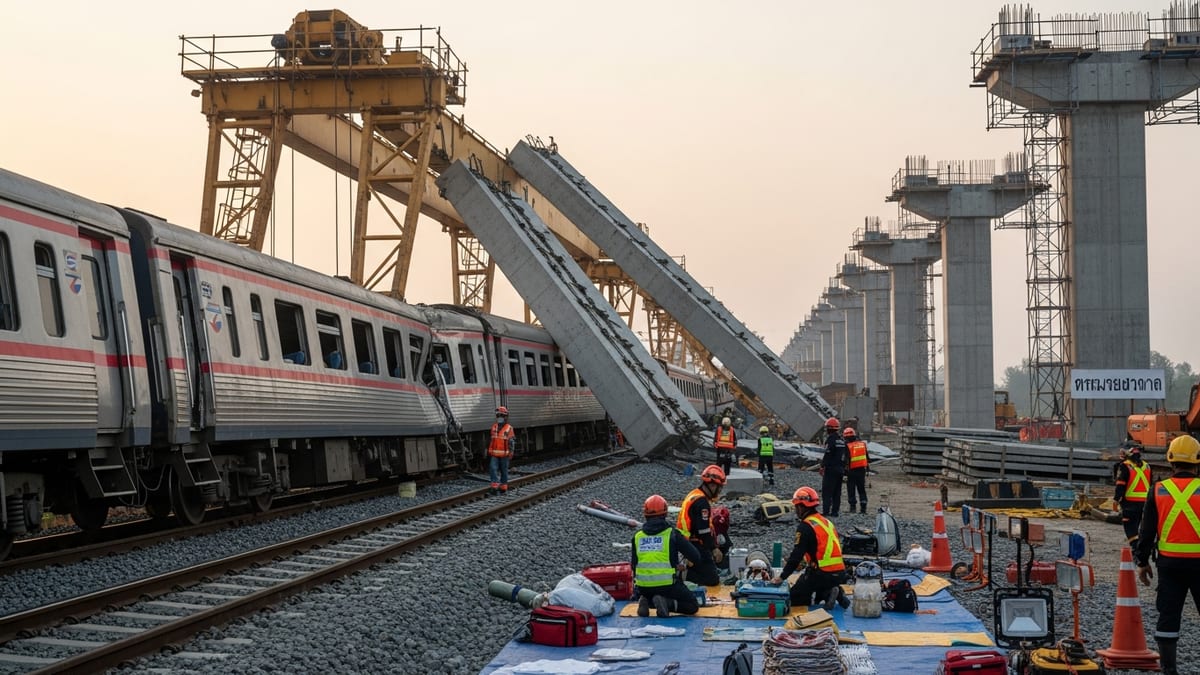
Morning derailment near Priddis Slough
Published coverage indicates the derailment occurred around 7:30 a.m. on Monday, July 13, along the Canadian Pacific Kansas City (CPKC) line near Sheriff King Street Southwest, in a corridor between the communities of Silverado and Somerset. Multiple local outlets report that at least 11 freight cars left the tracks, with several ending up partly submerged in a pond and adjacent wetland known as Priddis Slough.
Images from the scene show a string of boxcars and tank cars tilted or lying on their sides in shallow water, with sections of twisted track visible along the embankment. Nearby residential neighborhoods remained outside the immediate impact zone, but the derailment was clearly visible from surrounding roads and pathways frequently used by local residents and commuters.
According to publicly available information, there were no reported injuries among rail crew or emergency personnel, and no fire was observed despite the presence of fuel and gas cargo on the train. Initial reports suggest that the derailment was confined to a relatively short section of track adjacent to the water, limiting secondary damage to nearby infrastructure.
Rail operations through the area were suspended for much of the day while responders assessed the site, stabilized railcars in the water and began planning recovery operations. Commuters heading in and out of the city’s southwest quadrant experienced heavier traffic than usual as detours were put in place.
Cargo mix includes lumber, propane and argon
Public statements from the railway and media coverage indicate the affected train was hauling a mix of lumber, plywood and pressurized gases, including propane and argon. Several derailed cars in the water were loaded with forest products, which posed more of a debris and recovery challenge than an immediate toxic hazard.
The propane and argon cargo attracted particular attention, given their potential risks if containment were compromised. Argon is an inert gas widely used in welding and metal cutting; in high concentrations it can displace oxygen in confined spaces, but it does not burn. Propane, by contrast, is highly flammable and can create an explosion risk if large volumes escape and are ignited.
Based on early assessments described in local reporting, there was no significant release of hazardous materials into the pond or surrounding area. Emergency teams and railway crews carried out gas monitoring around the train and along the shoreline, while specialized equipment stood by in case any tank showed signs of leakage or instability.
Observers following the incident noted that the combination of mixed freight and proximity to water highlights how complex even a seemingly contained derailment can be. Each commodity requires its own safety protocols, and recovery strategies must balance rapid clearance of the line with careful handling of potentially sensitive cargo.
Wetland habitat and environmental response
The derailment occurred at the edge of a slough and wetland system that supports waterfowl and other wildlife on Calgary’s southwestern fringe. The area is one of several semi-natural pockets that remain within the city limits, forming part of a broader mosaic of ponds, grasslands and riparian zones that attract both residents and migratory birds.
Environmental teams and hazardous materials specialists were deployed to assess possible impacts on surface water, sediment and shoreline vegetation. According to publicly available information, early visual inspections did not indicate obvious fuel slicks or large debris fields extending far beyond the immediate derailment footprint, though more detailed checks are expected as the recovery progresses.
Standard spill-prevention measures in such situations typically include booms or barriers to contain floating material, pumps and absorbent pads to capture hydrocarbons, and targeted removal of contaminated soil if needed. While reports so far suggest limited leakage, the presence of multiple railcars in a shallow wetland complicates heavy-equipment access, increasing the risk of further disturbance to habitat during crane and recovery operations.
The incident renews long-standing questions about how freight corridors intersect with sensitive natural areas at the urban fringe. Local advocates have previously pointed to wetlands like Priddis Slough as valuable buffers and biodiversity reservoirs, while transport planners view the same corridors as essential freight arteries connecting Calgary with regional and continental supply chains.
Traffic disruptions and community impact
The derailment prompted immediate closures along parts of Sheriff King Street Southwest, a key north-south route for residents of growing suburban communities such as Silverado and Belmont. News coverage and social media posts show police vehicles, fire trucks and railway service crews blocking access while assessments were underway.
Motorists reported delays and diversions during the morning and afternoon peaks, as traffic shifted onto alternative routes including Macleod Trail and nearby collector roads. Transit users in the area also faced slower travel times, although the incident did not directly affect the separate CTrain light rail line that runs through Calgary’s southwest.
For residents living near the slough, the sight of derailed freight cars in a local pond added a new dimension to an ongoing public conversation about rail traffic in and around the city. Previous minor incidents and stalled trains have already drawn attention to how frequently long freight consists move through residential districts and close to recreational spaces.
Travelers and commuters planning to drive through the southwest corridor are being advised through local media to allow extra time and monitor traffic updates while the track and roadway environment are gradually restored. Full reopening of the immediate area will depend on how quickly derailed cars can be removed, track rebuilt and safety checks completed.
Investigation and broader rail safety context
The precise cause of the derailment has not yet been publicly determined. Railway representatives and transportation safety agencies typically carry out multi-stage investigations that examine track conditions, train speed, maintenance records, recent inspections and any mechanical or operational factors that may have contributed.
Canada’s rail network has seen a number of high-profile derailments over the past several decades, and national safety recommendations emphasize track integrity, inspection technology and routing considerations for trains carrying dangerous goods. Events such as the southwest Calgary derailment are likely to add to the data set used by regulators and rail operators to refine risk models, especially where lines run through or beside populated areas and natural habitats.
For Calgary, the incident underscores how closely freight infrastructure is woven into the city’s transportation landscape. Trains carrying bulk commodities, lumber, fuel and other goods move through multiple quadrants each day, often in proximity to homes, schools, parks and wetlands. Episodes like this week’s derailment near Priddis Slough are prompting renewed scrutiny of contingency plans, communication protocols and the balance between economic efficiency and local safety expectations.
As cleanup and investigation work continues, publicly available reports suggest that attention is now shifting from the immediate emergency response toward longer-term questions. These include how best to minimize environmental disturbance during car removal, what infrastructure upgrades might reduce the likelihood of similar incidents, and how communities along the rail corridor can stay informed about the movement of freight through their neighborhoods.