


More news on this day
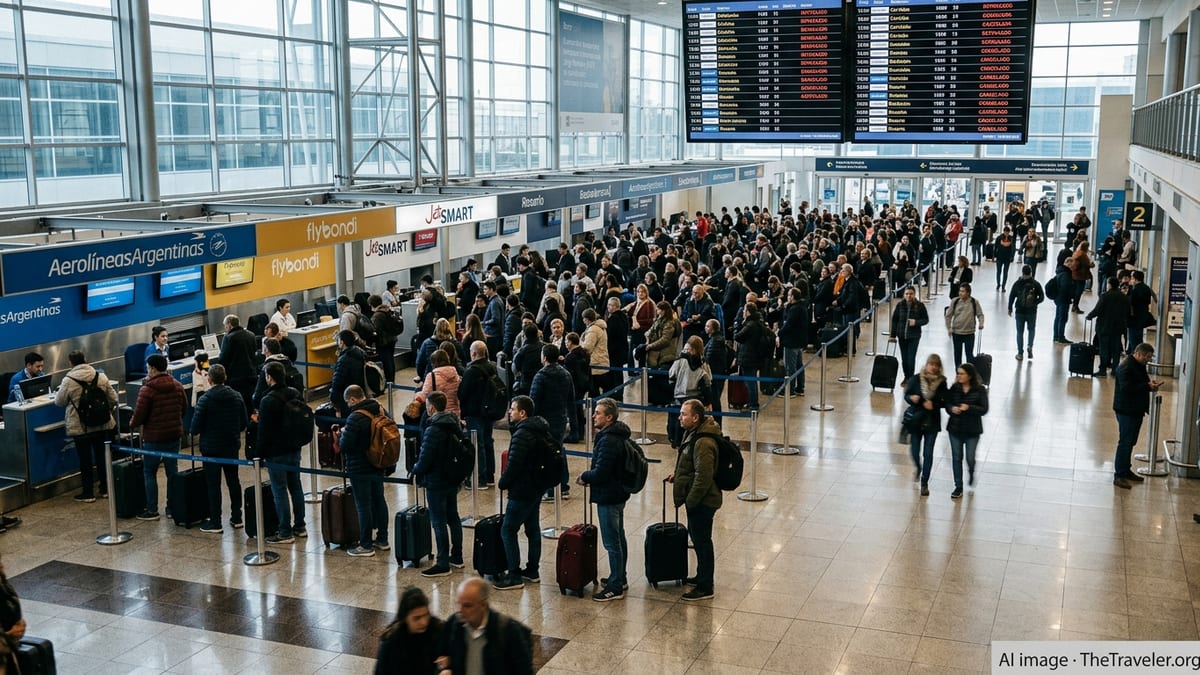
Hundreds of passengers traveling across Argentina on Friday faced widespread disruption as 39 delayed flights and 16 cancellations rippled through services operated by Flybondi, Aerolineas Argentinas, Ethiopian Airlines and other carriers at airports in Buenos Aires, San Miguel de Tucumán, San Carlos de Bariloche and Ezeiza.
Get the latest news straight to your inbox!
Delays and Cancellations Ripple Across Key Argentine Hubs
Publicly available airport operations boards and local media reports indicate that combined delays and cancellations mounted through the day at Buenos Aires’ metropolitan terminals and major regional gateways. The disruption affected domestic services linking the capital with San Miguel de Tucumán and San Carlos de Bariloche, as well as international operations routed through Ezeiza International Airport.
The tally of 39 delayed flights and 16 cancellations reflects a mix of postponed departures, aircraft held on the ground awaiting improved conditions, and services removed from schedules altogether. Passengers faced extended waits in departure halls and, in some cases, overnight rebookings on later flights or alternative routings.
According to published coverage of recent operational data, Flybondi and Aerolineas Argentinas were among the most heavily affected carriers, alongside selected long haul and regional operators serving Buenos Aires and Ezeiza. Ethiopian Airlines, which serves Buenos Aires via Ezeiza, also appeared among airlines showing delays, highlighting how local constraints can quickly extend to intercontinental networks.
The impact was felt not only in the capital but also in provincial airports such as San Miguel de Tucumán and the tourism gateway of San Carlos de Bariloche, where knock-on effects from late inbound aircraft and missed connections compounded local congestion.
Weather, Congested Infrastructure and Labor Tensions Drive Disruption
Recent Argentine aviation coverage has repeatedly pointed to a combination of dense fog, storm systems and high seasonal traffic as a major driver of irregular operations. Reports from Ezeiza this week described periods of low visibility that led to suspensions, diversions and a cluster of flights marked as delayed or cancelled, with some services diverted to Aeroparque in central Buenos Aires when conditions allowed.
Alongside the weather, chronic congestion at Buenos Aires’ airports remains a structural issue. Ezeiza and Aeroparque handle the majority of Argentina’s international and domestic traffic, and publicly available statistics show them among the country’s busiest hubs. When visibility deteriorates or a runway closure is ordered for maintenance, the limited margin in the system can quickly translate into cascading delays across the schedule.
Labor relations in the aviation sector have also been a recurring source of disruption. Previous industrial actions by air traffic controller groups and airline unions have resulted in significant waves of cancellations and reprogrammed flights for Aerolineas Argentinas, Flybondi and other carriers. While the latest disruptions center primarily on weather and operational constraints, the broader context of strained staffing and labor negotiations continues to shape how quickly airlines and airports can recover when operations are stressed.
Industry observers note that this mix of weather exposure, infrastructure bottlenecks and periodic labor tensions leaves Argentina’s domestic network particularly vulnerable, especially at peak holiday periods when demand surges on routes to popular destinations such as Bariloche.
Flybondi and Aerolineas Argentinas Under Renewed Scrutiny
The latest wave of disruption has once again focused attention on Flybondi, the country’s largest low cost airline, and Aerolineas Argentinas, the state-owned flag carrier. Publicly accessible performance data and previous government statements show that Flybondi has been warned in the past over high cancellation rates and demanded to present corrective plans after episodes that left thousands of travelers stranded.
Investigations and analyses in Argentine media have chronicled periods in which Flybondi recorded exceptional levels of delays and cancellations, particularly around peak holiday travel. Commentators have linked these problems to a lean fleet, tight aircraft utilization and exposure to maintenance or crew availability issues that leave little buffer when conditions deteriorate.
Aerolineas Argentinas, while operating a larger and more diversified network, has also experienced significant disruption during prior labor disputes, with some pilot and cabin crew actions prompting days marked by hundreds of cancellations and tens of thousands of affected passengers. Such episodes have fueled ongoing debate over the resilience and cost structure of the national carrier.
The presence of Ethiopian Airlines among the delayed flights at Ezeiza underscores that even international operators with generally strong on time records can be caught up when Argentine hubs slow down. Long haul services often depend on tightly timed connections at origin and destination, so a local ground stop or extended fog can require last minute schedule adjustments with far reaching consequences for connections in Africa, Europe or other parts of South America.
Knock On Effects for Tourism and Regional Connectivity
Friday’s disruptions hit routes that are crucial for domestic tourism and regional economic links. San Carlos de Bariloche, one of Argentina’s busiest provincial airports, is a key gateway for both winter ski traffic and year round nature tourism. When flights between Buenos Aires and Bariloche are delayed or cancelled, travelers can miss hotel bookings, excursions and onward transfers, amplifying the economic impact beyond the airport perimeter.
San Miguel de Tucumán, another airport affected by the latest wave of delays and cancellations, is an important node for northern Argentina, handling both business travel and growing tourist flows. Reports from recent months have highlighted concerns from local sectors about recurring irregular operations on flights connecting the region with Buenos Aires, including on services operated by low cost carriers.
According to tourism industry commentary, repeated episodes of large scale disruption risk undermining confidence in domestic air travel among both local residents and international visitors. Travelers planning itineraries that combine Buenos Aires with Patagonia, the northwest or the Lake District may increasingly factor in extra buffer days, alternative ground transport, or higher fares on carriers perceived as more reliable.
While Argentina’s aviation market has expanded in recent years, with low cost entrants adding capacity and new routes, these benefits can be overshadowed when operational reliability falters. The current round of delays and cancellations reinforces long standing questions about how well the country’s air transport system can support its ambitions as a destination.
What Passengers Can Do When Disruptions Hit
Consumer advocates and travel industry guidance consistently stress the importance for passengers in Argentina of monitoring flight status through official airline channels and airport information boards on the day of travel. Same day schedule changes and rolling delays are common when weather or operational issues arise, meaning original booking confirmations may quickly become outdated.
For those already affected by Friday’s disruptions, publicly available airline policies outline options that can include free rebooking to the next available flight, voucher offers or, in some cases, refunds. The specific remedies depend on the carrier, the cause of the disruption and applicable regulations, which can differ from those in North America or Europe and may offer more limited protections.
Travel planners recommend building additional time into domestic connections in Argentina, especially during peak seasons and when traveling to high demand destinations such as Bariloche or Iguazu. Choosing earlier flights in the day, when possible, can also provide more rebooking options if operations begin to unravel later on.
Ultimately, the events affecting Flybondi, Aerolineas Argentinas, Ethiopian Airlines and other carriers across Buenos Aires, Ezeiza, San Miguel de Tucumán and San Carlos de Bariloche highlight an increasingly central issue for travelers in Argentina: balancing competitive fares and expanded route choices with a realistic assessment of the risk of delays and cancellations, and preparing strategies to mitigate that risk when journeys do not go as planned.