


More news on this day
Passengers traveling through Manchester Airport are facing renewed disruption as a wave of flight delays and cancellations affects departures and arrivals at the busy northern hub, complicating summer getaway plans for thousands of travelers.
Get the latest news straight to your inbox!
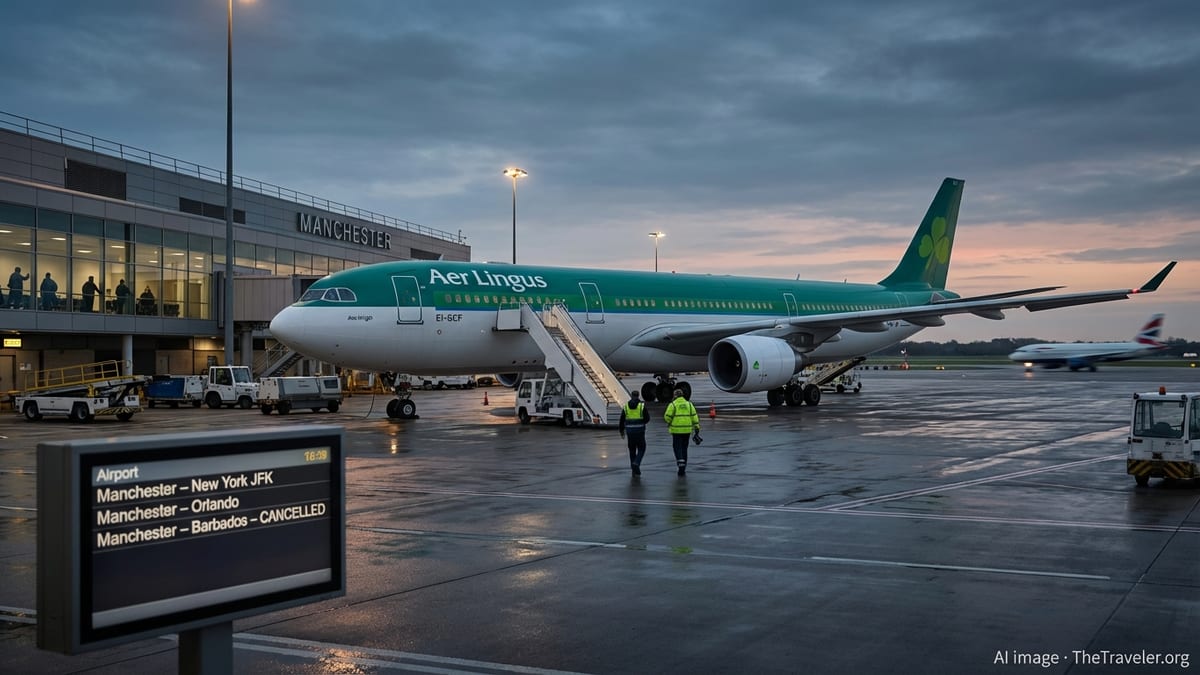
Departures hit by rolling delays and cancellations
Live flight data and passenger reports indicate that a growing number of services from Manchester Airport have been delayed, with some departures cancelled outright as airlines adjust schedules and aircraft rotations. Several short haul leisure routes have seen last minute changes, forcing holidaymakers to rebook or reroute at short notice.
Disruption has been particularly evident on popular European services, where a mix of operational issues and weather-related knock-on effects elsewhere in airline networks has resulted in late departures. Some flights have been retimed by several hours, while others have been withdrawn from the schedule, leaving passengers reliant on alternative services later in the day or on subsequent dates.
The pattern reflects wider strain across European aviation, where tight summer schedules leave little spare capacity to recover from relatively small incidents. When an inbound aircraft arrives late or encounters a technical or staffing issue, the setback can cascade through multiple subsequent flights, including those departing from Manchester.
Travel industry trackers show Manchester consistently experiencing one of the higher proportions of delayed departures among major UK airports, amplifying the impact of any fresh disruption on already stretched schedules.
Knock-on impact on arrivals and onward journeys
Arriving flights into Manchester have also been caught up in the disruption, with delays on inbound services from European and domestic airports affecting passengers with onward rail, coach and connecting flight plans. Later than scheduled arrivals leave travelers with less time to clear immigration and baggage reclaim before making their next leg.
Where flights have been cancelled at origin airports, some services have simply not operated to Manchester at all, reducing connectivity and leaving gaps in the timetable. In these cases, passengers are being reprotected on later flights where seats are available, but busy peak-season loads mean options can be limited.
The ripple effect extends beyond the airport perimeter. Late arrivals have contributed to crowding at nearby rail stations connecting Manchester Airport with the wider North West, as travelers attempt to salvage their journeys by switching to trains or long distance coaches. Even where rail lines are running normally, the additional demand from disrupted air passengers can put pressure on services at peak times.
For those with long haul connections, any delay on a feeder flight into Manchester can be particularly challenging. Minimum connection times may be breached by relatively modest schedule slips, resulting in missed onward departures and, in many cases, overnight stays while waiting for the next available long haul service.
Background of a busy hub with limited resilience
The latest disruption comes against the backdrop of strong traffic growth at Manchester Airport, which has been handling rising passenger numbers as demand rebounds and new routes are added. Publicly available performance data for UK airports shows that Manchester already experiences a relatively high share of delayed departures compared with some other major hubs, highlighting the pressure on its operations during busy periods.
Industry reports suggest that factors such as tight turnarounds, constrained stands and ongoing infrastructure works can reduce operational resilience when airlines and ground handlers are running at full capacity. In these circumstances, even localized issues at aircraft, crew or service provider level can trigger disproportionate knock-on effects across the daily schedule.
Historical events also underline how vulnerable operations can be to sudden disruptions. Previous incidents at Manchester involving power supply problems and IT failures have led to widespread cancellations and delays, with lessons from those episodes informing current contingency planning. Nevertheless, any new wave of disruption during the peak holiday season is likely to test those plans and the airport’s ability to recover quickly.
Analysts point out that Manchester’s role as a key international gateway for northern England means any sustained operational difficulties can have outsized consequences for tourism, business travel and regional connectivity, particularly on days when multiple airlines are adjusting schedules simultaneously.
What passengers can do if their flight is affected
Consumer rights organisations advise that passengers whose flights from Manchester are delayed or cancelled should first confirm the latest status directly with their airline or booking provider, as schedules and estimated departure times can change at short notice. Many carriers update their mobile apps and online platforms in near real time, offering options to rebook, request refunds or switch to alternative routes where available.
Under UK and European air passenger protection rules, travelers on eligible flights may be entitled to assistance such as meals, refreshments and accommodation during extended delays, as well as rerouting or reimbursement where services are cancelled. Whether additional financial compensation is due will depend on the cause of the disruption and whether it is within the airline’s control.
Travel experts recommend that passengers keep boarding passes, booking confirmations and receipts for any reasonable out of pocket expenses incurred while waiting, in case they need to submit a claim later. Documentation of delay lengths and any written notifications from airlines can also support potential claims through airlines directly or via specialist claims firms.
Those due to travel from Manchester over the coming days are being urged by travel industry commentators to allow extra time to reach the airport, monitor flight information closely and have contingency plans for ground transport and accommodation, particularly if their journeys include critical connections or fixed time events.
Prospects for recovery and the hours ahead
Operational data suggests that the pattern of delays and cancellations at Manchester can ease or worsen quickly depending on how effectively airlines and the airport are able to reset their schedules during quieter periods. If aircraft and crews can be repositioned efficiently, some later flights may operate closer to schedule, helping to reduce backlogs.
However, with high passenger volumes and limited slack in daily rotations, any further incidents affecting individual flights, ground handling or air traffic control could prolong disruption. Evening departures are often particularly vulnerable if early morning and midday delays have not been fully absorbed during the afternoon.
Travel analysts note that passengers booked on early services in the following days may benefit from somewhat greater reliability, as overnight recovery can give airlines a chance to restore regular rotations. That said, aircraft and crews out of position due to cancellations may still cause isolated problems, especially on busier leisure routes.
With the holiday season ramping up, attention is likely to remain focused on Manchester Airport’s operational performance, as travelers, airlines and the wider tourism sector watch closely to see how quickly the current wave of disruption can be contained and whether further schedule turbulence lies ahead.