


More news on this day
Weather conditions across the Southeast continued to disrupt air travel at Hartsfield-Jackson Atlanta International Airport on Monday, as lingering storms and operational recovery efforts led to fresh rounds of delays and cancellations for passengers traveling through one of the world’s busiest hubs.
Get the latest news straight to your inbox!
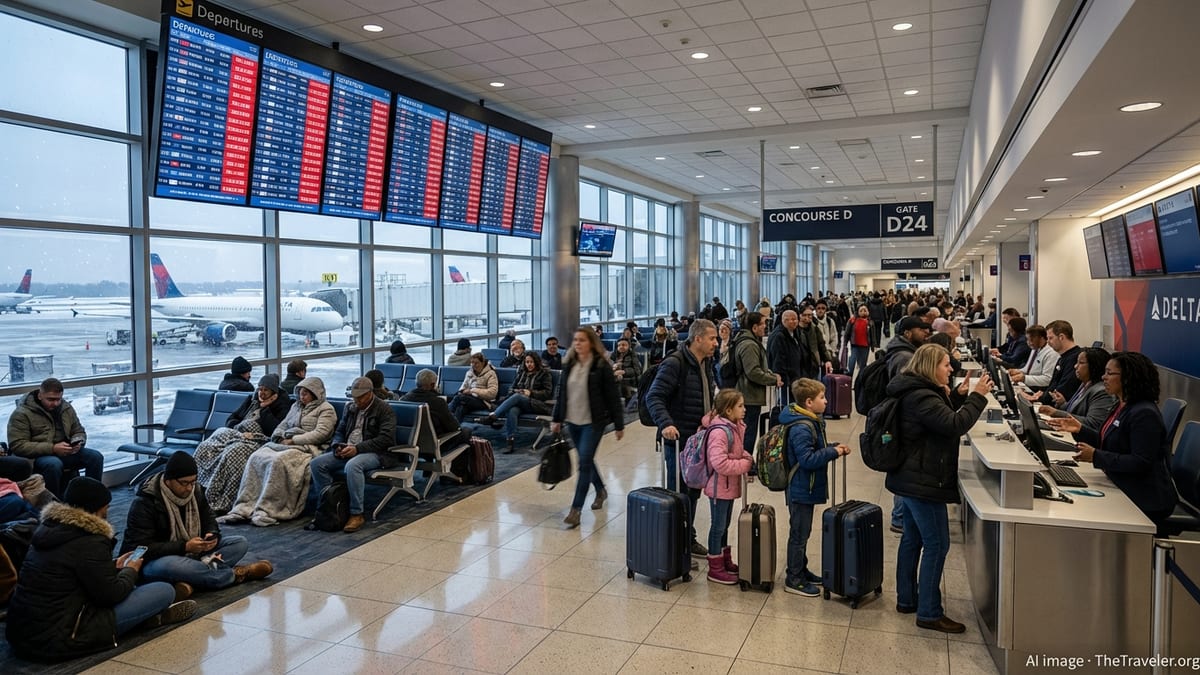
Lingering Weather Systems Keep Pressure on Operations
Regional forecasts on Monday pointed to unsettled conditions around parts of the Southeast, with rain and storms still affecting key air corridors even as skies over central Atlanta showed improving periods of sunshine and milder temperatures. Aviation tracking data indicated that carriers were still working through disruptions linked to earlier storm activity, including convective weather that passed through major hubs over the weekend.
Hartsfield-Jackson Atlanta International Airport functions as a critical connection point for domestic and international routes, so even modest weather disturbances in surrounding states can ripple through local schedules. When thunderstorms or low clouds pass through approach and departure paths, air traffic controllers often reduce the rate of arrivals and departures, which in turn produces knock-on delays for aircraft waiting to reach gates or depart.
Operational recovery can take much longer than the storms themselves. Aircraft and crews that were diverted or delayed elsewhere in the network over previous days frequently arrive out of position, leaving airlines to reshuffle equipment and staffing on Monday morning and into the afternoon. That dynamic was reflected in patchy departure boards, where some routes operated near schedule and others showed extended holds.
Published forecasts for Atlanta on Monday highlighted relatively moderate temperatures for mid-June and only limited chances of precipitation during peak daytime hours, but aviation schedules remained sensitive to upstream weather over neighboring states and along the Eastern Seaboard. That combination of residual weather and logistical strain led to a steady stream of schedule changes for travelers transiting Atlanta.
Flight Cancellations and Delays Ripple Through the Network
Publicly available flight-tracking services showed that Atlanta continued to rank among the U.S. airports with elevated disruption levels on Monday, though not at the extreme peaks seen during major winter storms or severe thunderstorm outbreaks earlier this year. The pattern included clusters of cancellations on certain regional and connection-heavy routes, alongside widespread but shorter delays on others.
Passengers connecting through Atlanta experienced the compounding effect of disruptions at other hubs, particularly where weather affected aircraft inbound from the Midwest or Northeast. Even when conditions over Atlanta itself remained relatively calm, storms along an inbound route could force pilots to deviate, slow down, or wait for ground stops to be lifted at origin airports, adding further minutes or hours to already tight schedules.
Travelers arriving for morning and midday departures encountered a mix of outcomes. Some flights left close to on time, especially on routes less exposed to active weather systems, while others faced rolling departure estimates as airlines coordinated slots with air traffic control. The variability underscored how quickly conditions can change at a large hub, and how even a modest set of delays can build as the day progresses.
By Monday afternoon, airlines were focused on reducing the backlog and preserving evening connections where possible, though schedules remained fluid. For many passengers, that meant longer dwell times in concourses, rebooked itineraries, or overnight stays when missed connections could not be recovered the same day.
Impact on Passengers and Ground Transportation
The disruptions at the airport had visible consequences throughout the terminal complex, from ticket counters and security checkpoints to curbside pickup areas. While crowding levels varied by time of day, lines at rebooking desks and customer service centers reflected the volume of travelers seeking alternative flights, standby options, or updated connections.
Delays and cancellations also affected ground transportation patterns around the airport. Rideshare and taxi queues shifted as arriving passengers reached curbside later than planned, while drivers for private transfers and hotel shuttles adjusted schedules to align with revised arrival times. Travelers relying on regional rail and bus services timed to flight schedules needed to monitor updated departure boards to avoid extended waits.
Inside the terminals, concession areas and seating zones served as de facto waiting rooms for stranded travelers. Families with children, international visitors making their first connection through Atlanta, and business travelers on tight itineraries all faced similar uncertainty as departure times adjusted throughout the day. Many turned to airline mobile apps and digital boards for real-time status checks, often refreshing frequently as conditions evolved.
Despite the heightened disruption, basic airport operations such as security screening, baggage handling, and interterminal transport continued under normal procedures. However, with many passengers arriving earlier than usual to account for possible weather-related complications, periods of heavier foot traffic were reported around check-in and security areas in the morning and early afternoon.
Advice for Travelers Navigating Weather-Related Disruptions
For travelers with flights into or out of Atlanta, Monday’s conditions served as a reminder of how quickly weather can affect airline schedules even during non-winter months. Aviation and travel experts frequently recommend building extra time into itineraries that involve tight connections, especially during seasons prone to thunderstorms across the Southeast and Midwest.
Passengers are widely encouraged to monitor their flights through airline apps and text alerts rather than relying solely on printed boarding passes issued hours earlier. Real-time tools typically provide the earliest indication of gate changes, rolling departure estimates, or rerouting decisions, which can be critical for those moving between concourses in time for boarding.
Flexible packing and planning can also help mitigate the impact of unexpected overnight stays. Travelers often benefit from carrying essential medications, chargers, and a small change of clothes in hand luggage, particularly when connecting through major hubs where hotel rooms close to the airport can fill quickly during broad disruption events.
In addition, travel planners suggest that passengers consider earlier departures when possible on days with heightened weather risk. Morning flights are generally less affected by same-day storm development, which often intensifies during afternoon and evening hours across much of the Southeast in late spring and summer.
Outlook for the Remainder of the Week
Short-range forecasts for the Atlanta area pointed to a changing weather pattern over the next several days, with relatively stable conditions expected on Monday giving way to higher rain chances later in the week. That outlook raised the possibility of continued intermittent disruption, particularly during afternoon and evening peaks when thunderstorms are most likely to develop.
For airlines operating large connecting banks through Atlanta, the upcoming pattern may require ongoing adjustments to scheduling and crew placement. If storms materialize along major routes to and from the airport, carriers may again need to trim flight loads, hold aircraft on the ground, or reroute planes around the most active cells to maintain safe operations.
Travelers planning trips through Atlanta this week are likely to benefit from checking both their flight status and the broader regional forecast before heading to the airport. While Monday’s conditions showed that flights can still be affected even when local skies appear relatively cooperative, awareness of developing systems across the Southeast and East Coast can offer valuable context for understanding potential delays.
As the summer travel period continues to ramp up, the situation on Monday at Hartsfield-Jackson illustrated how central Atlanta remains to the nation’s aviation network, and how weather-sensitive that network can be when storms linger over key corridors.