


More news on this day
Passengers using Manchester Airport on Friday 12 June are facing a series of cancellations and longer delays across both short haul and long haul routes, according to live operational data and airline status updates.
Get the latest news straight to your inbox!
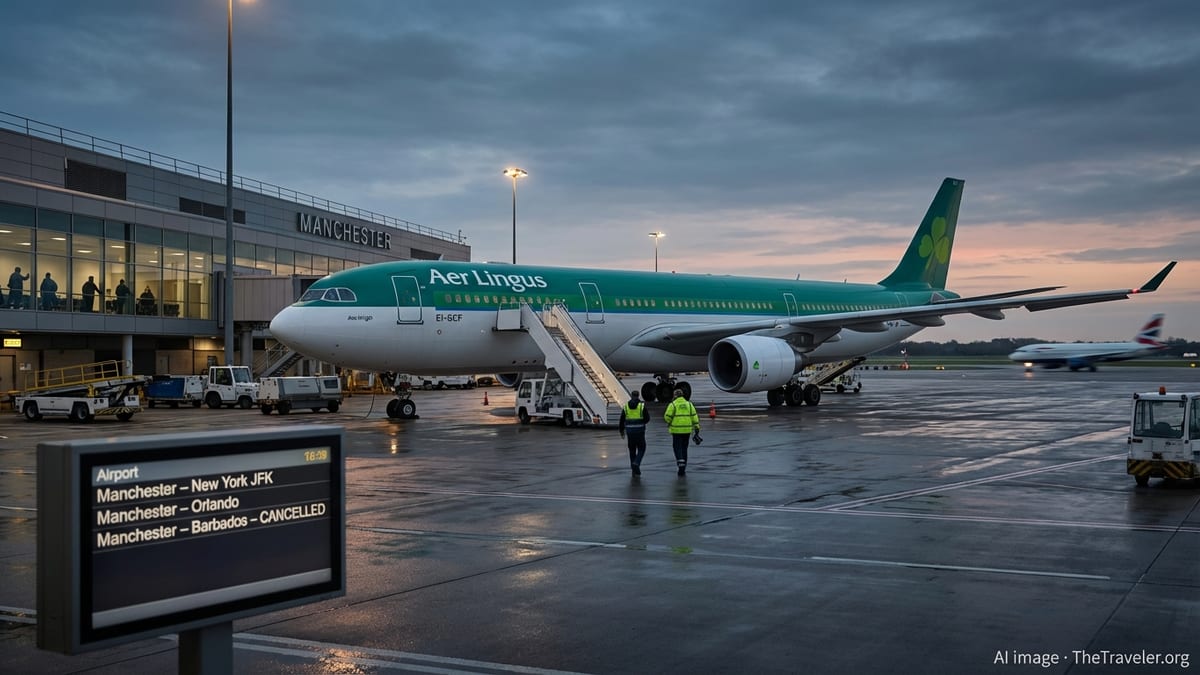
Overview of disruption at Manchester Airport
Publicly available departure and arrival boards for Manchester Airport on 12 June show a mixed operating picture, with most flights running broadly to schedule but several notable cancellations and extended delays affecting key leisure and long haul services. The disruption appears to be concentrated on a handful of routes rather than indicating a wider operational shutdown.
Live tracking services and airline status pages indicate that some departures have been withdrawn entirely from the schedule, while others are running with significant time changes. These issues are spread across different carriers, including low cost and full service airlines, and affect flights from both Terminal 2 and Terminal 3.
The pattern reflects a wider environment in which individual technical issues, aircraft availability and operational knock-on effects can lead to cancellations on specific rotations, even when an airport’s overall timetable remains largely intact. For travellers, this means close attention to flight status remains essential, even on otherwise routine summer dates.
Short haul departures cancelled or heavily delayed
Among short haul services, status pages for several European leisure routes include cancellations out of Manchester on 12 June. Real time data for Ryanair flight FR9073 from Manchester to Alicante lists the service as cancelled for this date, indicating that the aircraft will not operate its scheduled departure or arrival. Passengers booked on this flight are being directed via airline channels to consider alternative options.
Separately, information for easyJet service U27266, which normally links Manchester with Palma de Mallorca, shows a change from an earlier delay to full cancellation in updated listings. The service had already been flagged as disrupted, and more recent schedule data marks the flight as cancelled, leaving travellers needing to rebook or seek refunds under the carrier’s policies.
These short haul cancellations stand out against a broader departure board where many other flights to Spain, Portugal and other Mediterranean destinations continue to operate. However, the loss of individual rotations on busy leisure routes can significantly affect holidaymakers with fixed accommodation check-in times or cruise departures tied to arrival windows.
Long haul services affected, including Orlando route
Manchester’s role as a UK base for transatlantic links means that cancellations on long haul sectors can have an outsized impact. Real time listings for Aer Lingus flight EI035 from Manchester to Orlando show the service as cancelled around this date, with schedule tables indicating no active departure or arrival times and the status recorded as “canceled.” The change leaves a gap on a popular family route into Florida at the start of the main summer travel build up.
Published coverage in recent months has also highlighted adjustments to Aer Lingus operations from Manchester, including changes to the carrier’s North American network out of the airport. Against that backdrop, a cancellation of the Orlando service on 12 June adds to uncertainty for passengers who use Manchester as an alternative to London for direct long haul departures.
When long haul services are withdrawn, options to rebook can be more limited compared with European routes, particularly for passengers needing to travel on specific days or who are connecting beyond the first point of entry. This can lead to longer rerouting journeys via other UK or European hubs and, in some cases, overnight stays.
Live boards show pockets of delay alongside cancellations
Alongside outright cancellations, Manchester’s live departure and arrival pages on 12 June show isolated examples of longer delays. Some services display revised departure or arrival times well beyond their original slots, reflecting late inbound aircraft or operational issues elsewhere in the network. In many cases these flights remain scheduled to operate, but with adjusted timings.
For example, live schedule tools tracking recent Jet2 operations into Manchester from European cities show a pattern of flights occasionally arriving significantly behind timetable, with average delays reported on certain routes. While specific flights on 12 June may still land, the typical delay margins for some services underline the potential for knock-on disruption to subsequent rotations during busy periods.
The airport’s own digital boards allow searches by terminal and date, giving passengers a way to verify whether their flight is listed as on time, delayed or cancelled. Travel specialists advise checking these tools repeatedly on the day of travel, rather than relying solely on earlier confirmation emails or historical timetables.
What passengers should do if their flight is affected
Consumer guidance issued in recent years for UK travellers stresses the importance of documenting any cancellation or substantial delay at the time it occurs. Passengers are generally encouraged to keep screenshots of boarding passes, flight status pages and any messages from airlines, as these records can assist later when seeking refunds, rerouting or compensation under UK261 rules where applicable.
Industry advice notes that airlines usually set out their rebooking and refund processes through mobile apps, websites or customer service channels after a flight is marked as cancelled. In many cases travellers can request a new date of travel or a refund online, although high volumes of disruption can temporarily slow response times on busy summer days.
Specialist passenger rights organisations also recommend that travellers familiarise themselves with the difference between delays and cancellations when assessing potential compensation. While not every cancellation or delay will qualify, particularly when caused by extraordinary circumstances, having a clear record of timings and airline communications can make it easier to submit a claim where rules allow.