


More news on this day
UK holidaymakers heading to Europe this summer are being urged to brace for severe border queues, after travel commentator Simon Calder highlighted five airports where new EU entry checks and heavy demand could combine to create the longest delays.
Get the latest news straight to your inbox!
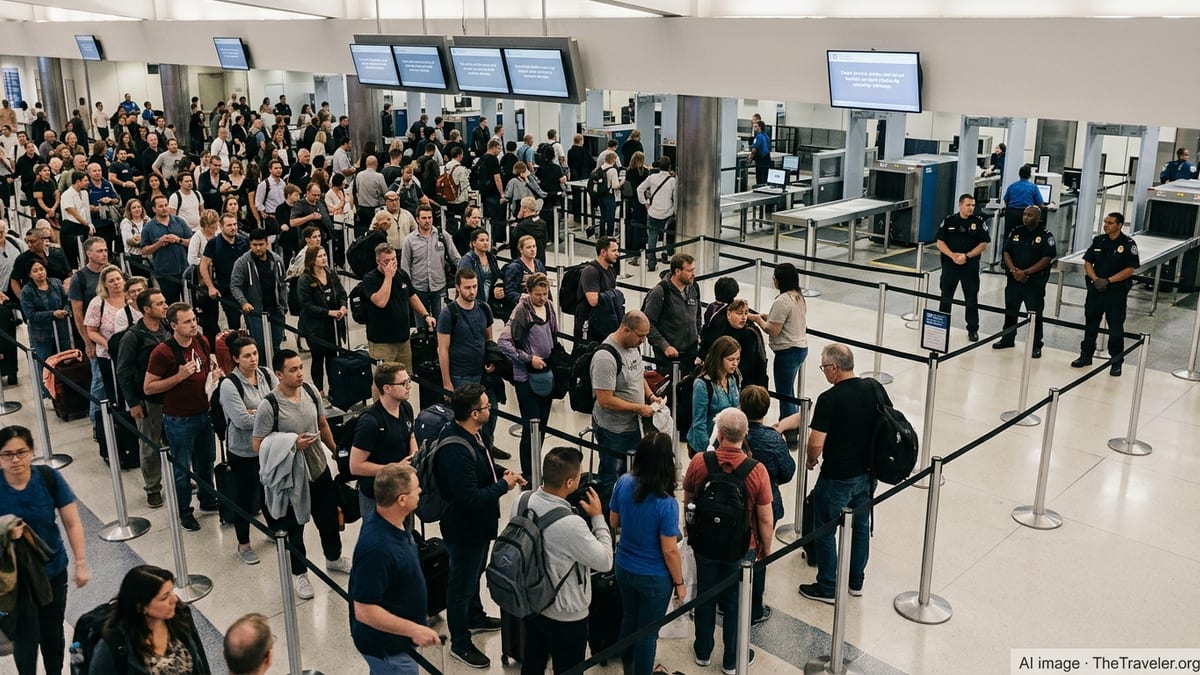
Calder’s warning amid turbulent EES rollout
According to recent coverage in the Independent’s Travel Insider newsletter, Simon Calder has focused attention on the first full holiday season operating under the European Union’s new Entry/Exit System for non-EU visitors. The scheme, which records fingerprints and facial biometrics at the external border of the Schengen area, has already been linked with long queues for British travellers this spring as it beds in.
Calder’s latest analysis singles out five major gateways where the pressure is expected to be most acute for UK passport holders this summer. While individual experiences can vary widely, he points to a combination of very high passenger volumes, complex transfer operations and early reports of congestion at frontier checkpoints since EES went live.
The commentary comes as industry bodies such as the International Air Transport Association warn that, without further staffing and process improvements, border waits of three to six hours are possible at peak times in some European hubs. Publicly available guidance from airlines has already shifted, with several carriers advising Britons to build in significantly more time between arrival at the airport and departure, particularly when flying home from the continent.
Although exact delay patterns will fluctuate day to day, Calder notes that the airports on his “worst for border delays” list share common structural challenges. These include limited space around control points, heavy reliance on connecting traffic and, in some cases, additional pressures from national security checks layered on top of the new EU system.
Paris Charles de Gaulle: crowded hub under scrutiny
Paris Charles de Gaulle is one of the airports highlighted by Calder as a potential flashpoint for border queues this summer. Earlier reader reports and travel commentary have long described the hub as a difficult environment at peak times, with sprawling terminals, long walking distances and busy transfer flows making it harder to move passengers quickly through passport control.
Since the introduction of EES, anecdotal accounts from British travellers at Charles de Gaulle have described substantial waits at arrival and departure immigration, particularly during weekend peaks and school holidays. With the airport also preparing for a busy events calendar across France, concerns are growing that already tight staffing at frontier posts may struggle to match surging demand.
Calder’s assessment notes that UK visitors often encounter the most serious delays when arriving in Paris at the same time as multiple long haul services from outside Europe. In these circumstances, manual processing of first-time EES registrations can significantly slow the flow through the booths, leaving even connecting passengers at risk of missing onward flights.
Publicly available information from aviation analysts suggests that any operational snags at Charles de Gaulle can ripple across the wider European network because of the airport’s role as a major transfer hub. That dynamic, combined with the learning curve around biometric checks, is a key reason it appears on Calder’s list.
Amsterdam, Frankfurt and Munich face biometric bottlenecks
Calder also singles out three northern European giants, Amsterdam Schiphol, Frankfurt and Munich, as high risk locations for frontier queues in the coming months. All three airports handle large numbers of non-EU passengers, a high share of transfer traffic and tight morning and evening departure waves, which can severely test border capacity.
Amsterdam has invested heavily in automated gates and additional staff following several summers of baggage and security disruption, yet reports this spring indicate that EES registrations have still created pinch points at certain times of day. Travellers from the UK and other third countries who need to complete the new checks can find themselves funneled into relatively small spaces, with limited ability for the airport to expand the footprint of control areas quickly.
In Germany, Frankfurt and Munich are under pressure for different but related reasons. Recent aviation data has shown both airports near the top of European rankings for flight cancellations and disruption this season, reflecting a mix of fuel supply issues and operational strain. When flights arrive off schedule, the carefully planned rhythm of border staffing can easily be knocked off balance, leaving longer waits for those queueing to enter or exit the Schengen zone.
Calder’s analysis notes that transfer passengers at these hubs are particularly exposed. A delayed inbound flight, followed by a slow-moving EES registration process at passport control, can turn what appears on paper to be a comfortable connection into a race against the clock, especially during the evening peak when alternative routings are scarce.
Barcelona joins the list as leisure demand surges
Rounding out Calder’s five “worst for delays” list is Barcelona, a gateway that has seen sustained growth in leisure travel from the UK in recent years. The airport’s popularity with both traditional airlines and low cost carriers means that, on busy summer weekends, large numbers of British holidaymakers can arrive within short time windows, all needing to complete border formalities.
Early in the EES rollout, travellers passing through Barcelona have reported variable experiences, with some flows moving quickly while others face longer queues due to technical glitches or staffing shortages at the booths. According to published analysis of European punctuality trends, the airport has also seen an uptick in knock-on delays when weather or air traffic control restrictions affect the wider Mediterranean region, further bunching arrivals at peak times.
Calder’s commentary suggests that the configuration of some non-Schengen gates at Barcelona, where space is comparatively tight, may accentuate the impact of any slowdown at passport control. With limited room to hold waiting passengers, queues can quickly spill back into departure lounges and gate areas, increasing stress levels for travellers and staff alike.
Tourism officials have repeatedly stressed the importance of smooth operations to protect the region’s visitor economy. However, with air traffic across Europe forecast to grow again this summer compared with last year, any capacity constraints at frontier checkpoints in Barcelona are likely to be felt most acutely in July and August.
What travellers can do to reduce the risk
While Calder’s list of five high risk airports is intended as a warning rather than a reason to cancel trips, it underlines the need for UK visitors to factor in more generous time buffers when travelling through key European hubs this summer. Publicly available industry guidance consistently recommends arriving earlier at departure airports, particularly when flying back from the continent to the UK or when connecting onward beyond Europe.
For anyone booking new itineraries, experts advise considering routings that avoid tight connections at the busiest hubs highlighted in Calder’s analysis, especially at peak times of day. Choosing flights with longer layovers, even at the cost of a slightly extended journey, can provide a margin of safety if EES queues are running longer than expected at border control.
Travellers are also encouraged to complete any airline or airport pre-registration steps where available, check terminal and gate information before setting out, and monitor local media or airport updates for signs of disruption. Although many of these measures cannot fully remove the risk of delays linked to the new biometric system, they can help reduce the chances of missed flights or abandoned trips.
Calder’s warning ultimately reflects a wider reality facing European aviation this summer: with traffic rising and infrastructure under strain, border control has become a critical pressure point. For British holidaymakers planning long awaited trips, treating frontier queues as a core part of the journey rather than an afterthought may be the surest way to stay one step ahead of the disruption.