


More news on this day
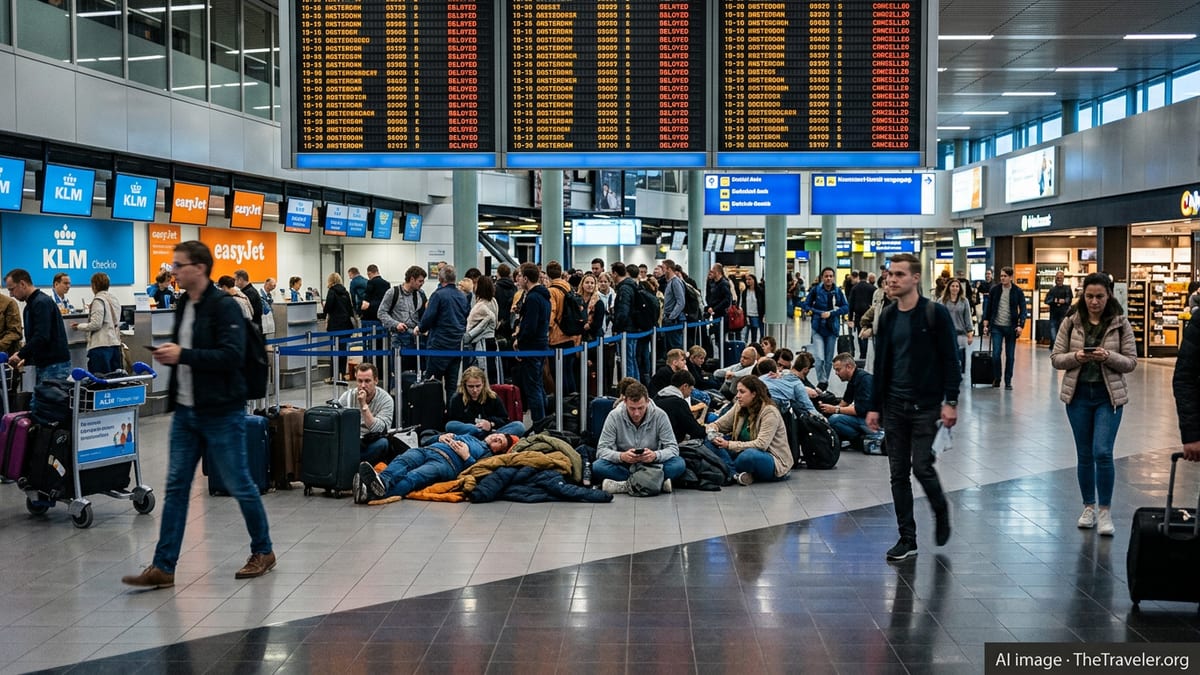
Hundreds of travelers were left stranded or facing missed connections on Monday as significant operational disruption at Amsterdam Schiphol Airport and Princess Juliana International Airport in Sint Maarten delayed 417 flights and canceled 11, disrupting services operated by KLM, Delta Air Lines, Air France, American Airlines, JetBlue, Winair, and other carriers on busy routes to London, New York, and regional Caribbean destinations.
Get the latest news straight to your inbox!
Heavy Disruption Across Two Key Hubs
According to live operational data compiled from airport information dashboards and independent flight status trackers, both Amsterdam Schiphol and Princess Juliana International experienced widespread schedule disruption, with knock-on effects rippling across European and transatlantic networks. Schiphol, one of Europe’s busiest hubs and a primary base for KLM and its SkyTeam partners, reported the bulk of the delays as aircraft and crews fell out of position throughout the day.
Princess Juliana International, a critical gateway for the northeastern Caribbean and the home base for regional operators such as Winair, also saw its tightly timed bank of flights pushed back, resulting in missed onward connections for passengers heading to islands including St. Barthélemy and Anguilla. Publicly available airport departure boards showed delays stretching from morning into the evening, with some services departing more than two hours behind schedule.
The dual-hub disruption was especially impactful given the role of Amsterdam as a major long-haul connector and Sint Maarten’s position as a regional transfer point. Travelers attempting to move between North America, Europe, and smaller Caribbean islands faced extended waits, rebookings, and last-minute itinerary changes as airlines attempted to recover their schedules.
KLM, Delta, Air France and Partners Scramble to Recover Schedules
Published coverage and airline schedule data indicate that KLM and its joint venture partners Delta Air Lines and Air France were among the hardest hit carriers at Amsterdam. These airlines rely on finely timed connection windows through Schiphol for flights to London, New York, and other long-haul destinations, meaning even moderate disruption can quickly cascade into missed connections and aircraft rotations out of place.
At New York John F. Kennedy and London airports, arrival boards reflected late incoming services from Amsterdam, with some aircraft held on the ground in Europe and others arriving behind schedule into congested evening slots. That, in turn, forced airlines to adjust departure times for return sectors and reassign aircraft where possible to minimize further disruption.
Public operational data from route-tracking services show that partner carriers used available slack in their fleets to protect transatlantic services, but shorter European feeder flights and regional legs in and out of Amsterdam bore the brunt of schedule changes. Some passengers reported via social media that they were rebooked onto later departures or rerouted through alternative hubs such as Paris Charles de Gaulle or London Heathrow.
American, JetBlue and Regional Carriers Caught in the Ripple Effect
Transatlantic partners and competitors of the KLM and Air France network, including American Airlines and JetBlue, also experienced knock-on impacts on services linked to Amsterdam and Sint Maarten. Flight status boards showed delays on certain New York and Boston routes where aircraft and crews were scheduled to connect with arriving traffic disrupted in Europe and the Caribbean.
At Princess Juliana International, where JetBlue and American both operate key links to major US gateways, even modest departure delays can pose challenges for same-day connections to onward domestic flights in the United States. On Monday, several northbound services departed behind schedule, compressing connection times at congested US hubs and contributing to additional rebookings.
Regional airline Winair, which operates short inter-island hops from Sint Maarten to nearby islands, was also affected. The carrier’s operations depend heavily on timely arrivals from larger international flights bringing in connecting passengers. When those inbound services run late, regional departures often must be held or re-sequenced, leading to longer ground times and, in some cases, missed same-day connections for travelers heading to smaller Caribbean islands.
Knock-On Impacts for London, New York and Beyond
The disruptions at Amsterdam and Sint Maarten were particularly visible on some of the world’s most heavily traveled city pairs, including routes linking these hubs with London and New York. Airline timetable data and live tracking show that several services between Amsterdam and London experienced rolling delays as crews and aircraft rotated late from earlier sectors, squeezing already busy runway and gate capacity.
On the North Atlantic, departures between Amsterdam and New York were among those affected as carriers worked to balance aircraft utilization with duty-time limits for flight and cabin crews. Delays departing Europe pushed some arrivals into peak evening periods at US airports, creating congestion at immigration and baggage reclaim for passengers already facing extended travel days.
Travel industry analysts note that even a relatively small number of cancelations can have an outsized impact when they occur at key connecting banks. With 11 flights canceled alongside hundreds delayed, rebooking passengers onto remaining services became more complex, and some travelers faced overnight stays or next-day departures as the most practical option.
Passengers Face Long Queues and Guidance to Check Rights
Images and accounts posted to social media platforms on Monday showed long lines at check in, transfer desks, and customer service counters at both Amsterdam Schiphol and Princess Juliana International, as stranded travelers sought rebooking options and information on their rights. Some passengers described waiting several hours to speak with airline staff, while others reported using mobile apps and websites to secure alternative itineraries.
Consumer advocates and passenger-rights platforms urged travelers flying from or through Amsterdam to document delays carefully and keep receipts for meals, hotels, and transport while they waited for new flights. Under European Union air passenger rules, and comparable US and Caribbean policies in certain cases, travelers may be entitled to care, refunds, or compensation depending on the cause and length of delays and cancelations, as well as whether the disruption was within an airline’s control.
Travel planners recommend that passengers scheduled to fly through Amsterdam or Sint Maarten in the coming days monitor their flight status frequently, allow additional time for connections, and consider earlier departures where feasible. Based on recent traffic patterns and data from delay-tracking services, large hub airports can take several operational cycles to fully recover from a day of widespread disruption, even after the immediate cause has been resolved.