


More news on this day
Severe weather sweeping across parts of Japan has triggered major disruption at several of the country’s busiest airports, with 363 flights reported delayed and 18 canceled at Tokyo, Narita, Fukuoka, Osaka Itami, and Sendai, affecting operations for All Nippon Airways, Japan Airlines, Skymark, low cost carrier Peach Aviation, and a number of international connections.
Get the latest news straight to your inbox!
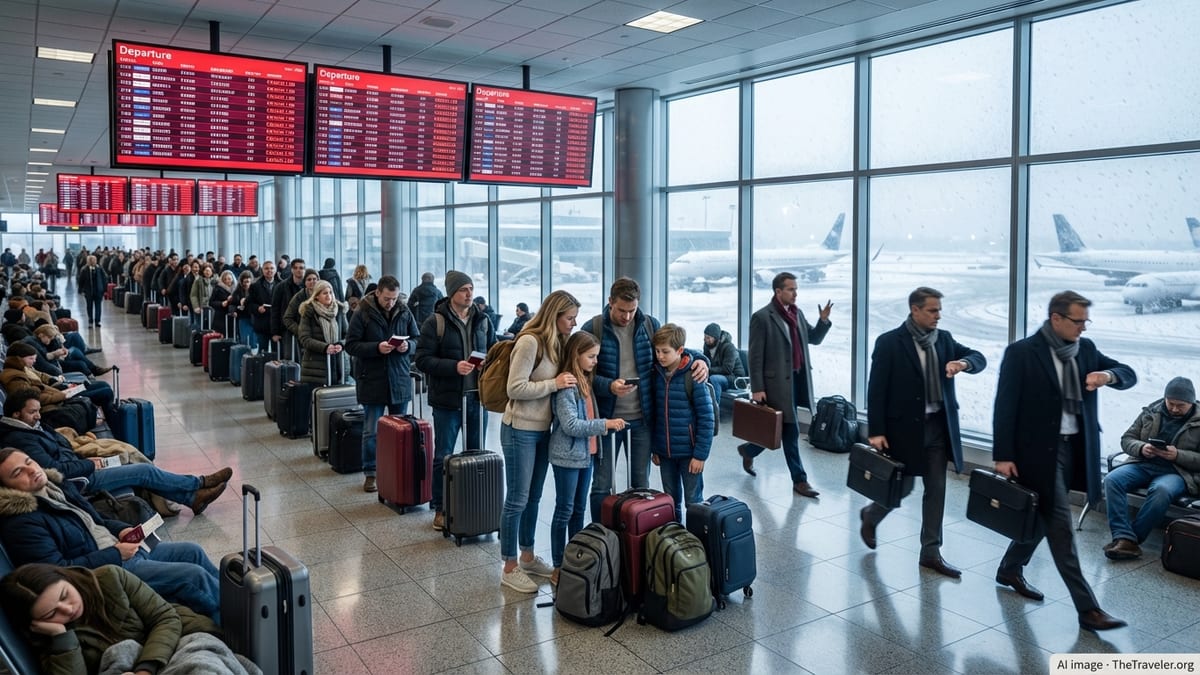
Widespread Disruption Across Japan’s Air Network
The latest wave of disruption unfolded on June 22, with domestic and international flight tracking data showing widespread delays across eastern and western Japan. Narita International Airport, a key long haul gateway, reported a particularly dense cluster of late departures and arrivals, while significant backlogs also developed at Tokyo’s Haneda-adjacent Itami counterpart in Osaka, regional hub Fukuoka, and Sendai in the Tohoku region.
Publicly available airport and airline status pages indicated extended ground holds and adjusted departure slots as strong winds, heavy rain bands, and low cloud intermittently affected approach and departure paths. Aircraft already in the air were in many cases able to land after holding, but turnarounds slowed sharply as ramp operations contended with deteriorating conditions.
By late evening, aggregated figures from flight information services pointed to 363 delayed flights and 18 outright cancellations across the five airports. The bulk of the impact fell on short haul domestic sectors, but knock on effects quickly rippled into international schedules, especially for flights banking on tight connection windows at Narita and Fukuoka.
Japan’s tightly timed domestic network, in which aircraft typically operate multiple sectors per day, amplified the disruption. Delays of an hour or more on early rotations spread into late night departures, with some services pushed beyond curfew windows and ultimately removed from the schedule.
ANA, Japan Airlines, Skymark and Peach Aviation Heavily Affected
Japan’s two largest carriers, All Nippon Airways and Japan Airlines, bore much of the operational strain, reflecting their dense combined footprint at Tokyo and regional airports. Live status feeds on representative domestic flights, including ANA and JAL services into and out of Fukuoka, showed late running patterns persisting throughout the day, with some routes repeatedly posting revised departure estimates.
Budget focused and hybrid operators also faced significant challenges. Peach Aviation, which uses Narita, Osaka and Sendai as important bases for low cost domestic and short haul international routes, saw multiple turnarounds extended beyond scheduled blocks as aircraft waited for improved weather windows and available slots. For leisure travelers timing arrivals to match hotel check in or onward train travel, such shifts proved especially disruptive.
Independent carrier Skymark, active on key domestic trunk and regional links and prominent in timetables for Kobe, Fukuoka and northern routes, experienced similar cascading delays. Given the limited spare capacity typical of peak season operations, options for same day rebooking onto alternative flights were constrained, particularly on popular city pairs.
According to published information on airline passenger policies, travelers on affected ANA, JAL, Skymark and Peach flights were generally offered rebooking on later departures or, in the case of cancellations, itineraries on subsequent days. Some carriers also made clear that full refunds could be requested where flights did not operate as scheduled.
International Connections Thrown Off Schedule
Narita and Fukuoka, which act as important interchange points for long haul and regional services, became pressure points as the day progressed. Long haul arrivals from North America and Europe funneled into an already congested schedule, compounding queues at immigration and further delaying baggage delivery and customs clearance for connecting passengers.
For travelers booked on separate tickets, especially those pairing international flights with low cost carriers such as Peach Aviation or domestic-only operators, the disruption proved particularly risky. Travel forums and recent passenger accounts from Japan in June have repeatedly highlighted the vulnerability of self planned connections at Narita and other Japanese hubs when inbound flights run late or ground operations are temporarily suspended.
Passengers facing missed onward departures saw costs mount quickly, as separate ticket arrangements typically require new purchases for replacement domestic sectors. In some cases, travelers opted to reroute via the Shinkansen high speed rail network where same day flight alternatives were unavailable or prohibitively expensive.
For airlines that rely on a mix of through ticketed and point to point passengers, the knock on effect extended beyond immediate delays. Broken connection chains translated into misaligned aircraft and crew positioning, forcing further tactical adjustments to schedules for the following day.
Knock On Impacts for Travelers Across Japan
The operational issues at Narita, Fukuoka, Osaka Itami, Tokyo and Sendai were felt far beyond the airport perimeter. Ground transport services, including airport limousine buses and rail links, in some cases experienced crowding as passengers arriving late sought to salvage remaining connections into urban centers or regional cities.
Reports from recent disruptions at Japan’s major hubs show that immigration and security bottlenecks can become acute when multiple delayed international arrivals converge into the same late evening window. At Narita, in particular, travelers have described unusually long lines forming when weather or air traffic control issues compress arrival banks, occasionally leading to missed last train or bus departures into Tokyo.
Domestic tourism and business travel itineraries also came under strain. Travelers heading to regional cities for events, onward ferries, or early morning tours frequently depend on evening feeder flights into Fukuoka, Sendai or Osaka. When those flights were pushed back or canceled entirely, same day alternatives were scarce, leaving passengers to scramble for last minute hotels near airports or in nearby city centers.
The timing of the disruption, aligning with an already tight summer schedule, further complicated recovery. Japanese carriers have recently been operating at high utilization levels in response to robust demand and rising fuel costs, leaving fewer idle aircraft available to plug unexpected gaps in the network.
What Stranded Passengers Can Do Next
For travelers still facing disruption from the day’s events, publicly available guidance from airlines and consumer travel advisories highlights several immediate steps. Passengers holding tickets on ANA, Japan Airlines, Skymark or Peach are generally encouraged to verify their flight status using carrier websites or official apps before heading back to the airport, as schedules may continue to shift while operations normalize.
Those whose flights were among the 18 canceled sectors are typically eligible for rebooking on the next available service or for requesting a refund under the respective carrier’s conditions of carriage. In many cases, airlines also facilitate changes to connecting flights issued on the same ticket, but passengers on separate itineraries must work directly with each airline or their travel agency.
Travel insurance policies can play an important role when separate tickets or nonrefundable hotels and tours are involved. Policy wording varies, but some products cover additional accommodation, meals, and alternative transport when weather related delays lead to missed connections, particularly for long haul travelers transiting through Japan.
Looking ahead, frequent visitors to Japan increasingly recommend building longer buffers into itineraries involving Narita, Fukuoka, Osaka Itami and Sendai, especially during periods of unsettled weather. Allowing several hours between international arrivals and domestic onward flights, or planning an overnight stop before continuing, can reduce exposure to the kind of system wide delay that left hundreds of passengers stranded across the country.