


More news on this day
Air travelers across the United States faced a fresh round of disruption as a new wave of operational problems led to 92 flight cancellations and 2,826 delays, affecting passengers on Delta Air Lines, United Airlines, JetBlue, PSA, Hawaiian and several other carriers at major hubs and regional airports from Nevada and Tennessee to Arizona, Atlanta, Chicago and Dallas.
Get the latest news straight to your inbox!
Disruptions Spread Across Multiple States and Hubs
The latest data from publicly available flight-tracking dashboards show that delays were concentrated at busy connecting hubs such as Atlanta, Chicago, Dallas and Denver, while cancellations and late departures also rippled through airports in Nevada, Tennessee and Arizona. The pattern left many passengers stranded mid-journey or facing missed connections across the domestic network.
While the absolute number of cancellations, at 92 flights, remained relatively modest compared with the most severe disruption days seen in recent years, the scale of delays was notable. With more than 2,800 flights arriving significantly behind schedule, travelers encountered extended waits on the ground, aircraft held at gates and longer-than-normal taxi times around the system.
Publicly available information indicates that the impact was not confined to a single region or weather system. Instead, the operational strain appeared to be distributed across several key corridors, including routes into and out of major hubs in the Southeast and Mountain West, as well as busy leisure and business markets in Nevada and Arizona.
Travel industry analysts note that such days of widespread delays, even when cancellations are relatively contained, can be particularly disruptive for passengers who rely on tight connection windows or are traveling through multiple hubs in a single itinerary.
Major Airlines Among Those Affected
Among the carriers affected were large U.S. network airlines, including Delta and United, as well as JetBlue and regional operators such as PSA, along with Hawaiian Airlines on select routes. Public tracking boards showed delays across a mix of mainline and regional fleets, underscoring how knock-on effects can quickly move from one part of an airline’s operation to another.
Operational statistics published by the U.S. Department of Transportation in past years have shown that carriers such as Delta, United, JetBlue, Hawaiian and PSA typically operate with relatively low cancellation rates in normal conditions. On high-disruption days, however, even robust operations can see on-time performance fall sharply as small problems compound and spread through a tightly scheduled system.
Some airlines have previously emphasized the role of regional affiliates, including carriers like PSA that operate flights on behalf of larger brands, in maintaining schedules to smaller and mid-sized cities. When those regional operators encounter constraints, delays can cascade into the mainline networks, making it harder for airlines to reposition aircraft and crews where they are most needed.
For travelers, the distinction between mainline and regional carriers is often invisible. A delayed feeder flight into a major hub can jeopardize onward long-haul journeys, and a single cancellation may ripple across dozens of subsequent legs as aircraft and crews fall out of their planned rotations.
Weather, Congested Airspace and Operational Strain
On days with elevated disruption, a combination of factors typically contributes to system-wide strain. Weather remains the most visible trigger, especially around major hubs such as Atlanta and Chicago where thunderstorms, low visibility or high winds can force traffic-management initiatives that slow arrivals and departures.
However, recent coverage of the U.S. air travel system has also highlighted structural challenges that can amplify these weather impacts, including pockets of congested airspace and staffing pressures in parts of the air traffic control system. When capacity is reduced for even a few hours at a high-volume hub, delays can quickly accumulate and persist long after local weather improves.
Historical performance reports show that airlines and airports routinely contend with a mix of carrier-related delays, national aviation system constraints and late-arriving aircraft. Once flights begin to run behind schedule, it becomes harder for airlines to reset their networks without canceling selected services, even when they seek to limit outright cancellations in favor of delays.
In the most recent episode, the relatively low number of cancellations compared with the high volume of delays suggests that airlines attempted to keep most of the day’s schedule intact, accepting longer waits and rolling delays rather than cutting a larger block of flights outright.
Impact on Passengers and Travel Plans
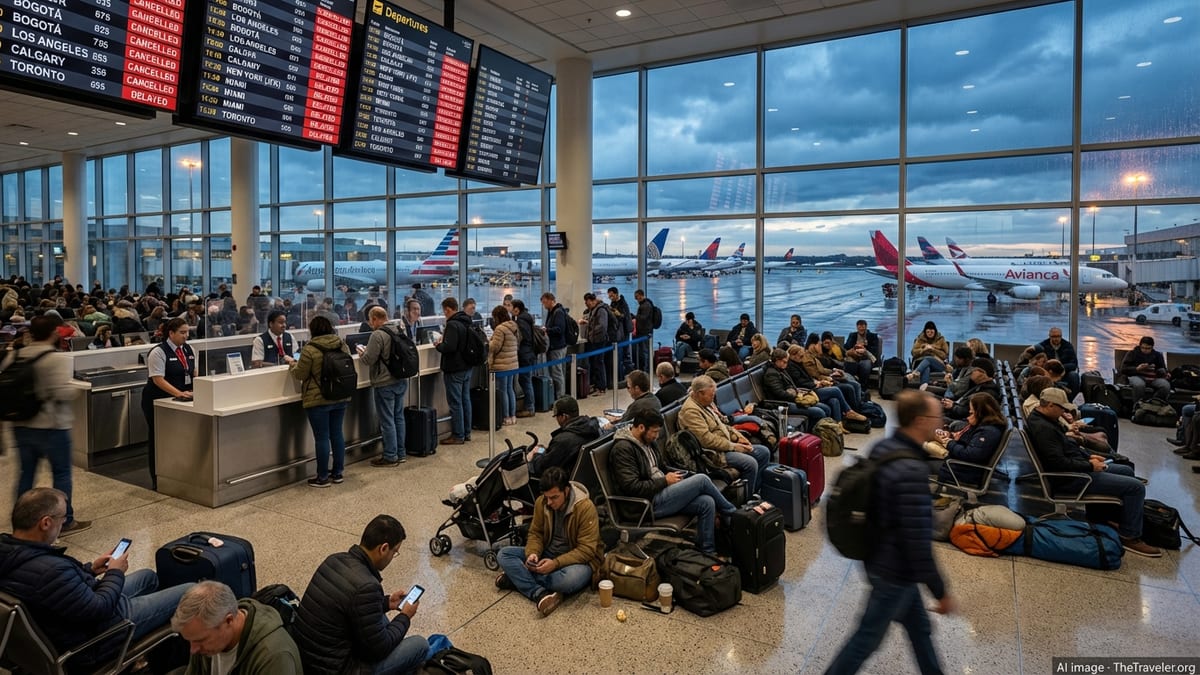
The immediate effect for travelers was a familiar one: crowded departure areas, long customer-service lines and tight or missed connections at some of the busiest hubs in the country. Passengers traveling through Atlanta, Chicago, Dallas and Denver faced particularly high chances of encountering disruptions, though regional airports in Nevada, Tennessee and Arizona also saw schedules pushed back.
For business travelers, even short delays can translate into lost meeting time or the need to rebook same-day returns, while leisure travelers may lose time at their destinations or incur additional accommodation costs when overnight stays become necessary. The scale of the latest disruption means thousands of travelers were likely forced to adjust plans on short notice.
Consumer advocates frequently advise travelers on days like this to monitor their flight status closely, use airline apps and airport displays to track gate changes and, where possible, build additional time into connections through the largest hubs. Published guidance from aviation regulators and industry groups also stresses the importance of understanding each airline’s rebooking and compensation policies when flights are significantly delayed or canceled.
Even as the system recovers in the hours after a disruption, aircraft and crews may remain out of position, leading to residual delays into the following day. Travelers booked on early-morning departures from affected hubs often see continuing knock-on effects from the previous day’s schedule.
Persistent Volatility in U.S. Air Travel
The latest wave of cancellations and delays highlights the ongoing volatility in the U.S. air travel system, where a mix of strong demand, busy hubs and operational constraints continues to leave little margin for error. In recent seasons, several high-profile disruption days have underscored how quickly delays can escalate once conditions deteriorate in one or more key locations.
Publicly available performance data over multiple years show that, on average, a relatively small share of flights in the United States are canceled in normal conditions. However, a significant percentage of flights can be delayed, and peak disruption days frequently see several thousand flights arriving late, even in the absence of a major nationwide weather event.
With summer and holiday travel periods often driving higher passenger volumes, analysts expect operational resilience to remain a central focus for airlines and airports. For travelers, the recent disruptions serve as a reminder that flexible planning, awareness of airline policies and proactive monitoring of flight status remain important tools when navigating an increasingly busy and sometimes unpredictable air network.