


More news on this day
Travelers across Germany faced major disruption on Saturday as widespread delays and a cluster of cancellations at Frankfurt, Munich and Berlin airports rippled across key European routes, stranding passengers on domestic and international services.
Get the latest news straight to your inbox!
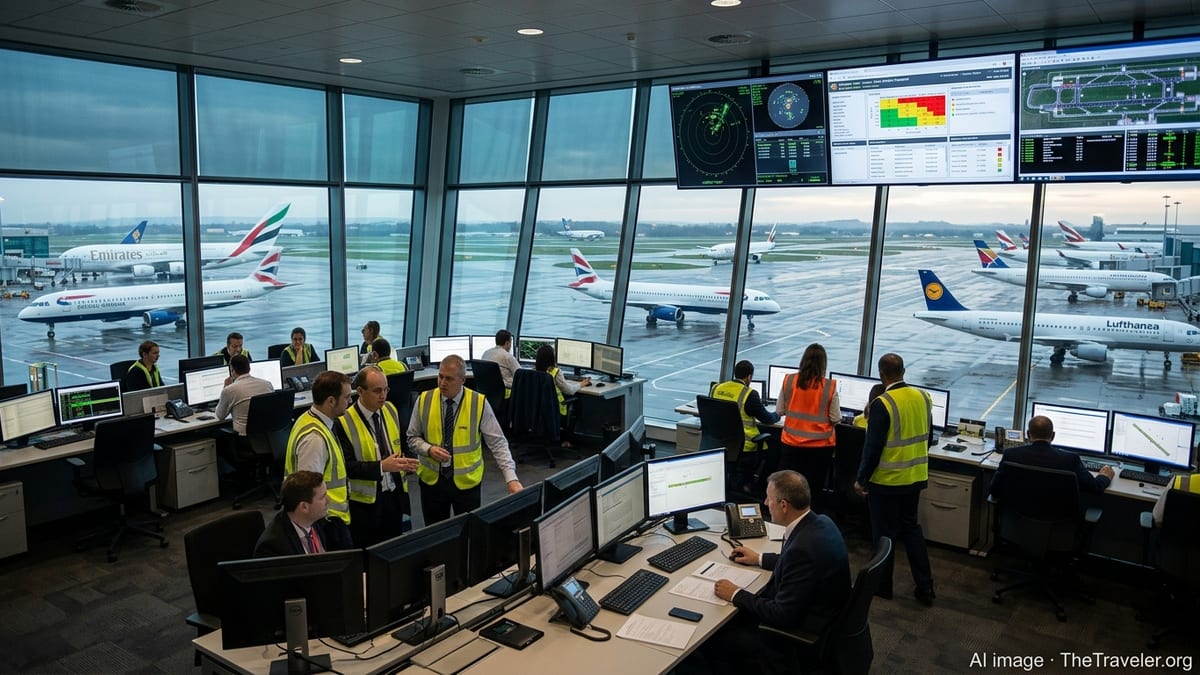
Hundreds of Flights Affected Across German Hubs
Operational data from German aviation and flight-tracking platforms on May 9 indicate that 489 flights were delayed and 10 canceled across Frankfurt, Munich and Berlin, creating bottlenecks at three of the country’s busiest hubs. The disruption hit morning and midday peaks particularly hard, as late departures quickly translated into missed connections and extended waits at gates and transfer desks.
Frankfurt Airport, Germany’s primary intercontinental hub and one of Europe’s busiest, recorded the largest share of affected traffic. A mix of late-arriving aircraft, crew rotations under pressure and congestion in the departure banks led to knock-on delays on both short-haul and long-haul routes. Similar patterns emerged at Munich, the country’s second hub, where regional feeds into the Lufthansa network struggled to depart on time, amplifying problems for onward connections.
Berlin Brandenburg Airport, while smaller as a connecting hub than Frankfurt and Munich, still saw a notable cluster of delayed services, especially on intra-European routes. Passengers reported extended time on board waiting for pushback, queues at security and passport control, and frequent changes to departure estimates on departure boards.
The concentration of disruptions at all three airports on the same travel day meant that travelers attempting to reroute via alternative German hubs often found limited options, compounding the sense of being stranded even when aircraft continued to operate.
Impact on Lufthansa, Eurowings, Air France and Partner Networks
The disruption fell heavily on carriers for which Frankfurt, Munich and Berlin are critical nodes. Publicly available flight data show that Lufthansa, which uses Frankfurt and Munich as its main hubs, experienced extensive delays on feeder flights bringing passengers in from around Europe and within Germany. Late inbound aircraft frequently led to delayed turnarounds, and in a smaller number of cases to preemptive cancellations where schedules could no longer be recovered.
Eurowings, the low-cost arm within the Lufthansa Group with a significant presence at Berlin and multiple German regional airports, also saw its operations affected. Delays on its point-to-point services reduced the availability of alternative same-day options for travelers attempting to bypass the congested hubs, particularly on routes within Germany and neighboring countries.
Air France and other SkyTeam and Star Alliance partners serving Germany’s main gateways were drawn into the disruption as well. Late departures from Frankfurt, Munich and Berlin reduced on-time performance for shared routes into Paris Charles de Gaulle, Amsterdam Schiphol and Zurich, while also increasing the risk of missed connections at those onward hubs.
The result was a cascading effect in which a relatively modest number of outright cancellations, compared with the volume of delayed flights, still created significant operational complexity. Carriers needed to reshuffle crews and aircraft, while ground handling and customer service teams contended with mounting queues of travelers seeking rebooking, overnight accommodation or revised itineraries.
Key European Routes to Paris, Amsterdam, Zurich and London Disrupted
The disruption was particularly visible on some of Europe’s busiest business and leisure corridors. Routes linking Germany’s main hubs with Paris, Amsterdam, Zurich and London recorded repeated delays throughout the day, reflecting the central role these city pairs play in the continent’s air transport network.
Flight boards at Frankfurt showed rolling delays on departures to London Heathrow, Amsterdam Schiphol, Paris Charles de Gaulle and Zurich, with some services departing significantly behind schedule as aircraft and crews arrived late from previous legs. Munich and Berlin displayed similar patterns on their own links to these hubs, where high-frequency schedules usually provide resilience but can also propagate delays rapidly when early rotations are disrupted.
Because these routes often serve as feeders into global long-haul networks, even short delays created outsized consequences. Passengers connecting in Paris and Amsterdam for flights to North America, Africa and Asia faced tight transfer windows that in many cases became unworkable. Others arriving late into Zurich risked missing onward services into smaller European and alpine airports, a concern for weekend leisure travelers at the start of the late-spring holiday period.
Rail and road alternatives absorbed some of the displaced demand, particularly on the German segments between Frankfurt, Munich and Berlin and nearby cities such as Cologne and Stuttgart. However, limited same-day capacity and the short notice of many disruptions meant that a substantial number of travelers remained dependent on rebooked flights rather than switching modes.
Passengers Face Long Queues, Missed Connections and Uncertain Timelines
Reports shared through social media, aviation forums and traveler communities described long lines at transfer and service counters at all three airports. Many passengers who missed onward connections sought same-day alternatives, only to find remaining seats scarce on high-demand routes to London, Paris, Amsterdam and Zurich.
Travelers on domestic and short-haul European services were particularly vulnerable to rolling delays, as aircraft scheduled for multiple rotations in a single day fell further behind schedule with each leg. Even relatively short late departures of 30 to 60 minutes in the morning accumulated into multi-hour disruptions by afternoon, with some passengers reaching their destinations late in the evening instead of early afternoon as planned.
Families and older travelers appeared especially affected by gate changes and compressed connection times, while business travelers expressed concern about missed meetings and events. Published accounts also noted difficulties in reaching airline customer-service hotlines during peak disruption periods, pushing more passengers to queue at counters within the terminals.
Although the number of outright cancellations remained limited compared with the total number of delayed flights, passengers on the 10 canceled services often faced the most challenging outcomes. In several cases, they were offered itineraries involving overnight stays or long detours via secondary hubs, underlining how tightly scheduled major European networks have become at the start of the busy summer season.
Operational Pressures Raise Questions Over Summer Readiness
The scale of delays across three major German airports on a single day has reignited questions about the resilience of European aviation ahead of the peak summer travel period. Recent analyses by European air traffic and airport performance bodies have highlighted structural pressures, including staffing constraints, complex slot coordination and the tight integration of feeder and long-haul networks.
According to industry performance digests, routes connecting Frankfurt with other major hubs such as Amsterdam, Zurich and London already rank among those with some of the highest proportions of delayed departures in Europe. On a day when disruption hits all three principal German gateways, these underlying vulnerabilities become more apparent to travelers and industry observers alike.
Aviation analysts note that while weather, air traffic control restrictions and isolated technical issues can trigger disruption on any given day, the extent to which delays spread through the network depends heavily on scheduling buffers, staffing levels and the flexibility of both airlines and airports to reposition resources. The latest wave of disruptions at Frankfurt, Munich and Berlin suggests that recovery margins remain tight, particularly during busy weekend travel windows.
With passenger volumes trending near or above pre-pandemic levels at many major European airports, the events of May 9 are likely to serve as an early stress test for German and European aviation ahead of the main summer holiday rush. Travelers planning to connect through Frankfurt, Munich or Berlin in the coming weeks may factor in longer minimum connection times and a higher tolerance for schedule changes as airlines and airports work to manage sustained demand under continued operational pressure.