


More news on this day
Travelers moving through Denver International Airport faced mounting disruption as more than 175 flights were delayed, rippling across United Airlines, Delta Air Lines, American Airlines and other carriers serving major domestic and international routes to Chicago, Los Angeles, New York, Dallas and Atlanta.
Get the latest news straight to your inbox!
Delays Mount Across Major Carriers and Key Hubs
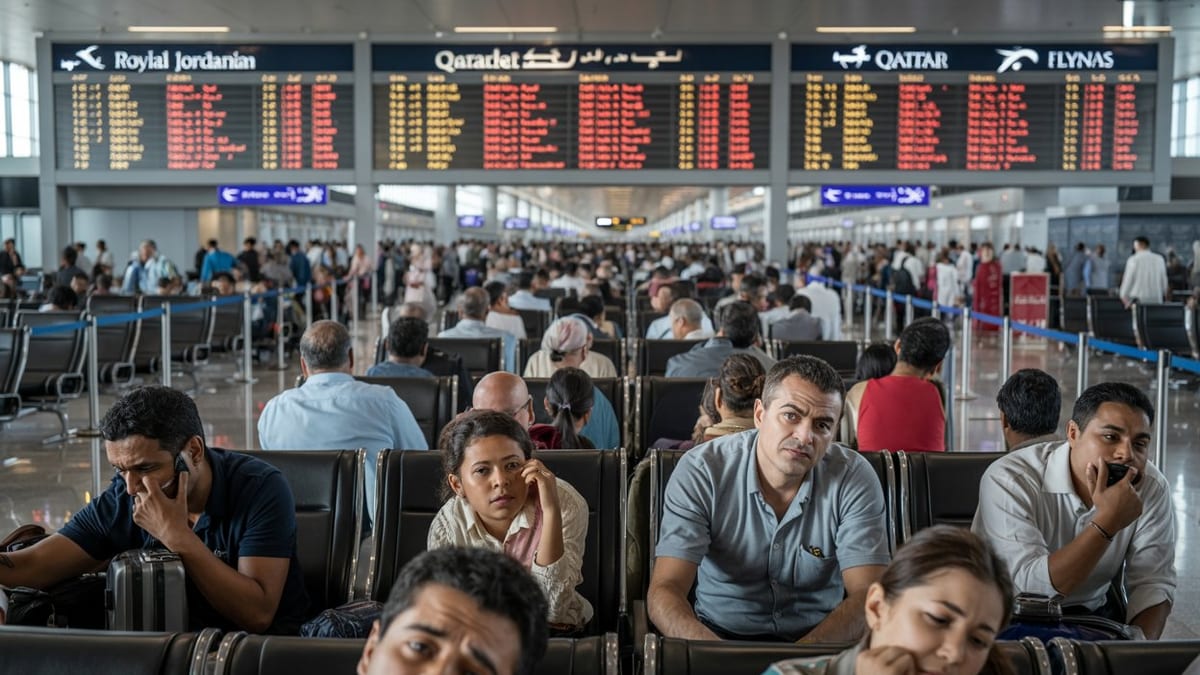
Publicly available tracking data and airport information indicate that operations at Denver International Airport have been strained, with at least 175 departures and arrivals affected in a fresh wave of delays. The disruption has touched a wide range of airlines, including the three largest U.S. network carriers, and has complicated connections through some of the country’s busiest hubs.
United Airlines, which maintains a significant hub presence in Denver and Chicago, appears prominently in delay tallies, with late departures from Denver feeding directly into congestion at Chicago O’Hare and Newark. American Airlines and Delta Air Lines have also experienced knock-on effects as schedules tightened on links between Denver and Dallas Fort Worth, Los Angeles, New York and Atlanta.
These schedule pressures are most visible on trunk routes where airlines operate frequent daily services. Flights between Denver and Chicago, Los Angeles and New York are particularly vulnerable, as modest operational hiccups can quickly cascade into missed slots, ground holds and late inbound aircraft.
Regional partners operating under major carrier brands have also been drawn into the disruption. Smaller jets feeding Denver from secondary markets are arriving late, compressing turnaround times and reducing flexibility for crews and ground staff attempting to keep the overall schedule moving.
Operational Strain Follows Safety Incidents and Capacity Limits
The latest round of delays comes as Denver International Airport is managing both near-term safety incidents and longer running capacity constraints. Published summaries of recent events in Colorado highlight a Frontier Airlines flight that aborted takeoff after striking an individual on a runway at Denver, an incident that led to an engine fire and an emergency evacuation. While that episode centered on a specific flight, it underscored the operational sensitivity of a high-volume airfield handling complex traffic flows.
Separately, federal planning documents describe construction and airfield improvement work at Denver that is expected to reduce capacity and increase delay exposure during certain phases. Even when the airfield remains open, temporary runway or taxiway closures can lengthen ground movements and reduce the number of arrivals and departures the airport can accommodate in peak periods.
These structural factors are layered atop routine seasonal patterns. Spring and early summer travel in the United States typically brings heavier passenger volumes, leaving airlines with less slack in their networks. When a hub such as Denver experiences a cluster of delayed departures, there are fewer open seats on later flights to absorb displaced travelers, leading to longer rebooking windows and pressure on customer service channels.
Aviation performance data from recent years also show that Denver sits among a group of large U.S. airports where roughly a quarter of departures may experience some form of delay in a typical year. That historical profile means that even modest operational disruptions can translate into hundreds of affected flights over the course of a busy travel day.
Passengers on Routes to Chicago, Los Angeles, New York, Dallas and Atlanta Hit Hard
The concentration of delays at Denver has been especially disruptive for travelers bound for other major hubs. Routes from Denver to Chicago O’Hare and Los Angeles International, which are served heavily by United and American on the one hand and United and Delta on the other, have seen clusters of late departures and arrivals that complicate onward connections within those networks.
Flights linking Denver with New York area airports have also been vulnerable, particularly services to John F. Kennedy International and Newark Liberty International. These airports already operate within constrained airspace, so late arrivals from Denver can face additional holding or resequencing as they enter congested approach corridors.
Dallas Fort Worth and Atlanta, core hubs for American and Delta respectively, have likewise absorbed the ripple effects. Delayed arrivals from Denver into these hubs can push aircraft and crews off their next scheduled departures, affecting passengers who may not have traveled through Denver at all but whose aircraft originated there earlier in the day.
Because these routes connect some of the largest business and leisure markets in the country, disruptions quickly multiply. A single delayed Denver to Chicago flight may strand passengers booked onward to smaller Midwest cities, while a late Denver to Atlanta service can complicate connections across the Southeast and to Latin America.
What Airlines Are Offering Affected Travelers
Public information from the U.S. Department of Transportation’s airline customer service dashboard shows that major U.S. carriers, including United, Delta and American, commit to providing certain forms of assistance during significant delays that are within the airlines’ control. These commitments generally include meal vouchers or cash equivalents when delays exceed several hours, and hotel accommodation for overnight disruptions in specific circumstances.
However, those commitments can vary by carrier and by cause of delay, and they do not apply uniformly in cases attributed to air traffic control programs or weather. Travelers at Denver confronting long waits are being advised by consumer advocates to review each airline’s published customer service plan and to keep documentation of actual delay times in case they later pursue reimbursement or goodwill gestures.
In addition to direct airline assistance, third party flight tracking and passenger rights platforms increasingly offer tools that can help travelers identify their eligibility for compensation or support. These services aggregate real-time disruption data and compare it against published policies and, on some international itineraries, applicable passenger protection regulations.
At Denver, airport displays and airline mobile applications remain the primary point of reference for updated gate and departure information. With schedules in flux, many passengers have been encouraged to monitor those channels continuously and to consider switching to earlier or later flights when rebooking windows open and seat availability allows.
Ongoing Vulnerability of the U.S. Air Network
The delays centered on Denver highlight the broader vulnerability of the U.S. air travel system to localized disruptions. Recent nationwide data compiled by aviation analytics firms and reported by travel industry outlets show that, across a typical day, thousands of flights can be delayed and hundreds canceled, with only a handful of key hubs responsible for a large share of the disruption.
Airports such as Atlanta, Chicago O’Hare, Denver, Los Angeles and New York consistently appear in performance rankings as facilities where high passenger volumes and constrained infrastructure leave limited room for error. When a single hub experiences a day of heavy delays, the effect is often felt in secondary and tertiary markets days later as aircraft and crews cycle through the network.
For travelers, analysts note that these patterns may justify building extra connection time into itineraries involving Denver and other major hubs, especially during peak seasons. Flexible departure days, early morning flights and nonstop services where available remain among the most reliable strategies for reducing exposure to widespread delays like those seen in the latest disruption at Denver International Airport.