


More news on this day
Travelers moving through Moscow and St. Petersburg at the start of the week faced major disruptions as at least 184 flights were reported delayed and five canceled at Sheremetyevo International Airport and Pulkovo Airport, snarling domestic and international schedules for Aeroflot, Rossiya Airlines, Pobeda, Turkish Airlines, Emirates, and other carriers.
Get the latest news straight to your inbox!
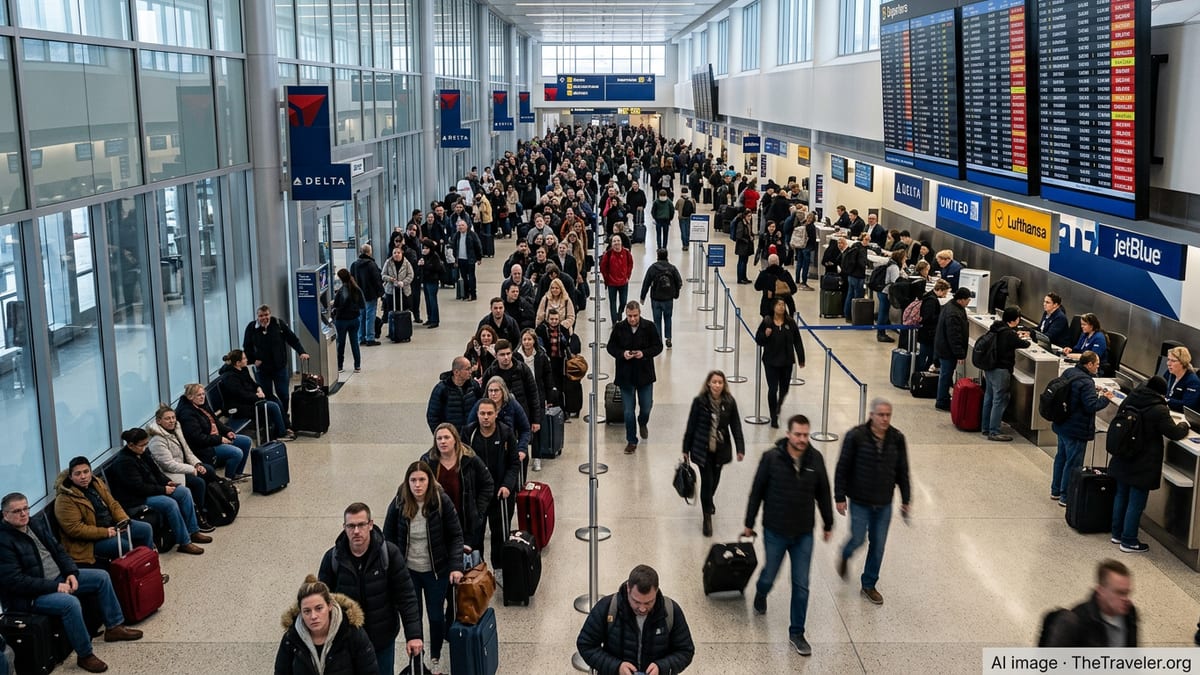
Wave of Delays at Russia’s Key Air Hubs
Publicly available flight-tracking dashboards on June 8 indicated that operations at Sheremetyevo in Moscow and Pulkovo in St. Petersburg were heavily strained, with a high concentration of departures and arrivals marked as delayed. The cluster of disruptions affected both peak morning and mid-day waves, creating knock-on impacts across the rest of the schedule.
Data compiled from airport information boards and independent tracking platforms showed a combined tally of roughly 184 delayed flights and at least five cancellations across the two hubs over a several-hour window. The numbers fluctuated through the day as airlines retimed services and updated statuses from "scheduled" to "delayed" or "canceled."
Both airports serve as strategic gateways in Russia’s air network: Sheremetyevo is Moscow’s busiest international gateway, while Pulkovo is the primary airport for St. Petersburg and an important connecting point for travelers headed to southern Russia, the Black Sea region, the Caucasus, and selected international destinations. Disruptions at these hubs have an outsized effect on the wider route map, particularly for passengers relying on connections.
Reports from Russian-language media and regional outlets over recent days have described repeated periods of restricted or disrupted operations at airports in western Russia, with Pulkovo and the Moscow airports experiencing intermittent suspensions and rolling delays. The latest wave at Sheremetyevo and Pulkovo appears to be part of this broader pattern of instability rather than an isolated technical fault.
Domestic and International Routes Affected
The disruption hit a broad spectrum of carriers and routes. Russia’s flag carrier Aeroflot, its affiliate Rossiya Airlines, and low cost subsidiary Pobeda all saw flights from their Moscow-area bases delayed on services linking the capital with St. Petersburg, Black Sea resorts, major Siberian cities, and Central Asian destinations. For many travelers, even moderate delays in these dense domestic corridors translated into missed or uncertain onward connections.
International travelers also faced significant inconvenience. According to airline timetables and live status boards, Turkish Airlines, Emirates, and other foreign carriers operating between Moscow, St. Petersburg, Istanbul, Dubai, and additional long-haul hubs registered late departures and arrivals. Several flights used by transfer passengers heading onward to Europe, the Middle East, Africa, and Asia left late enough to jeopardize downstream connections.
In St. Petersburg, local news coverage in recent days has noted multiple instances in which more than a dozen flights at Pulkovo were delayed for two hours or longer during concentrated peaks, with travelers advised to monitor status boards closely and allow additional time for their journeys. This latest episode reinforced a trend of recurring operational stress at the airport rather than a one-off shock.
For airlines, the ripple effects are substantial. Even a few hours of irregular operations at Sheremetyevo or Pulkovo can displace aircraft and crews, forcing carriers to juggle rotations and, in some cases, to consolidate or cancel later flights. That dynamic helps explain how a limited number of outright cancellations can still be associated with a far larger volume of delayed services across the day.
Operational Context: Airspace Restrictions and Security Concerns
The disruptions at Sheremetyevo and Pulkovo have unfolded against a backdrop of heightened security and recurring airspace restrictions in western Russia. In the early morning of June 5, Russian military and government statements described large-scale drone activity over multiple regions, followed by temporary constraints on civil aviation in and around Moscow and St. Petersburg. Those measures, while not always detailed in public notices, often result in holding patterns, diversions, and short-notice suspensions of takeoffs and landings.
In St. Petersburg, local media reports on June 6 highlighted that Pulkovo had been working under limitations for several hours, with flight departures and arrivals adjusted in coordination with airspace controls. Earlier in the spring, the airport temporarily suspended operations on at least one occasion, underscoring its vulnerability to regional security events and associated airspace adjustments.
Moscow’s wider airport system has experienced similar constraints. Recent coverage from Moscow-based outlets has described temporary restrictions at Vnukovo and Domodedovo around the same time frame, as well as previous weekends when multiple Moscow airports were forced to suspend or sharply curtail operations due to drone activity and related security incidents. While Sheremetyevo is often one of the first hubs to resume flights once restrictions are lifted, backlogs from earlier suspensions can translate into hours of residual delays.
Aviation industry analyses published over the past year have pointed to a clear linkage between security-related airspace closures and chronic schedule instability at Russian airports. Each new episode of restricted operations adds further strain to airlines’ efforts to maintain predictable timetables, particularly for complex banks of connecting flights.
What Travelers Are Experiencing on the Ground
For passengers, the main visible consequence of the current disruption has been long waiting times at departure gates and in arrivals halls. Travelers at both Sheremetyevo and Pulkovo have reported via social media and public forums that flights were repeatedly pushed back in small increments, often 30 minutes to an hour at a time, complicating efforts to rebook connections or arrange alternative plans.
Some travelers noted that mobile apps and booking platforms for carriers such as Aeroflot and Turkish Airlines provided more up to date information than physical airport boards, especially when flights were shifted from "delayed" to "canceled" or rerouted to other airports in the region. In a number of cases, passengers only received formal confirmation of retimed flights or cancelled segments shortly before the original scheduled departure.
Publicly accessible guidance from tourism bodies and consumer advocates consistently advises passengers caught in such disruptions to document delays, keep boarding passes and receipts, and monitor both airport and airline channels. While Russia’s regulatory framework differs from the compensation regimes in the European Union, some carriers operating international routes apply their own internal policies for meal vouchers, hotel accommodation, or alternative transport in cases of extended disruption, subject to the cause of the delay.
Families traveling with children and travelers on tight itineraries have been particularly exposed. Missed connections in Istanbul, Dubai, or other intermediate hubs can add 24 hours or more to a journey, especially when onward flights operate only once per day. In turn, this has created a secondary wave of schedule pressure for airlines trying to accommodate disrupted passengers on later services already operating at high load factors at the start of the summer travel season.
Ongoing Uncertainty for Upcoming Flights
As of the evening of June 8, schedules at Sheremetyevo and Pulkovo showed gradual improvement but remained fragile. Many of the morning’s delayed aircraft and crews were still working back into position, with some late-running domestic flights from Moscow to regional airports turning around behind schedule for the return leg to Sheremetyevo or St. Petersburg.
Airlines have been updating departure and arrival times in near real time, and additional minor cancellations remained possible where tight rotations could not be recovered. Publicly available data for the coming days indicated that most planned services by Aeroflot, Rossiya, Pobeda, Turkish Airlines, Emirates, and other carriers were still listed as operating, though aviation analysts caution that short-notice airspace restrictions or further security incidents could quickly alter that picture.
Travelers scheduled to transit through Moscow or St. Petersburg in the next several days are being encouraged, through airline advisories and media coverage, to check in early, monitor flight status frequently, and be prepared for potential schedule changes. For those with critical onward connections, avoiding very tight layovers and considering longer connection windows may offer an extra buffer against unexpected delays.
With summer demand rising and regional security conditions still volatile, the episode at Sheremetyevo and Pulkovo illustrates how quickly conditions can shift for air passengers in Russia. Even a handful of canceled flights and fewer than 200 delays can cascade across a sprawling domestic and international network, leaving travelers from nearby regions and far afield adjusting their plans long after the immediate disruption has passed.