


More news on this day
Hundreds of travelers faced hours-long waits and missed connections at Amsterdam Schiphol Airport as 252 flights were delayed and 20 canceled, disrupting services on major carriers including KLM, Delta Air Lines, Lufthansa, British Airways and easyJet across European and intercontinental routes.
Get the latest news straight to your inbox!
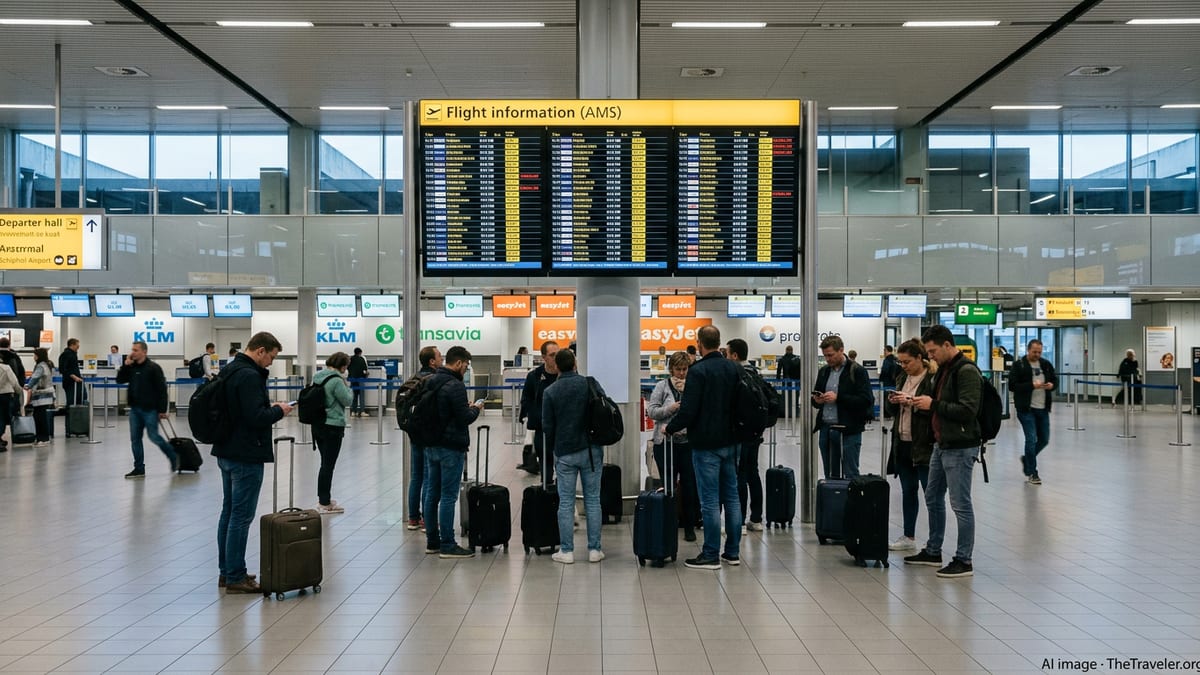
Fresh Turbulence at One of Europe’s Busiest Hubs
Publicly available flight-tracking data for the latest disruption period show that Schiphol, the Netherlands’ primary international gateway, again experienced widespread schedule problems, with delays far outnumbering outright cancellations but still leaving large numbers of passengers stranded in terminals. The pattern mirrors earlier episodes in 2026, when winter weather and operational constraints produced repeated waves of disruption at the airport.
According to published coverage and aggregated aviation statistics, the most recent event involved roughly 252 services arriving to or departing from Schiphol operating behind schedule, alongside 20 canceled flights. The imbalance between delays and cancellations meant aircraft and crews were frequently out of position, complicating recovery efforts for airlines already operating near capacity at the start of the summer travel season.
Schiphol’s role as a major transfer hub amplified the impact. Many affected passengers were not simply traveling to or from Amsterdam but changing planes en route to destinations across Europe, North America, the Middle East and beyond. Missed connections translated into unexpected overnight stays, rebookings on alternative routings and long queues at customer-service desks as travelers sought new options.
The disruption came against the backdrop of a challenging year for Dutch aviation. Official statistics for the first quarter of 2026 have already shown a drop in passenger numbers compared with 2025, with analysts pointing to earlier winter storms, capacity limits and geopolitical tensions that have constrained some long-haul markets.
Major Airlines Caught in the Disruption Web
The latest wave of delays and cancellations at Schiphol touched a broad mix of airlines, reflecting the airport’s status as both a hub and a key destination for global carriers. KLM, the dominant airline at Schiphol, was heavily represented among disrupted services, particularly on dense short- and medium-haul routes that funnel passengers from regional European cities into its long-haul network.
Transatlantic and alliance partners were also affected. Flight-monitoring snapshots for the period show disruption on routes served by Delta Air Lines and other North American carriers, with late departures from Amsterdam triggering missed connections at onward hubs in the United States. European full-service airlines such as Lufthansa and British Airways, which operate multiple daily frequencies to Amsterdam from their own hubs, saw knock-on delays when inbound and outbound rotations were forced to wait for aircraft, crew or ground handling.
Low-cost operators, including easyJet and several regional budget airlines, were similarly caught up in the disruption. Because these carriers often operate tight turnaround schedules, a relatively short delay early in the day can cascade into significant lateness by evening, especially when airport congestion, de-icing backlogs or slot constraints limit recovery options. Reports from previous disruption episodes at Schiphol in 2026 indicate that low-cost passengers are particularly vulnerable to long waits when there are few alternative flights available on the same day.
Some long-haul services managed to depart with only minor delay, but schedule data indicate that even small timing shifts can result in missed interline connections. Travelers bound for destinations as varied as Oslo, Barcelona, London, New York and various Mediterranean holiday airports reported multi-hour layovers turning into overnight stays as they waited for new boarding passes and hotel vouchers.
Domestic, European and Intercontinental Routes All Affected
While Schiphol no longer has the same volume of purely domestic flights seen at some larger countries’ hubs, the airport remains the central node in the Netherlands’ limited internal air network and a critical gateway for nearby regional services. Short-haul flights to destinations within the country and to neighboring states were among those logged as delayed or canceled, complicating day trips and business travel plans.
European point-to-point services took the brunt of the disruption. Published aviation data highlight delays on high-frequency routes to major cities such as London, Paris, Frankfurt, Copenhagen and Barcelona, as well as to popular leisure destinations around the Mediterranean and in the Nordic region. Because many of these flights are used for same-day return travel, even moderate delays forced passengers to cancel meetings, rearrange hotel bookings or abandon weekend plans.
Intercontinental traffic was not spared. Long-haul routes linking Amsterdam with North America, the Middle East, Africa and parts of Asia experienced schedule pressures as delayed feeder flights arrived late, leaving connecting passengers and baggage unable to make original departures. Airlines sometimes opted to hold long-haul flights to accommodate late-arriving travelers, increasing delay statistics but reducing the number of people left behind at Schiphol.
For travelers already abroad, the disruption in Amsterdam appeared as distant knock-on effects. Aircraft scheduled to operate from Schiphol to other continents were in some cases delayed leaving the Netherlands, which in turn pushed back their return flights. This rolling disruption meant that passengers at outstations also faced sudden schedule changes, even when local conditions appeared normal.
Weather, Capacity and Operational Strain Under Scrutiny
While precise triggers for each individual delay vary from flight to flight, observers point to a familiar set of structural pressures behind Schiphol’s recurring problems. Earlier in 2026, heavy snowfall and strong winds forced the cancellation of hundreds of flights over several days, reducing runway capacity and overwhelming de-icing resources. That earlier episode also left long-lasting scars, including stranded baggage and a spike in compensation claims, which underscored the system’s vulnerability.
More recent disruptions have unfolded in less extreme weather, suggesting that operational and capacity constraints are playing a growing role. Publicly available aviation analysis notes that crew availability, tight turnaround schedules, air-traffic control restrictions and infrastructure limits at the airport have all contributed to a situation in which relatively minor issues can quickly escalate into large-scale disruption.
Industry commentators observe that Schiphol’s complex mix of hub operations, low-cost services and cargo traffic leaves little margin for error on busy days. When even a small number of aircraft are delayed in reaching their gates or when ground-handling operations are stretched thin, the resulting congestion can ripple across the airport’s departure and arrival banks. This is especially acute during peak travel seasons, when load factors are high and few empty seats remain for rebooking.
Recent official statistics on flight volumes at Dutch airports also indicate that carriers and the airport are still adjusting to post-pandemic travel patterns and new geopolitical realities. Some long-haul markets have contracted significantly, forcing airlines to revise schedules and sometimes consolidate flights. These adjustments can complicate contingency planning when sudden disruption strikes.
Passenger Rights, Next Steps and What Travelers Can Expect
For those left stranded at Schiphol by the latest 252 delays and 20 cancellations, European Union air passenger rights regulations are a critical reference point. Under EU rules, travelers may be entitled to assistance in the form of meals, hotel accommodation, ground transport and, in some cases, financial compensation when significant delays or cancellations occur and the airline is deemed responsible.
Consumer advocacy groups and travel-law resources recommend that affected passengers keep detailed records of boarding passes, delay notifications, receipts for extra expenses and any written communication from airlines. This documentation can be essential when submitting claims for reimbursement or compensation weeks or months after the disruption has ended. Publicly available guidance also stresses that passengers should check whether disruptions are attributed to extraordinary circumstances, such as severe weather or air-traffic control strikes, which can limit compensation eligibility even if assistance is still owed.
Travel analysts suggest that the latest Schiphol disruption will renew debate about resilience at major European hubs as the continent moves into the busy summer travel period. Recommendations circulating in travel media include allowing longer connection times when transferring through Amsterdam, booking earlier flights in the day to preserve rebooking options and considering travel insurance policies that specifically cover missed connections and extended delays.
While operations at Schiphol typically recover over several days once the immediate cause of disruption eases, the cumulative effect of repeated events in 2026 has already affected passenger confidence. For now, publicly available information indicates that airlines and the airport are working through backlogs by adjusting schedules, reallocating aircraft and crews and prioritizing key long-haul departures, but travelers planning to route through Amsterdam are being advised to monitor flight status closely and prepare for potential changes.