


More news on this day
Hundreds of air travellers across Europe are facing long waits and unexpected overnight stays after a fresh wave of disruption delayed 1,697 flights and cancelled at least 106 services, hitting routes through the Netherlands, Belgium, the United Kingdom, Switzerland and other countries.
Get the latest news straight to your inbox!
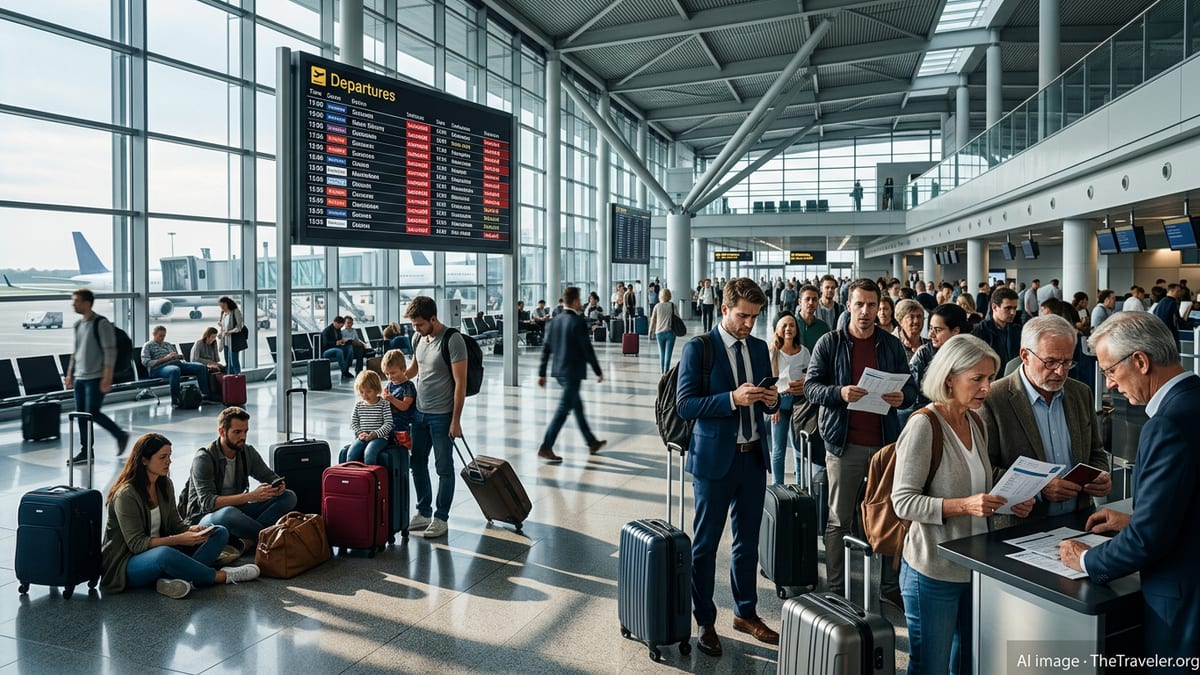
Airports Across Western Europe Hit by Fresh Wave of Disruption
Publicly available flight tracking data and operational summaries point to a heavily disrupted day across several of Europe’s busiest hubs, with airports in the Netherlands, Belgium, the United Kingdom and Switzerland reporting extensive delays and cancellations. The pattern of disruption has left passengers stranded at key interchanges including London, Zurich and Amsterdam, with knock-on effects rippling into regional airports.
Aggregated figures from aviation analytics platforms indicate that 1,697 flights were delayed and 106 were cancelled within a 24 hour window, predominantly affecting short haul and intra European services. While the precise causes vary by airport and carrier, the scale of the disruption has been significant enough to overwhelm normal rebooking channels and strain airport accommodation capacity in several cities.
Travel disruption monitors highlight that Amsterdam Schiphol alone has recently recorded hundreds of delayed flights and several dozen cancellations in a single day, while London Heathrow and other UK airports continue to see rolling timetable changes. Zurich, a major hub for both point to point and connecting itineraries, has also reported irregular operations, contributing to wider network instability for European and long haul travellers alike.
The timing of the disruption, during the late spring and early summer travel build up, has compounded the impact. Many flights are operating close to full, reducing the number of spare seats available for affected passengers seeking same day alternatives.
British Airways, Lufthansa and Eurowings Among Worst Affected Carriers
Among the carriers most visible in the latest wave of disruption are British Airways, Lufthansa and Eurowings, alongside several other European airlines operating dense schedules between the UK and continental hubs. Flight status portals show a series of cancellations and heavily delayed services on routes linking London with Amsterdam, Vienna, Zurich and other key cities.
In the British Airways network, recent days have seen selected services between London Heathrow and Amsterdam, as well as onward European points, cancelled outright. Other departures on traditionally high frequency routes have operated with notable delays, contributing to missed connections and extended layovers for travellers routed through the airline’s London hub.
Lufthansa and Eurowings, already operating against a backdrop of previous schedule adjustments and labour related disruption earlier in the year, have also recorded cancellations and operational changes on flights feeding into hubs such as Frankfurt, Munich and Zurich. Public timetables and passenger accounts show instances where Lufthansa operated sectors have been removed from schedules at short notice, with some affected travellers rebooked onto partner or competitor airlines via alternative gateways.
These carrier specific challenges intersect with broader air traffic control constraints, airport capacity issues and localized weather concerns, making it difficult for airlines to recover schedules quickly once significant disruption sets in.
Travellers Stranded in London, Zurich and Other Key Hubs
London and Zurich have emerged as two of the hardest hit connection points for stranded passengers. In London, a concentration of cancellations and rolling delays at Heathrow has disrupted itineraries not only for origin and destination travellers, but also for those using the airport as a transfer hub between continental Europe and long haul routes to North America, Asia and Africa.
Passengers arriving late into London from the Netherlands, Belgium and other nearby markets are frequently missing onward departures, in some cases being pushed to next day flights as remaining services fill up. Travel forums and social media posts describe long queues at customer service desks, with many travellers seeking hotel vouchers, meal allowances and new routings after their original plans fell apart.
Zurich, a key gateway for traffic across central and southern Europe, has experienced similar issues. When flights from surrounding countries arrive late or are cancelled, connecting passengers can find themselves stuck overnight despite the airport’s normally reliable transfer operations. Disruption at Zurich also feeds back into national networks operated by carriers such as Lufthansa Group airlines and their partners, multiplying the number of affected passengers.
Secondary airports across the region, including Brussels and other Belgian and Dutch fields, have also reported higher than usual numbers of disrupted travellers as some passengers attempt to re route themselves by train or short haul flights to bypass congested hubs.
Weather, Capacity and Operational Pressures Behind the Numbers
While no single trigger explains the full scale of the current disruption, a mix of weather related constraints, air traffic control bottlenecks and airline operational pressures appears to be driving the situation. Recent forecasts have brought periods of strong winds, low visibility and unsettled conditions to parts of northwestern Europe, prompting flow restrictions and slower landing and departure rates at affected airports.
At the same time, aviation industry reporting has for months highlighted shortages of air traffic controllers and ground handling staff at several major hubs. These structural capacity issues make it more difficult to absorb even modest weather events or technical problems, increasing the likelihood that delays cascade through the day and transform into flight cancellations.
Airlines including Lufthansa have also been proactively trimming parts of their summer flight programmes in response to higher operating costs and capacity constraints. Although such schedule adjustments are designed to reduce the risk of last minute cancellations, they can also leave less slack in the system, meaning that when irregular operations do occur, there are fewer spare aircraft and crews available to plug the gaps.
As a result, travellers flying between the UK, the Netherlands, Belgium, Switzerland and surrounding markets are currently more exposed to multi hour delays and last minute rebookings than they might expect during a typical early summer travel period.
What Passengers Can Expect Under European Air Passenger Rules
Consumer advocacy organisations and air passenger rights specialists note that most of the flights affected by the current disruption fall under European and UK compensation frameworks, commonly referred to as EU261 and UK261. These regulations set out when travellers are entitled to care, assistance and, in some cases, financial compensation for long delays and cancellations.
Under these rules, passengers on flights departing from EU or UK airports, or travelling on EU or UK based carriers, may be eligible for hotel accommodation, meals and re routing at no extra cost when disruption is significant. Eligibility for cash compensation depends on the length of delay, distance of the flight and whether the root cause is considered within the airline’s control.
Legal experts and advisory platforms emphasize that passengers should retain boarding passes, booking confirmations and receipts for any out of pocket expenses incurred during long waits or forced overnight stays. Online claim tools are increasingly used by travellers to check potential entitlements and to submit documentation once they return home.
With irregular operations continuing across several key European hubs, observers expect a surge in claims in the coming days, as passengers stranded in London, Zurich, Amsterdam and other affected airports seek redress for disrupted journeys.