


More news on this day
US travelers flying via the United Arab Emirates and other Gulf hubs are increasingly caught in the knock-on effects of a widening Middle East airspace crisis, as more than 13,000 regional flights have been disrupted while leading carriers work to keep their networks operational.
Get the latest news straight to your inbox!
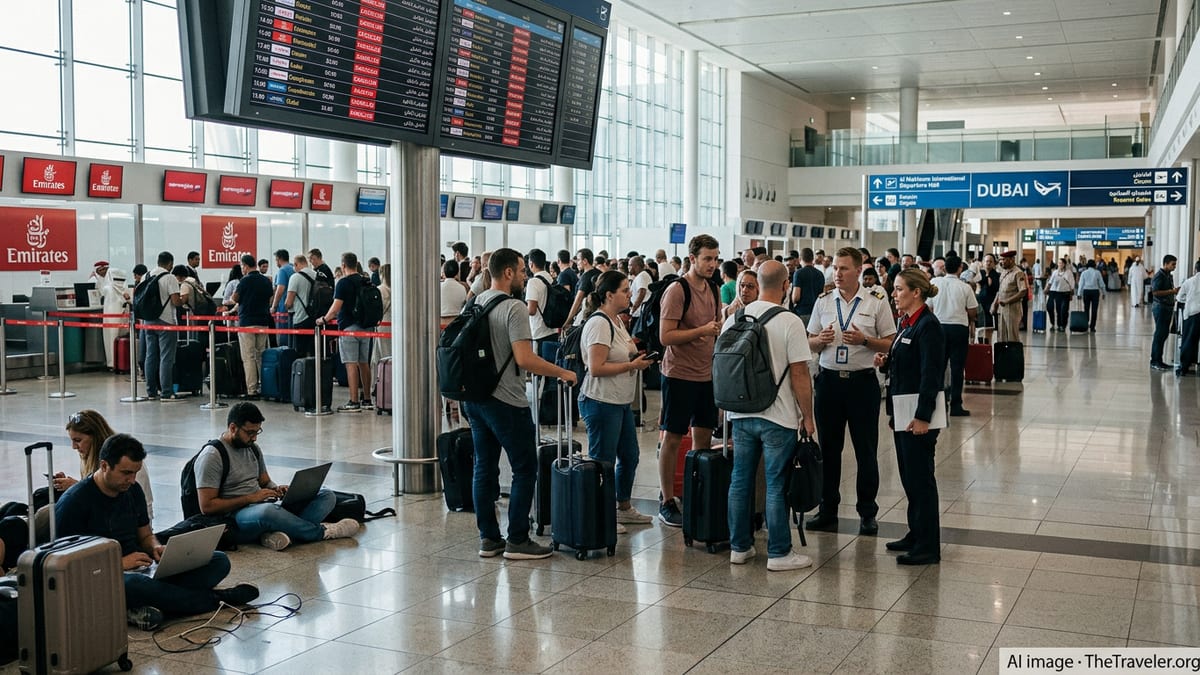
US Joins Long List of Countries Hit by Gulf Routing Turmoil
Publicly available flight tracking and schedule data indicate that passengers traveling between the United States and key destinations such as the United Kingdom, Germany, France, Australia, Saudi Arabia, India and China on itineraries routed through the Gulf are now facing highly uneven levels of disruption. While many nonstop services between these countries remain available, journeys that rely on one or more connections through Dubai, Abu Dhabi, Doha, Jeddah or Riyadh are far more vulnerable to last minute changes.
Industry analyses of airline schedules and global distribution systems suggest that more than 13,000 flights within the broader Middle East region have been canceled, rerouted or subjected to significant schedule changes since late February, largely due to airspace closures and restrictions affecting Iran, Iraq, Lebanon and parts of the Gulf. The impact has cascaded into long haul flows linking North America, Europe, Asia and Australia, because so many itineraries rely on Gulf hubs as intermediate stops.
For US travelers, this means that journeys to secondary cities in Europe, South Asia and East Asia that once depended on seamless Gulf connections may now involve longer routings via alternative hubs or require rebooking on different dates or airlines. Travel search platforms and booking engines show a patchwork of availability, with some days offering near normal service and others showing sharp reductions in capacity on routes that touch the Gulf.
Consumer-facing guidance from travel rights groups stresses that passengers with itineraries involving the UAE, Qatar, Saudi Arabia or Kuwait should monitor their bookings closely and treat departure times as provisional, even when flights appear confirmed. The pattern of disruption remains dynamic and uneven, varying by country pair, airline and travel date.
Emirates, Etihad and flydubai Keep UAE Hubs Running
Despite repeated waves of disruption, scheduled data and airport departure boards show that the UAE’s main carriers, Emirates, Etihad Airways and flydubai, have kept their core hubs at Dubai and Abu Dhabi operational, albeit with trimmed schedules and altered routings. Reports from aviation analytics firms indicate that Emirates has removed a noticeable share of its planned June capacity, particularly on some Europe and Asia sectors, in response to tighter airspace constraints and longer flight times.
Analysts note that Emirates, which relies heavily on Dubai as a mega-hub for global connections, has had to balance network breadth with operational reliability. This has resulted in targeted cuts to certain high frequency routes, while many trunk services between Dubai and major cities in Europe, North America and Asia continue to operate. Flight tracking feeds show that widebody aircraft remain active on numerous long haul sectors, even as frequencies fluctuate from week to week.
Etihad Airways, operating from Abu Dhabi, appears to have taken a slightly different approach, focusing on restoring and stabilizing a core set of destinations as regional air traffic control restrictions evolve. Public schedules suggest that Etihad has reintroduced many of its pre-crisis routes and is adjusting departure times and routings to navigate closed or restricted airspace corridors. Flydubai, with its strong regional network, has experienced recurring clusters of delays and cancellations but continues to offer connectivity across the Middle East, South Asia and parts of Europe.
For connecting passengers from the US and Europe, the practical effect is that flights may still depart and arrive close to schedule on one leg of a multi segment trip, while a subsequent regional connection faces delay, rerouting or cancellation. This uneven pattern has become a defining feature of the current disruption phase.
Qatar Airways and Saudia Navigate Capacity Cuts and Reroutes
Qatar Airways and Saudia are contending with similar pressures, as their hubs in Doha, Riyadh and Jeddah sit close to or within some of the most congested and restricted airspace in the world. Published coverage of airline schedules shows that Qatar Airways has removed a significant number of flights from its timetable compared with last year, reflecting both the temporary closure and later constrained reopening of parts of regional airspace and the need to reroute services around prohibited zones.
As restrictions have eased in some sectors, the Doha hub has progressively resumed operations, with Qatar Airways gradually rebuilding its network to key markets in Europe, Asia and Africa. However, residual limitations on overflights across Iran, Iraq and neighboring regions mean that many journeys continue to operate on longer, more fuel intensive routings. This adds cost and complexity, and in some cases has led to reduced frequencies or upgauging to larger aircraft in order to consolidate demand.
Saudia, operating from Saudi Arabia’s main gateways, has maintained services on many core routes while cutting or adjusting others that have become less viable under current routing constraints. Data from regional airports indicate that flights to and from Riyadh and Jeddah have been subject to intermittent waves of disruption, especially on short haul links within the Gulf and to nearby conflict affected regions. Long haul services to Europe, North America and Asia remain generally more stable, although block times are often extended.
For travelers from countries such as Germany, France, the United Kingdom, India and China, these changes translate into smaller choice sets on certain days and higher load factors on remaining flights. US bound passengers connecting through Doha, Jeddah or Riyadh may find fewer departure time options and greater sensitivity to knock on delays earlier in the day.
Kuwait’s Temporary Rout and the Gradual Reopening of Regional Airspace
Kuwait has been one of the most visible flashpoints of the current aviation crisis. Public reports on regional security developments describe a series of attacks and threats targeting Kuwait International Airport earlier this year, prompting authorities to close the country’s airspace and suspend most commercial operations. Kuwait Airways and other carriers temporarily halted flights, and many services were diverted to alternative airports in neighboring states.
In recent weeks, however, Kuwait’s air traffic has begun a phased return. Statements from the country’s civil aviation authorities and airport operators, as summarized in regional media, outline a gradual reopening plan with foreign and local airlines reintroducing flights in stages from June. Flight tracking data confirms a slowly increasing number of arrivals and departures, although schedules remain thinner and more volatile than before the crisis.
The Kuwait disruption has had a disproportionate impact on short haul regional links and on passengers using the airport as a connecting point between the Gulf and South Asia or Europe. With Kuwait temporarily off the map as a reliable hub, travelers and airlines have shifted traffic flows toward Dubai, Abu Dhabi, Doha and Saudi gateways, adding further strain to those hubs even as they manage their own operational challenges.
As more carriers return to Kuwait, analysts expect incremental relief in regional connectivity, but most assessments suggest that the broader Middle East airspace environment is likely to remain constrained through at least the remainder of 2026. This continues to shape how airlines design networks and how travelers plan multi stop journeys through the region.
What Uneven Disruption Means for Transatlantic and Indo Pacific Links
The combined effect of shifting routes, partial hub closures and airspace bans is a pattern of uneven disruption that is particularly visible on transatlantic and Indo Pacific itineraries touching the Gulf. Flights between the US and Australia, India or Southeast Asia that once relied heavily on one stop connections via Dubai, Abu Dhabi or Doha now face more frequent schedule changes and, in some cases, higher fares as airlines manage capacity tightly.
Travel booking platforms show that some US to India and US to Australia itineraries via the Gulf remain available on multiple dates, while others disappear for blocks of days before reappearing with different timings or connection points. This creates planning challenges for both leisure and business travelers, who must weigh the convenience of traditional Gulf routings against the perceived stability of alternative paths through European or Asian hubs.
For Europe to Asia flows, restrictions on Middle East overflights compound existing detours around Russian airspace, pushing some airlines to adopt significantly longer great circle deviations. Reports from aviation regulators highlight how prohibitions on flying over Iran, Iraq and Lebanon at all levels force carriers either to skirt the southern edge of the Gulf or adopt more northerly or southerly tracks, each with fuel and time penalties. Gulf based airlines can sometimes optimize these paths from their home hubs, but the overall effect is still slower and more expensive journeys.
Analysts suggest that if current airspace and security conditions persist, the industry could see a more permanent reshaping of global traffic flows, with certain Gulf hubs focusing on specific corridors where they retain a time or cost advantage, while other routes shift toward alternative hubs in Europe, Central Asia or Southeast Asia. For now, though, the picture remains fluid, and passengers connecting via the UAE and neighboring states should expect that disruption, while no longer universal, will continue to be uneven and at times abrupt.