


More news on this day
Rail passengers across east London and beyond are facing major disruption after a trackside fire shut Stratford station, halting or severely reducing services on one of the capital’s busiest interchanges.
Get the latest news straight to your inbox!
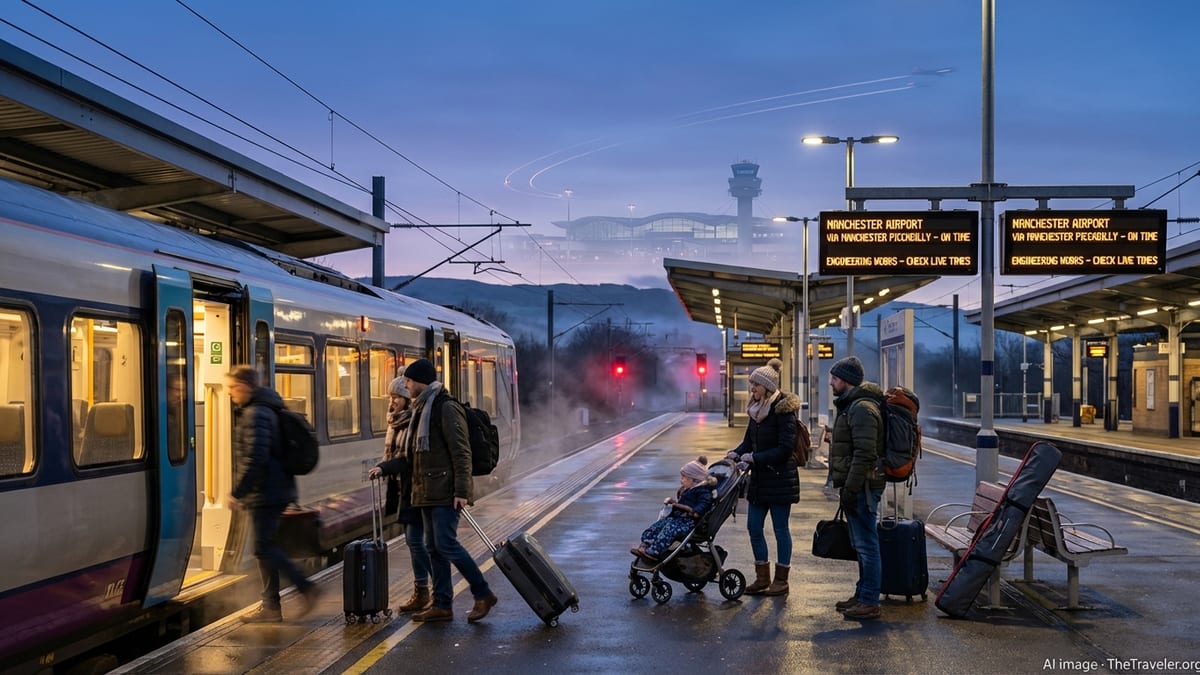
Blaze near tracks forces full station shutdown
Reports indicate that the incident began on the evening of Friday 10 July, when a lineside blaze broke out close to the tracks at Stratford in east London. Coverage in London media describes a fast-moving fire affecting vegetation and infrastructure alongside the railway, prompting an immediate halt to services through the area.
According to publicly available information from rail industry sources, the fire was brought under control within a few hours, but not before it caused significant damage to signalling and related equipment. The impact on critical rail systems meant that Stratford station, a key hub for suburban, regional and urban services, remained closed into the weekend.
National disruption summaries show that all lines running through Stratford were initially suspended or heavily reduced, with disruption expected to continue into Monday 13 July. Passengers were advised to avoid the station entirely and check live updates before travelling.
Multiple operators and lines hit by cascading disruption
Stratford is a major interchange where National Rail, the London Underground, the Docklands Light Railway, London Overground and the Elizabeth line intersect. The station usually handles hundreds of trains and large passenger flows each hour, connecting central London with key destinations in Essex, east London and the Docklands.
Published service updates indicate that Greater Anglia services were severely disrupted on all routes to, from and through Stratford, with widespread cancellations, diversions and short-notice changes. Elizabeth line trains also faced restrictions, with some services terminated early or diverted away from the affected stretch of track while engineers worked on repairs.
London Overground links between Highbury & Islington and Stratford were suspended for part of the disruption period, while other sections of the line reported severe delays. Docklands Light Railway services that normally serve Stratford were curtailed or rerouted, adding further pressure to neighbouring stations as passengers sought alternative routes.
London Underground operations were also affected, with local coverage noting that parts of the Jubilee line and Central line through Stratford experienced suspensions or heavy delays. Knock-on congestion spread quickly across the wider network as trains and crews were displaced from their usual diagrams.
Repairs focus on damaged signalling and power systems
Rail industry briefings suggest that the most serious damage from the fire was to signalling and telecommunications equipment positioned trackside near Stratford. These systems control train movements and ensure safe spacing between services, meaning any failure or uncertainty results in immediate reductions to capacity.
Engineers have been working through the weekend to replace cables, inspect signal housings and test equipment before trains can pass the affected area at normal speeds. Early indications from disruption summaries show that a limited number of services have been able to run through the station under reduced capacity, but a full timetable is not expected until extensive checks are completed.
Specialist teams are also assessing the wider infrastructure, including overhead line equipment and lineside power feeds. With much of the recent disruption in London linked to hot, dry weather, there is likely to be close attention on how vegetation management and infrastructure resilience are keeping pace with more frequent heat-related incidents.
Travel chaos for weekend and Monday commuters
The timing of the fire and the subsequent closure has created severe challenges for passengers travelling into and out of east London. According to journey planners and rail alerts, many travellers have been forced to reroute via Liverpool Street, Fenchurch Street, West Ham and other nearby stations, where platforms and concourses were reported to be significantly busier than usual.
Trains that would normally pass through Stratford are being diverted or turned back short of their destination, and some operators have introduced emergency timetables with fewer services and longer journey times. Rail forum discussions describe multiple trains stranded between stations at the height of the incident, with passengers eventually led back to platforms once it was safe to move.
Publicly available customer information advises those with flexible plans to delay travel, while those who must travel are urged to allow significantly more time and to check for short-notice cancellations. Disruption to early-morning services on Monday is expected, affecting both commuters heading into central London and longer-distance passengers connecting at Stratford.
Longer-term questions over resilience and maintenance
The Stratford incident comes amid wider scrutiny of how Britain’s railways are coping with a combination of ageing infrastructure, intense usage and more frequent heat-related events. Commentators on specialist rail platforms note that dense vegetation and dry conditions along some corridors can increase the risk of lineside fires spreading quickly to signalling and power equipment.
Network and operator statements following previous incidents have highlighted ongoing programmes to improve vegetation management, replace older cable runs and harden critical systems against extreme weather. The latest disruption at Stratford is likely to prompt renewed discussion about whether investment is keeping pace with rising demand on key London interchanges.
For now, rail users are being urged to follow live service updates and be prepared for continued alterations as repairs progress. Once the immediate disruption has passed, attention is expected to shift to how lessons from the Stratford fire can be applied across the network to reduce the risk of similar large-scale shutdowns in future.