


More news on this day
Transportation agencies in Massachusetts are urging travelers to brace for significant congestion, road closures, and longer-than-usual travel times around Foxborough as World Cup contenders Germany and Paraguay meet in a Round of 32 match on Monday, June 29.
Get the latest news straight to your inbox!
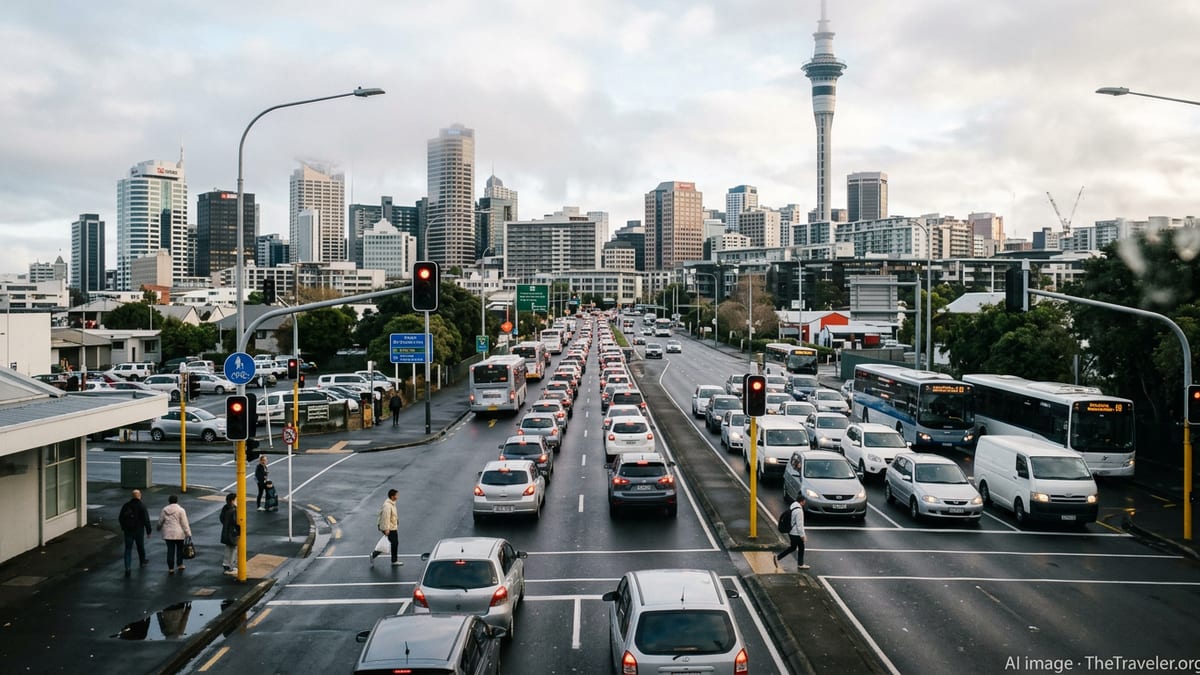
Match details set the stage for a difficult Monday commute
The Germany vs. Paraguay Round of 32 fixture is scheduled for a 4:30 p.m. kickoff on June 29 at Boston Stadium, the World Cup branding for Gillette Stadium in Foxborough. The weekday start time places pre-game arrivals squarely in the afternoon commute window, raising the likelihood of heavy traffic on key corridors long before the opening whistle.
Publicly available ticketing information indicates that tens of thousands of fans are expected, comparable to a major NFL crowd, at a time when many commuters are still on the roads. Parking lot opening times, typically several hours before kick-off, point to traffic building in the early afternoon and persisting late into the evening as spectators depart after the match.
MassDOT planning documents for the 2026 World Cup have repeatedly highlighted Foxborough as one of the most challenging sites in the state road network, due in large part to the limited capacity of Route 1 and the need to route event traffic through existing commuter patterns on Interstates 95 and 495.
Recent group-stage matches at the same venue have already offered a preview of strains on the system, with local reports describing notably heavier volumes on approach roads, even when overall delays remained somewhat below typical NFL game-day gridlock.
MassDOT traffic plan includes contraflow lanes and breakdown travel
According to recent coverage of state transportation advisories, MassDOT intends to deploy a contraflow lane on Route 1 between Interstate 95 and Interstate 495 to create additional capacity for match traffic. This setup allows one side of the roadway to carry vehicles in the opposite direction for limited stretches, a strategy used during previous high-impact events at the stadium.
Event-specific plans also call for allowing traffic to use designated breakdown lanes on Route 1 for portions of the day, effectively turning shoulders into temporary travel lanes. This approach has featured in MassDOT’s World Cup operations briefings as a way to move large volumes of vehicles more quickly while still preserving emergency access through on-site incident response teams and pre-positioned tow trucks.
World Cup planning presentations shared through the state’s public records show that the agency has spent months refining traffic signal timings, message sign usage, and ramp metering strategies to keep vehicles flowing to and from Foxborough. The operational goal is to keep game-related traffic on Route 1 and major interstates rather than allowing it to spill onto small local roads.
Despite these measures, transportation planners consistently warn that no amount of reconfiguration can fully offset the sudden surge created by a sold-out stadium combined with routine weekday traffic. The agency’s message to the public emphasizes leaving early, avoiding unnecessary driving near the stadium, and considering alternate modes where possible.
MBTA promotes special World Cup trains as driving alternative
On the transit side, the MBTA is promoting special Boston Stadium Trains on the Franklin/Foxboro Commuter Rail Line as a primary alternative to driving. Recent advisories note that approximately 6,000 round-trip tickets have already been sold for Monday’s match, with thousands more seats still available for fans traveling from Boston and other communities along the commuter rail network.
The World Cup service plan includes 14 express trains operating on match days, with World Cup rail tickets priced as all-day passes across the entire commuter rail system. Publicly accessible MBTA notices describe this strategy as a way to encourage fans to park at outlying stations rather than crowd limited parking near the stadium itself.
Earlier tournament matches at Boston Stadium have already shown the impact of this approach, with added trains and detailed boarding procedures at South Station helping to reduce car volumes on Route 1 and surrounding highways. Transit-focused coverage has highlighted improvements to crowd management and queuing at rail stations over the course of the group stage.
For Monday’s knockout match, transportation agencies are stressing that rail is likely to be the most predictable option for many spectators, particularly those traveling from central Boston or northern suburbs who would otherwise face congested approaches on I-93 and I-95.
Local communities prepare for rolling closures and restricted access
Municipal advisories in nearby communities such as Wrentham and Foxborough outline a series of local road closures and restrictions timed to coincide with World Cup matches. Notices detail streets that will be limited to local traffic only, with access controlled by police checkpoints several hours before kickoff and extending into the post-match departure period.
Residents living near the stadium have reported that residential cut-throughs frequently used by navigation apps can be closed off entirely to non-residents on match days. Earlier games in June have already seen detours, controlled intersections, and altered turning patterns that divert drivers back toward Route 1 rather than allowing them to weave through neighborhood streets.
World Cup planning material released by MassDOT notes that the stadium’s secure perimeter has been expanded for the tournament, which in turn pushes traffic control points and pedestrian zones further into surrounding areas. The result is a complex grid of detours, lane reductions, and timed closures that can catch unfamiliar drivers off guard if they rely solely on standard GPS directions.
Local forums and community postings describe a pattern in which weekday matches, in particular, tend to generate earlier and more sustained slowdowns than weekend fixtures, given that many residents are still commuting or picking up children from school when fans are already converging on the stadium.
What Monday travelers should expect on key corridors
For drivers using Interstate 95 and Interstate 495, transportation advisories suggest that the heaviest impacts are likely in the mid-afternoon window as fans head toward Foxborough. Reports from previous match days indicate that traffic starts to build several hours before kickoff, often around the time stadium parking lots open, and can extend for miles along approaches to the Route 1 interchanges.
Route 1 itself is expected to be a focal point of congestion. With contraflow operations and breakdown lane travel in effect, the road will be heavily managed, but overall speeds are still likely to be slow given the sheer number of vehicles. Travelers not attending the match are being urged in public messaging to consider alternate routes or adjust their schedules to avoid the corridor during peak periods.
Those who must drive near Foxborough on Monday are being encouraged, through public-facing materials, to check real-time traffic information and be alert for variable message signs indicating lane shifts, closures, and detours. Experience from earlier World Cup dates suggests that conditions can change quickly as law enforcement and traffic control teams respond to localized backups or incidents.
With a high-stakes World Cup knockout match on a weekday afternoon, the combination of match-day surges and routine commuter flows is poised to produce one of the most challenging traffic days of the tournament around Boston Stadium. Travelers across the region are being advised to plan accordingly, whether they are heading to the game or simply trying to get past it.