


More news on this day
Rory McIlroy and Jon Rahm are set to tee it up at this week’s Abu Dhabi Aldar Championship at Yas Links, even as regional conflict and new travel advisories put an unusual security spotlight on one of golf’s most lucrative season finales in the Middle East.
Get the latest news straight to your inbox!
Playoffs Press Ahead At Yas Links Despite Regional Tension
The Abu Dhabi Aldar Championship, which begins on Thursday, November 5, 2026, opens the two‑event DP World Tour playoffs that will conclude the season in the United Arab Emirates. The field at Yas Links features McIlroy, Rahm and a cluster of top European and international players competing for a reported 9 million dollar purse as part of the Race to Dubai rundown.
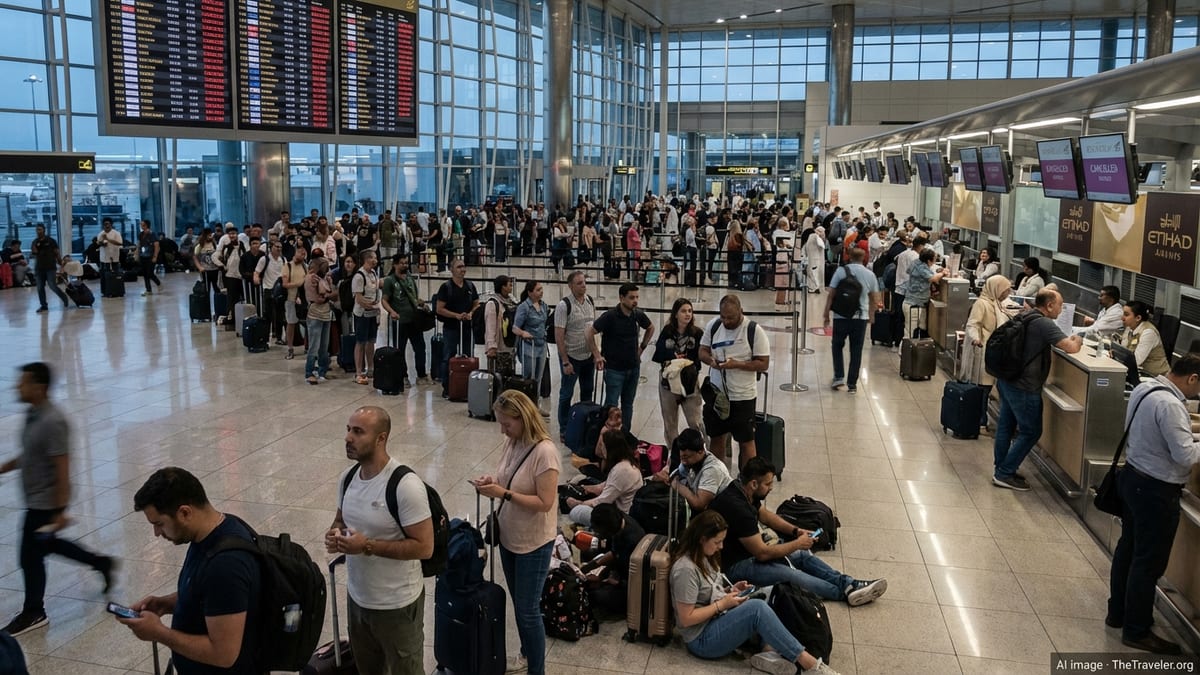
The event goes ahead as the wider region contends with an expanded conflict involving the United States and Iran, as well as attacks on critical infrastructure elsewhere on the Arabian Peninsula. Recent strikes on airports and energy facilities in neighboring countries have sparked concerns among athletes and traveling spectators about transit disruptions and general security conditions.
Some golf coverage has noted that questions emerged in recent weeks over whether the Abu Dhabi stop, and the season‑ending DP World Tour Championship in Dubai, would proceed on schedule. Reports indicate that tour officials chose to continue with both tournaments after consultations with external security and travel specialists, framing the situation as one that requires enhanced planning rather than wholesale cancellation.
For Abu Dhabi and Dubai, the playoffs represent not only sporting prestige but also a significant tourism showcase at the start of the region’s peak winter travel season. City authorities and organizers have long promoted the UAE as a safe, well‑connected hub for major events, an image now tested by developments beyond its borders.
Emergency Alert And Evacuation Protocols For Players And Caddies
This year’s build‑up has been dominated less by form charts and more by detailed emergency procedures distributed to players and caddies. Golf media obtained copies of a notice for competitors at Yas Links describing what to do if United Arab Emirates authorities issue a public mobile phone alert while the tournament is in progress.
According to published descriptions of the document, any such alert would trigger an immediate suspension of play. A long blast of the course air horn would serve as the on‑site signal, with all players and caddies instructed to leave the course and follow a mapped evacuation route back to the clubhouse and other designated safe areas.
Briefings at the clubhouse are expected to outline the nature of any incident and the options for resuming or abandoning play. Additional updates would be delivered through a players‑only digital portal, designed to give competitors a single, consistent source of operational information during a fast‑moving situation.
The protocol also addresses the scenario in which a government alert arrives while a player is away from the venue, instructing individuals to follow directions contained in the alert and any official local messaging. While event organizers have presented the measures as precautionary, their publication has underlined the extent to which security planning now forms a visible part of international sports logistics in the Gulf.
Star Names Commit As Others Stay Away
Against this backdrop, the decision by McIlroy and Rahm to travel to Abu Dhabi has carried symbolic weight. Both are past champions and regular contenders in the UAE, and they remain among the most recognizable faces for fans considering trips to Yas Island or television audiences following the playoffs from abroad.
At the same time, reports from golf outlets list a notable group of qualified players who have chosen not to make the journey, despite earning places in the limited‑field event. Names such as Robert MacIntyre, Justin Rose, Shane Lowry, Matt and Alex Fitzpatrick, Ryan Fox, Min Woo Lee and Ludvig Åberg have been cited among the absentees, with tournament previews indicating a mix of personal scheduling choices, family considerations and unease over the regional security climate.
Not every withdrawal has been explicitly linked to safety worries, and public explanations have varied. In some cases, representatives have pointed to the practicalities of long‑haul travel during a congested section of the global golf calendar. In others, players are understood to have weighed their comfort with flying into the Gulf at a time when missile and drone activity elsewhere in the Middle East has periodically disrupted civilian airspace.
The result is a field that remains elite but slightly thinner than it might have been in a more stable year, with additional opportunities for rising contenders who remained in the Race to Dubai standings and elected to compete.
Travel Advisories Highlight Evolving Risk Calculus
International travel advisories updated in October underline why security has become such a prominent talking point around the Abu Dhabi and Dubai events. The United States currently lists the United Arab Emirates as a Level 3 destination, advising travelers to reconsider non‑essential trips because of terrorism and armed conflict in the broader region. The advisory cites the possibility of attacks on transportation hubs, tourist locations and critical infrastructure, as well as recent missile and drone launches involving nearby states.
Other governments stop short of that level of warning but still urge a high degree of caution. Canadian and Australian travel guidance refers to an unpredictable regional security environment, the risk of terrorist incidents and the chance of sudden disruption to flights in and out of Abu Dhabi and Dubai. Publicly available information from those advisories recommends travelers monitor local news, heed any government alerts on their phones and prepare for possible schedule changes.
Despite these caveats, aviation into the UAE continues to operate at near‑normal volumes, with both Abu Dhabi International Airport and Dubai International Airport handling heavy traffic as the Northern Hemisphere winter begins. Airlines and airports in the federation are known for stringent security procedures, and so far there have been no widely reported interruptions directly affecting the Yas Links tournament schedule.
For golf fans and broader leisure travelers, the advisories translate into a more detailed pre‑departure checklist. Visitors are encouraged to confirm that their airline and insurer will accommodate potential itinerary changes, to register with their consular services where such programs exist, and to familiarize themselves with any local emergency messaging systems that might be used during their stay.
Tourism, Perception And The Future Of Gulf Golf
The determination to press on with the Abu Dhabi Aldar Championship and the subsequent DP World Tour Championship in Dubai reflects the importance of golf to the UAE’s wider tourism and branding strategy. Over the past decade, the country has positioned itself as a centerpiece of the sport’s international swing through the Middle East, investing in signature courses, resort infrastructure and marquee tournaments designed to attract high‑spending visitors during the cooler months.
McIlroy in particular has long been associated with this Gulf swing, building a strong competitive record in Abu Dhabi and Dubai that has helped establish both cities as familiar backdrops for international golf coverage. Rahm, a multiple winner of the DP World Tour Championship, has likewise contributed to the perception of the UAE as a stage for decisive late‑season drama.
Conflict on the region’s periphery now places that positioning under scrutiny. Organizers and local stakeholders must balance the desire to maintain a sense of normality for players and tourists with the need to be seen taking security concerns seriously. The highly publicized emergency procedures at Yas Links are one manifestation of that balance: prominent enough to reassure participants that planning is in place, yet framed as contingency rather than response to an imminent, specific threat.
How smoothly this week’s Abu Dhabi event and next week’s season finale in Dubai unfold will influence how prospective visitors, both sporting and general, view the UAE as a travel destination over the coming months. For now, with McIlroy, Rahm and a condensed field of contenders choosing to compete, the spotlight will fall equally on the quality of golf and on how effectively the tournament navigates a complex security landscape.