


More news on this day
A major power outage at Perth Airport on 29 October 2026 triggered hours of disruption across multiple terminals, grounding outbound flights, slowing arrivals and leaving travellers stranded at airports around Australia as airline schedules unraveled.
Get the latest news straight to your inbox!
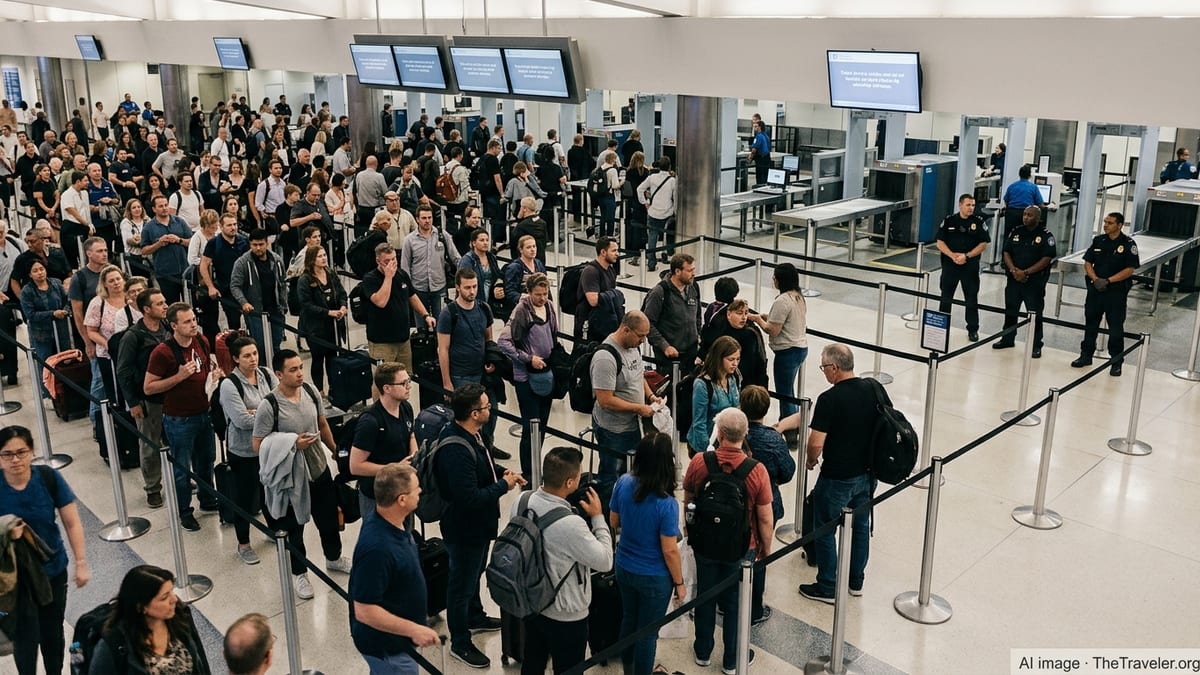
Power failure hits terminals and key systems
Published coverage indicates the disruption began on Thursday 29 October when Perth Airport reported a loss of power that affected terminal operations, including lighting, check in facilities and flight information displays. The airport’s public updates described a power outage affecting terminal operations, with messages warning that passengers should expect delays and that services were being progressively restored as backup systems came online.
Reports from Australian outlets such as PerthNow and international summaries of the incident indicate that both departure and arrival information screens were affected as the outage unfolded. Airline staff were forced to rely more heavily on manual processes at check in and boarding gates, which slowed the flow of passengers through the T1/T2 international and regional precinct and the T3/T4 domestic precinct.
Accounts of the disruption show that while the airfield itself remained operational, with navigation and runway lighting supported by separate backup systems, the terminal-side interruption had a cascading effect on passenger handling. Check in queues grew as electronic kiosks and conveyor-fed baggage systems were interrupted, and security screening capacity was reduced while some lanes were brought back into service.
Perth Airport’s publicly available material on infrastructure projects and contingency planning highlights the reliance on both mains electricity and on site generators to support critical terminal systems. In this incident, generator power began restoring supply to the terminals in the late afternoon and early evening, but not before a backlog of delayed flights and displaced passengers had built up.
Flights delayed and cancelled across major airlines
Local news reports and live departure boards captured during the outage show that services operated by Qantas, Virgin Australia and Jetstar were among those most visibly affected. Short haul domestic routes to cities such as Sydney, Melbourne, Adelaide and Brisbane recorded a mix of extended delays and same day cancellations as airlines adjusted to restricted check in and boarding capacity.
Information compiled from flight status tools used by these carriers indicates that some morning and early afternoon departures from Perth on 29 October were held on the ground for extended periods while terminal systems were stabilised. In several cases, aircraft remained available but boarding could not proceed at a normal pace because electronic boarding systems, baggage loading operations or jet bridge controls were impacted by the loss of power.
Arriving flights were less likely to be cancelled outright, but disruption inside the terminals meant later connections were missed and turnaround times increased. Some inbound aircraft arriving from the eastern states experienced longer than usual waits on the ground while gates, staff and baggage handling resources were reassigned to cope with the disruption.
Aviation industry commentary on the incident has noted that Perth Airport, which is ranked among Australia’s busiest airports by passenger movements, operates a tightly scheduled mix of interstate, regional and limited international services. Even a few hours of severely reduced capacity can therefore translate into a full day of knock on delays, particularly when aircraft and crews are due to operate multiple onward legs.
Travellers stranded in Perth and around Australia
Publicly shared accounts from passengers and local media coverage show that the power outage stranded travellers not only in Perth but also at airports around Australia when their inbound aircraft or onward connections failed to depart on time. Travellers waiting to depart Perth reported lining up in crowded terminals as they waited for updates, with some being advised to return the following day after services were cancelled.
Because many affected routes were domestic trunk services linking Perth with Sydney, Melbourne, Brisbane and Adelaide, disruption quickly spread along the network as aircraft scheduled to operate return legs were delayed in Western Australia. Passengers at eastern state airports reported being held at gates, or being informed that their flights had been cancelled when it became clear that their aircraft would not depart Perth within crew duty limits.
Coverage of the incident indicates that airlines applied a range of standard disruption policies, including moving passengers to later services where space was available and providing accommodation or meal assistance in line with each carrier’s conditions of carriage. However, with load factors already high in late October, many travellers faced long waits for alternative seats as airlines worked to reposition aircraft and crews.
Social media posts and traveller forums referenced missed events, disrupted holiday plans and business trips forced to extend by an extra night. Several passengers reported choosing to rebook to alternative carriers or routes where possible, while others opted to delay travel entirely until operations in Perth stabilised.
Cause of outage and recovery efforts
Initial reporting linked the power failure to severe weather systems affecting parts of Western Australia in the days leading up to 29 October, with high winds and storms contributing to wider electricity network issues across the Perth metropolitan area. Specialist aviation and infrastructure coverage has pointed to damage to external power lines supplying the airport precinct as a likely trigger, although full technical details of the event and subsequent review have not yet been published in detail.
Perth Airport’s broader planning documents show that the airport relies on a combination of utility supply and onsite backup generation to support key operational areas, including terminal lighting, security screening, baggage handling and communications. After the October outage, publicly available reporting indicates that the airport commenced a review of its backup generation and redundancy arrangements, with a focus on reducing the risk that future external power faults could cause similar large scale terminal disruption.
By the evening of 29 October, generator power and partial restoration of mains supply had allowed most terminal systems to resume operation, and later services were able to depart, albeit with heavy delays. However, the knock on effect for aircraft and crew positioning meant that disruption persisted into subsequent days, as airlines cleared backlogs and resumed normal rotations.
Industry observers note that this is not the first time Australian airports have faced widespread disruption due to infrastructure or systems failures. Previous incidents involving baggage system breakdowns, security screening interruptions and weather related power cuts in other states have similarly demonstrated how quickly aviation networks can be thrown off balance, even when the underlying flight infrastructure remains intact.
What affected passengers can do now
In the wake of the Perth Airport outage, guidance from airlines, airport advisories and independent travel resources has consistently stressed the importance of checking flight status directly with carriers before travelling to the airport. Airline apps and websites for Qantas, Virgin Australia, Jetstar and other operators remain the primary source of confirmed information on delays, cancellations and rebooking options, particularly when airport display systems have been disrupted.
Passengers still working through changes linked to the 29 October event are being directed, through public information and carrier announcements, to manage their bookings online where possible or to contact airline call centres if additional assistance is required. Some airlines have offered more flexible change conditions for affected flights, including waiving change fees or fare differences within specified date ranges, though specific options vary by carrier and ticket type.
For travellers with imminent departures from Perth, travel advisories recommend allowing extra time to reach the airport and complete check in and security, as operational teams may still be adjusting rosters and processes after the outage. Publicly available material from Perth Airport notes that the T1/T2 and T3/T4 precincts are around a 15 minute drive apart, so passengers connecting between airlines based in different precincts are encouraged to factor in additional transfer time.
More broadly, travel planning resources suggest that passengers flying through Perth and other major hubs build in contingency time for critical journeys and consider travel insurance products that cover delays and missed connections due to infrastructure failures. While large scale power outages of the kind experienced on 29 October remain relatively uncommon, the Perth incident has underlined how quickly localised infrastructure issues can ripple across a national flight network.