


More news on this day
Travellers using Johannesburg’s OR Tambo International Airport are being urged to brace for potential disruption after a weather-related travel advisory warned that storms and poor visibility could trigger delays and diversions on some flights.
Get the latest news straight to your inbox!
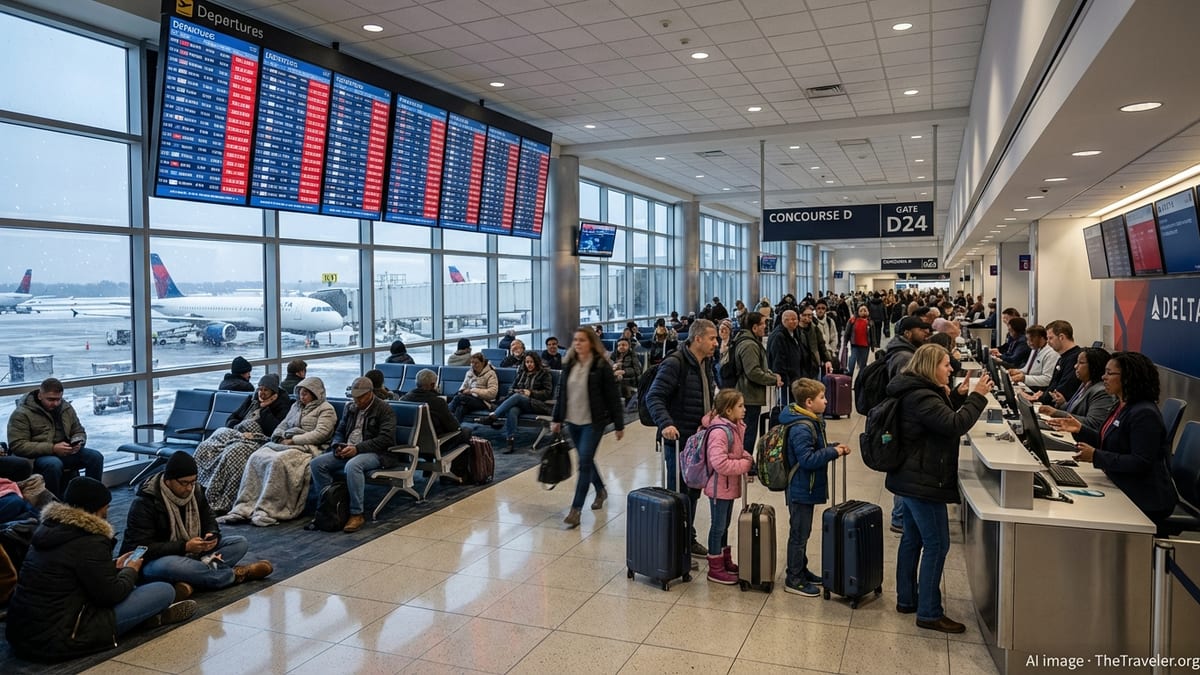
Advisory warns of possible delays and diversions
Publicly available information from South African media coverage indicates that OR Tambo International Airport issued a travel advisory on 2 November 2026, cautioning that adverse weather conditions around Johannesburg may affect both arriving and departing services. The notice highlighted the risk of slower operations where thunderstorms and low visibility coincide with busy traffic periods.
Reports describe at least one flight from Cape Town on Monday afternoon being diverted to Gaborone in Botswana as weather deteriorated over Gauteng. The diversion illustrates how quickly schedules can shift when storm cells affect approach paths into OR Tambo, which is South Africa’s primary international gateway and one of the busiest hubs on the continent.
The advisory urges passengers to monitor flight status through the Airports Company South Africa mobile app or directly with their airline before leaving for the airport. Travelers already at the terminal are encouraged to keep an eye on departure boards and announcements, as turnaround times may fluctuate if storms intensify or move unexpectedly across the highveld.
There were no indications in recent reporting of a full airport closure linked to the latest weather system. However, the combination of diversions, extended holdings in the air and slower ground handling during storms has raised concerns that the situation could escalate into wider knock-on delays if conditions persist.
Weather and airspace constraints behind the disruption risk
The warning at OR Tambo comes against a backdrop of weather sensitivity across South Africa’s aviation system. Industry updates in 2026 note that certain instrument flight procedures at some airports, including major hubs, have been temporarily withdrawn for mandatory review. Under reduced-visibility or storm conditions, this can limit the options available to pilots and air traffic controllers when sequencing aircraft into busy airfields.
Information published by local airlines explains that when low cloud or heavy rain reduces visibility, fewer flights can land or take off within a given period, particularly where some precision approach procedures are unavailable. This increases the likelihood of holding patterns, diversions to alternate airports, or tactical ground delays to manage the flow of traffic into Johannesburg.
In addition, South African and regional tourism bodies have been tracking broader global disruptions linked to airspace closures and geopolitical tensions. While these issues are not the direct cause of the current advisory at OR Tambo, they contribute to a fragile operating environment in which any local weather event can ripple through already tight schedules and aircraft rotations.
Operational statements from air navigation and airport operators over the past year have repeatedly stressed that safety margins take priority over punctuality. That means flights may be delayed, rerouted or cancelled where storm activity or visibility drops below the thresholds required for safe approach, landing and departure, even if conditions appear manageable from the terminal.
Recent history of bottlenecks at Johannesburg’s main hub
The latest warning follows a series of episodes in recent years in which passengers at OR Tambo have reported long queues and missed connections after technical or operational glitches. Coverage from South African news outlets in 2025 and 2026 highlights instances of congestion at security and immigration, as well as a separate period of delays linked to air traffic system issues affecting departures.
In previous incidents, airport and air navigation providers have described these disruptions as isolated and stressed that efforts were underway to restore full capacity as quickly as possible. Nonetheless, repeated bottlenecks have drawn criticism from parts of the travel and tourism industry, which argue that South Africa’s flagship gateway must be resilient as visitor numbers climb back toward pre‑pandemic levels.
Industry associations have expressed concern in earlier statements about the impact of interruptions to critical infrastructure, including navigation procedures and fuel logistics, on the reliability of air services at major airports such as OR Tambo. Those warnings have framed punctual and predictable operations at Johannesburg as essential to the region’s economic recovery and competitiveness as a long‑haul destination.
For travelers, the result has been a more unpredictable experience at times, particularly during peak holiday periods or when weather and technical constraints coincide. The fresh advisory about storm‑related disruption therefore taps into existing worries that relatively small shocks can still cascade into more visible “chaos” in terminals when systems are already under strain.
What passengers flying through OR Tambo should do now
For those due to travel through OR Tambo in the coming days, publicly accessible guidance from airlines, tourism agencies and previous disruption notices points to a few practical steps to reduce the risk of serious inconvenience. The most consistent message is to verify flight details directly with the operating carrier before leaving home, using airline apps, websites or contact centers for the latest information.
Airports Company South Africa also promotes its own mobile app and online flight boards, which display updates on delays, gate changes and cancellations. During unsettled weather, schedules can adjust repeatedly as air traffic control sequences arrivals and departures around storm cells, so travelers are advised to keep checking these channels rather than relying solely on original booking confirmations.
Passengers connecting onward from Johannesburg may wish to allow extra time between flights, especially where an international arrival feeds into a regional or domestic leg. Travel forums and prior local coverage regularly reference the need for several hours’ buffer for complex itineraries through OR Tambo, taking into account potential queues at immigration and security, as well as possible weather‑driven disruption on the first segment.
Those heading to the airport by road are encouraged to factor in Johannesburg traffic and the possibility that others may arrive earlier than usual in response to the advisory, lengthening check‑in and baggage‑drop lines. Travel planners recommend that visitors monitor local news and weather bulletins on the day of departure, and consider travel insurance products that explicitly cover weather‑related delays or forced overnight stays if their itinerary is particularly time‑sensitive.
Outlook for operations as storm systems move through Gauteng
Short‑term forecasts for Gauteng suggest that scattered thunderstorms and shifting cloud cover could continue to affect aviation operations around Johannesburg as frontal systems move across the interior. Aviation notices accessible to the public show that any change in runway use, navigation procedures or air traffic capacity is typically communicated through official channels to airlines and pilots, then reflected in real‑time schedule updates.
South African tourism organizations state that they are monitoring the broader pattern of global flight disruptions and remain in contact with aviation stakeholders to understand the potential impact on inbound and outbound travel. At present there is no indication in public statements of a long‑term shutdown at OR Tambo, but observers note that further localized disruption remains possible while unstable weather persists.
Travel analysts point out that large hub airports frequently experience short bursts of irregular operations at the intersection of storms, tight scheduling and infrastructure constraints. In such conditions, even a limited number of diversions or extended airborne holding can place pressure on gates, baggage systems and passenger processing areas, creating the impression of wider chaos even where the underlying issue is temporary.
For now, the message to travelers is to stay informed, flexible and prepared for potential last‑minute changes to departure or arrival times. With OR Tambo remaining a crucial gateway for southern Africa and one of the few African airports offering direct links across multiple continents, how smoothly the hub weathers the current stormy spell will be closely watched by airlines, tourism partners and passengers alike.