


More news on this day
Severe thunderstorms sweeping across southeast England on Saturday have caused major disruption at London’s Heathrow and Gatwick airports, with hundreds of flights delayed, dozens cancelled and some passengers facing waits of up to six hours.
Get the latest news straight to your inbox!
Storms Hit at Peak Summer Travel Time
The disruption comes at the height of the busy summer getaway period, compounding pressure on two of Europe’s most heavily used aviation hubs. Publicly available flight-tracking data and media reports for Saturday 27 June indicate that both Heathrow and Gatwick were forced to slow arrivals and departures as intense storm cells moved across the London area.
Operational data compiled by flight-monitoring services suggests that by Saturday afternoon more than 700 flights linked to the two airports had been delayed, with Heathrow accounting for at least 360 delays and Gatwick more than 350. Additional services were cancelled outright as airlines sought to reset schedules and keep aircraft and crews within legal operating limits.
The storms followed several days of high temperatures across the United Kingdom, part of a broader early-summer heat pattern that has already strained transport networks. Weather forecasters had warned that the heat would break with heavy rain, lightning and localized flooding, conditions that typically trigger air-traffic restrictions over densely populated regions such as southeast England.
While exact figures continued to evolve through the evening, early assessments from aviation analysts pointed to one of the most challenging single-day weather events for London’s airports so far this year, echoing a series of recent disruption spikes linked to extreme conditions and airspace constraints.
Air Traffic Restrictions Ripple Across Airline Networks
According to published coverage and air-navigation updates, temporary air traffic control restrictions were introduced in the London area to maintain safe separation between aircraft operating in and around storm cells. When thunderstorms sit over or near key approach paths, controllers typically reduce the number of aircraft allowed to land and depart each hour, which quickly creates queues in the sky and on the ground.
At Heathrow, where normal operations already run close to maximum capacity, even small reductions in throughput can have an outsized impact. Aircraft circled in holding patterns, while others were kept at the gate until departure slots became available. Similar constraints affected Gatwick, which relies heavily on tightly timed schedules for short-haul services around Europe.
Publicly shared accounts from passengers and airline updates pointed to diversions, with some flights routed to alternative UK airports when conditions deteriorated during final approach. As aircraft and crews ended up in unexpected locations, knock-on delays spread through evening rotations, affecting later services that were otherwise unaffected by the worst of the weather.
Industry observers note that the London hub system is particularly sensitive to this kind of disruption because aircraft are often scheduled to operate multiple sectors in a single day. Once a morning or early afternoon flight is delayed or diverted, the impact can cascade through every subsequent leg operated by that aircraft, creating delays far from the original storm zone.
Passengers Face Long Delays and Limited Options
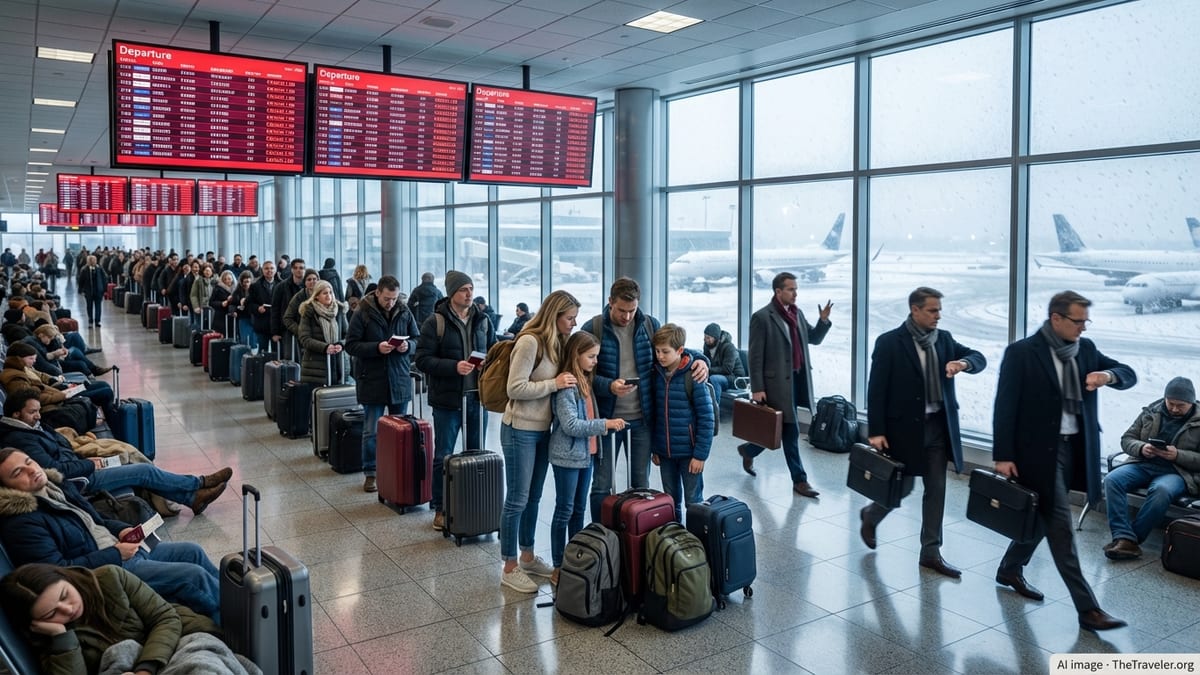
For travelers, the operational complexities translated into long waits, crowded terminals and a scramble for information. Reports from Heathrow and Gatwick indicated that some passengers were held on aircraft awaiting departure, while others spent several hours in departure halls as departure times slipped repeatedly.
Airlines advised customers to monitor digital channels for real-time updates and, where possible, to defer travel or accept rebooking options. Some carriers introduced more flexible change policies for affected flights, allowing passengers to switch to later departures or alternative routes once capacity became available.
Travel-rights organizations highlighted that under European and UK passenger-protection rules, compensation is often not payable when delays are caused by severe weather or air traffic control restrictions considered outside an airline’s control. However, guidance also stresses that airlines remain responsible for providing care and assistance, including meals, refreshments and accommodation where passengers are forced to wait for extended periods.
Specialists in passenger rights pointed to recent waves of disruption at UK airports as evidence of how quickly small margins in airline and airport operations can disappear when adverse conditions hit. They encouraged travelers affected by Saturday’s chaos to retain boarding passes, receipts and written communications from airlines in case later eligibility for partial refunds or reimbursement arises.
Storms Cap a Month of Elevated Disruption
Saturday’s thunderstorms arrive on the heels of several turbulent weeks for British and European aviation. In late June, monitoring by travel-compensation firms and industry trackers recorded hundreds of delays and cancellations across Heathrow, Gatwick, Edinburgh and Newcastle on a single day, with more than 700 flights affected as airlines struggled with a combination of weather and airspace constraints.
Earlier in the month, separate operational data showed that UK carriers and airports had already endured heavy disruption linked to a mix of staffing pressures, infrastructure glitches and localized storms. Analysts say this pattern underlines the vulnerability of tightly wound airline schedules to any external shock, whether meteorological or technical.
For travelers, the result has been an increasingly unpredictable operating environment, particularly for those relying on tight connections through London to long-haul destinations. Missed onward flights, lost hotel nights and re-routed itineraries have become recurring themes in passenger reports as even brief weather events trigger knock-on effects across airline networks.
Industry commentators suggest that if volatility in summer weather patterns continues, both airports and airlines may face growing pressure to build more slack into schedules, invest further in resilience measures and provide clearer, more proactive communication to passengers before storms or heatwaves arrive.
What Travelers Through Heathrow and Gatwick Should Do Next
With forecasters indicating that unsettled conditions could persist in the region in the short term, travel experts recommend that passengers due to fly through Heathrow or Gatwick over the coming days keep a close eye on airline apps and airport departure boards. Checking in online, confirming that contact details are up to date and enabling notifications can help travelers receive early warning of schedule changes.
Those starting journeys in the UK are advised to allow additional time to reach the airport, particularly if rail or road links are also affected by heavy rain or localized flooding. Where itineraries include tight connections, especially to long-haul flights, some advisers suggest exploring earlier feeder services or considering overnight stays near the airport to reduce the risk of missed onward legs.
Passengers who experienced significant delays on Saturday are encouraged to review airline guidance on refund and rebooking options and, where appropriate, to submit feedback or formal claims once operations stabilize. While many weather-related disruptions may fall outside compensation rules, carriers may still offer vouchers, partial refunds or goodwill gestures on a case-by-case basis.
As airlines and airports work to clear backlogs and reposition aircraft and crews, operational data indicates that residual delays may continue into Sunday, particularly during the morning peak. Travelers planning to pass through Heathrow and Gatwick this weekend are being urged to build flexibility into their plans and prepare for the possibility of further short-notice changes.