


More news on this day
Passengers across Saudi Arabia, the United Arab Emirates, Bahrain, Qatar, Iraq, Lebanon, and Syria are facing a fresh wave of disruption, with regional reports pointing to 31 flight terminations and several operational delays involving Air Arabia, Gulf Air, and Saudia, compounding anxiety for travelers already navigating volatile airspace and fuel-constrained schedules.
Get the latest news straight to your inbox!
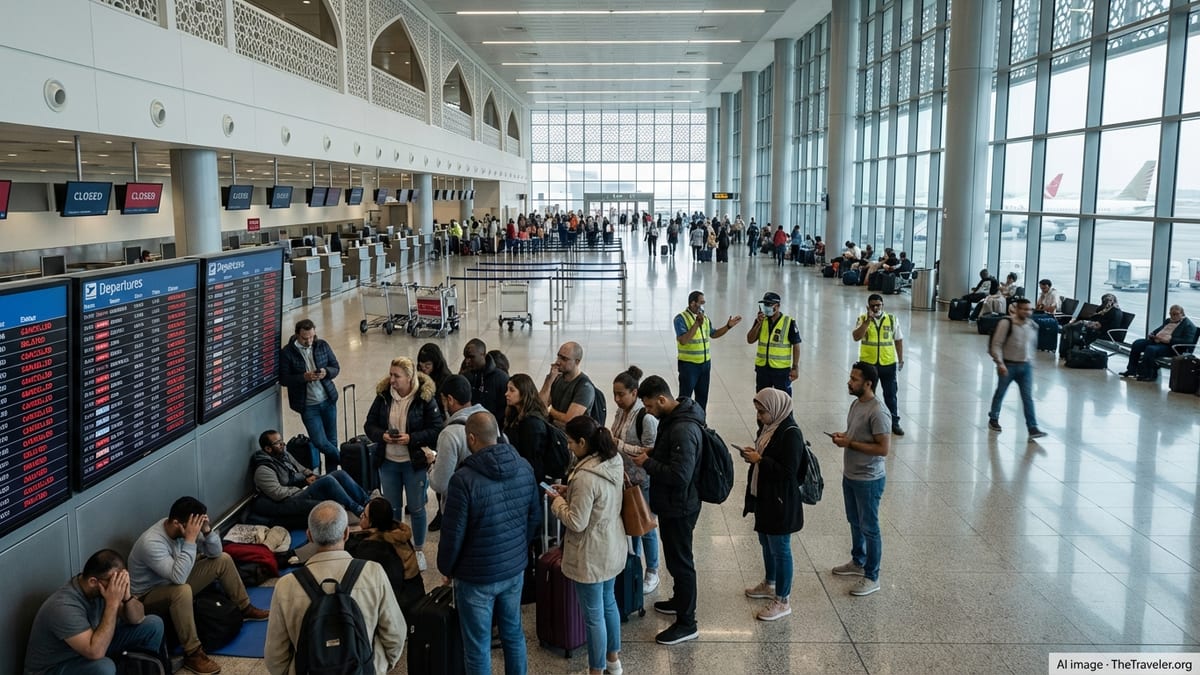
Regional Tensions Translate Into Sudden Flight Terminations
Available operational updates and industry trackers show that airlines serving key hubs in the Gulf and Levant have intensified schedule cuts in recent days, with cancellations concentrated on short and medium haul routes that traditionally connect Saudi Arabia, the United Arab Emirates, Bahrain, Qatar, Iraq, Lebanon, and Syria. Flight data for 30 April highlights multiple terminated rotations on popular corridors such as Jeddah to Sharjah, while broader route maps indicate a pattern of thinning frequencies across conflict-adjacent airspace.
The 31 terminated flights referenced in regional dispatches represent only a snapshot of a wider pattern of disruption that has unfolded through April. Aviation analytics and cargo market assessments describe a steep contraction in Middle East traffic and capacity, linking it to ongoing conflict, reroutings around sensitive airspace, and logistical strains on fuel and crew positioning. Passenger services are often the first to be trimmed as airlines reallocate resources to longer haul or strategically critical routes.
Alongside outright cancellations, at least four services have been logged with extended operational delays, reflecting the knock-on effect of aircraft and crew being held on the ground, repositioned, or forced into longer routings to avoid restricted flight information regions. Travelers in the affected countries are reporting missed connections and same-day rebookings becoming increasingly difficult as nearby flights also run full or operate on revised timings.
Air navigation advisories and government conflict-zone notices issued in recent weeks underscore the complexity of flying in and out of Bahrain, Iraq, Qatar, Lebanon, Syria, Saudi Arabia, and the wider Gulf. Restrictions on certain flight levels, changing risk assessments, and the possibility of further airspace closures mean schedules can change with little warning, particularly on cross-border routes that stitch together the region’s smaller markets.
Air Arabia: Point-to-Point Network Under Pressure
Air Arabia, a major low-cost carrier based in the United Arab Emirates, has been especially visible in traveler accounts of last‑minute itinerary changes. Publicly available booking channels and social media posts from passengers highlight multiple March and April cancellations on routes linking Gulf hubs with secondary cities, including services feeding into Iraq and Lebanon. On 30 April, at least one Jeddah to Sharjah rotation was listed as canceled on live flight‑tracking platforms, reinforcing the impression of a network under strain.
Reports from customers indicate that Air Arabia’s handling of disrupted itineraries has become a focal point of frustration. Several travelers sharing their experiences online describe being offered credit vouchers rather than cash refunds after airline‑initiated cancellations, or facing limited options to reroute without additional payment. Some accounts reference perceived changes in refund practices compared with expectations set in earlier terms, prompting criticism from passengers who booked months in advance.
Industry observers note that low‑cost carriers often operate with tighter aircraft utilization and smaller spare‑capacity buffers than full‑service rivals, making them particularly sensitive to airspace closures or unplanned ground time. Once a single leg in a multi‑sector pattern is pulled, downstream rotations can quickly be affected, magnifying the number of passengers who need assistance even if the total number of canceled flights appears modest on paper.
For now, Air Arabia’s own public updates continue to emphasize network expansion and new routes, but the day‑to‑day experience for some travelers is one of uncertainty. With fuel markets volatile and regional overflight options constrained, aviation analysts suggest that further tactical schedule adjustments by low‑fare operators cannot be ruled out as carriers attempt to protect profitability while maintaining core connectivity.
Gulf Air and Saudia Adjust Around Hub Vulnerabilities
Gulf Air and Saudia, two of the region’s key full‑service airlines, are also navigating a fragile operating environment. Operational bulletins compiled by logistics providers describe Gulf Air as running a “restricted” schedule, with flights to cities such as Doha, Kuwait City, and Baghdad suspended at various points in late April as Bahrain’s connectivity was restructured. At the same time, neighboring Saudi hubs, particularly Dammam, have taken on a larger transit role as airlines seek alternative routings around congested or sensitive airspace.
Saudia’s network has likewise been reshaped by the wider disruption. Trade and logistics updates list numerous cancellations on routes linking Saudi cities with major centers in the United Arab Emirates and Qatar, alongside cuts to services into Bahrain and other Gulf gateways. Separate regional coverage has documented more than a dozen Saudia cancellations over recent days, with ripple effects for passengers bound for and from the UAE, Saudi Arabia, and Egypt.
Despite these reductions, both Gulf Air and Saudia continue to operate a significant portion of their long‑haul and regional schedules, but often with altered timings or downgauged frequencies. Industry data for March shows the Middle East suffering one of the sharpest declines in international traffic worldwide, leaving airlines with little choice but to consolidate capacity on routes where demand and yields remain strongest.
Travelers using Bahrain, Riyadh, Jeddah, Doha, Beirut, and Damascus as transfer points face heightened risk of misaligned connections when feeder flights are removed or delayed. In several cases highlighted by travel management firms, passengers have needed to be rerouted via alternative Gulf hubs at short notice, sometimes with overnight stays or multi‑stop itineraries replacing what were once simple one‑stop journeys.
Passenger Experience: Distress, Confusion, and Limited Flexibility
For passengers in the affected countries, the immediate impact of 31 flight terminations and the accompanying delays is being felt in missed holidays, disrupted business trips, and urgent family travel plans thrown into disarray. Online forums frequented by Gulf and Levant residents feature a steady stream of complaints about sudden cancellations, long queues at call centers, and uncertainty over compensation or accommodation when flights are pulled on departure day.
Several travelers recount being notified of cancellations via email or app alerts only days or weeks before departure, limiting their ability to find affordable alternatives. Others describe arriving at airports in Saudi Arabia or the UAE to discover that their flight to Lebanon, Iraq, or Syria was no longer operating, with ground staff working from rapidly updated manifests and limited spare seats on remaining services.
Rebooking policies vary by carrier and fare type, adding another layer of complexity for affected passengers. Some customers of full‑service airlines report being reprotected on later flights or rerouted via different hubs at no extra cost, though often with long layovers. By contrast, complaints about low‑cost operators center on rebooking fees, credit‑only refunds, or restrictions on changing destinations, leaving travelers out of pocket when they opt to book new tickets with other airlines.
Consumer advocates in the region point out that national compensation and refund rules differ significantly between the Gulf states, Iraq, Lebanon, and Syria, and do not always mirror the stronger protections seen in European or some Asian markets. This regulatory patchwork can make it difficult for passengers to know what they are entitled to when faced with an airline‑initiated cancellation attributed to operational or safety considerations.
Key Routes Affected and What Rebooking Options Look Like
Routes most exposed to current disruption tend to be those threading through constrained airspace or linking smaller markets to major Gulf hubs. Flights connecting Saudi Arabia and the United Arab Emirates with Bahrain, Qatar, and Iraq have seen repeated schedule adjustments, while services into Lebanon and Syria remain susceptible to delay or cancellation when air traffic control capacity tightens or geopolitical risk levels change.
On Air Arabia, publicly accessible timetables show trimmed frequencies on several point‑to‑point sectors in recent weeks, with passengers on canceled services typically offered rebooking onto the next available flight on the same route, subject to seat availability. Traveler reports suggest that switching to a different destination or significantly altering travel dates may incur additional charges, particularly for lower‑priced fare classes.
Gulf Air’s interim strategy has focused on consolidating operations through select hubs while suspending certain city pairs until at least the end of April. Rebooking options commonly involve rerouting via alternative Gulf gateways or advancing or delaying travel by one or two days to align with remaining departures. Saudia, for its part, has prioritized high‑demand domestic and regional corridors, with impacted international passengers often accommodated on later flights from Jeddah, Riyadh, or Dammam, time and capacity permitting.
Travel management companies and logistical advisories are broadly aligned in recommending that passengers booked on upcoming journeys through Saudi Arabia, the UAE, Bahrain, Qatar, Iraq, Lebanon, and Syria monitor their reservations frequently, keep contact details updated with airlines, and be prepared for last‑minute changes. With regional airspace conditions and fuel markets still volatile, aviation experts warn that further adjustments to timetables across Air Arabia, Gulf Air, and Saudia remain possible as carriers balance safety, regulatory compliance, and the economics of operating in one of the world’s most challenging aviation environments.