


More news on this day
Britain’s rail network is straining under a rare red extreme heat warning, with passengers urged to travel only if essential as record-breaking temperatures trigger widespread disruption, reduced timetables and fears over track safety.
Get the latest news straight to your inbox!
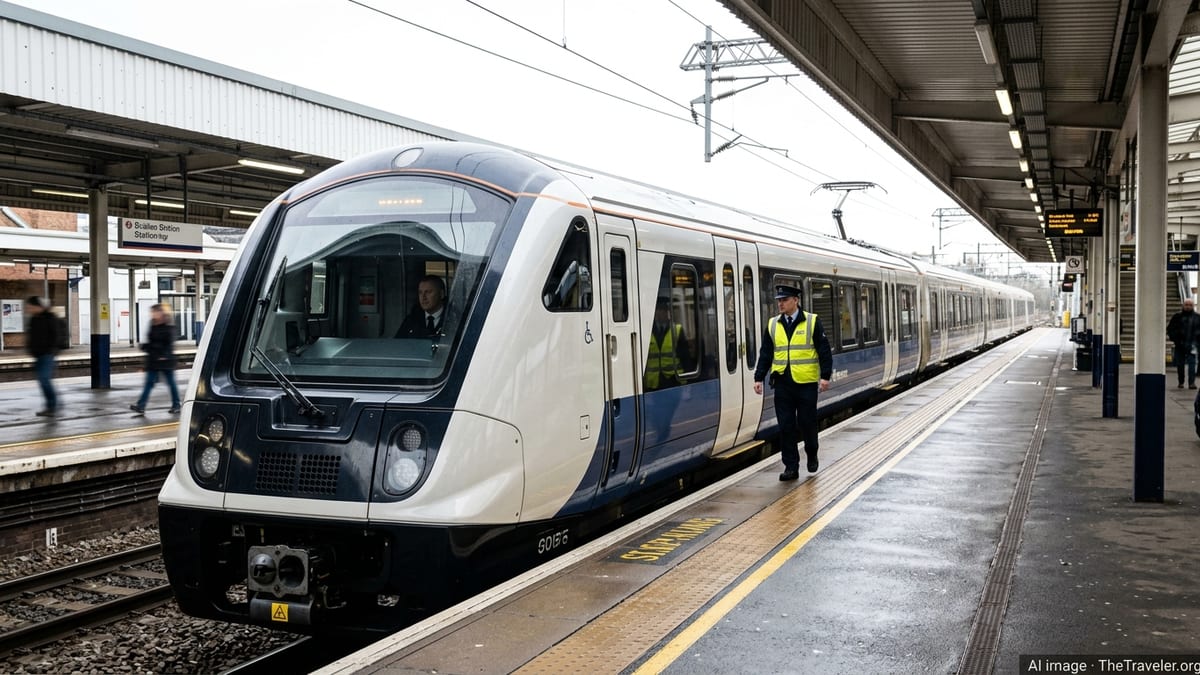
Red Alert as Temperatures Threaten June Records
Much of England and Wales woke up on 24 June to a red extreme heat warning in force, with forecasts indicating temperatures could approach or even challenge the United Kingdom’s all-time high of just over 40 degrees Celsius. Meteorologists also expect the current heatwave to surpass historic June records, turning large parts of the country into what forecasters describe as an unprecedented heat zone.
Publicly available information from the Met Office and the UK Health Security Agency indicates that the red warning covers London, the South East, South West, East of England and large areas of the Midlands, pointing to serious risks not only for public health but also for critical infrastructure. The alert period spans Wednesday and Thursday, coinciding with peak holiday and commuter travel for many routes.
Travel operators and government agencies have highlighted that such temperatures put particular stress on older networks designed for far cooler conditions. Track-side equipment, power supplies and signalling systems are all exposed to prolonged heat, increasing the likelihood of delays, temporary shutdowns and severe speed restrictions.
For visitors and domestic travellers alike, the timing is challenging. The late June heatwave intersects with the start of the busy summer travel season, when millions typically move through Britain’s mainline and regional rail hubs for holidays, events and airport connections.
Heat-Stricken Passengers Face Slower Trains and Cancellations
Across multiple operators, from commuter lines in the South East to long-distance services linking London with the South West and Wales, passengers are being warned to expect fewer trains, longer journey times and short-notice cancellations. Public statements from Network Rail and several train companies indicate that amended timetables will run through at least Thursday, with some planning reduced services for a longer period if temperatures remain high.
Rail infrastructure managers state that rails can expand and buckle when exposed to prolonged extreme heat, particularly on older track. To reduce this risk, they are applying blanket speed restrictions on some of the busiest main lines, meaning trains that do run will travel noticeably more slowly, increasing crowding and knock-on delays across the network.
In southern England, South Western Railway and Great Western Railway have announced pared-back timetables, while operators serving airports such as Gatwick have also warned of disruption. National travel advisories circulated in the past 24 hours describe a system working at reduced capacity, with some routes cut altogether and others operating at a fraction of their usual frequency.
For many heat-stricken passengers, this means packed concourses, extended waits on hot platforms and hurried improvisation of alternative routes. Reports from regional media describe commuters being turned away from busy services, holidaymakers queuing for hours and late-night travellers facing uncertainty over the last trains home.
From “Do Not Travel” Alerts to Survival Strategies
As conditions intensify, some operators have gone beyond gentle advice and issued firm “do not travel” messages for certain corridors, particularly those within the core red warning zone. Industry-wide notices summarised by travel outlets urge people to avoid rail journeys altogether unless absolutely essential, stressing that comfort and reliability cannot be guaranteed in the current conditions.
Where travel is unavoidable, companies are advising passengers to carry water, avoid peak hours where possible and allow substantially more time for journeys. Published guidance also suggests checking services immediately before departure, as the picture can change rapidly if track temperatures exceed safe thresholds or if air-conditioning failures force trains out of service.
For international visitors, especially those arriving from cooler climates, the combination of packed trains, high humidity and unfamiliar station layouts is proving particularly challenging. Major hubs such as London Waterloo, Paddington and Birmingham New Street are reported to be deploying additional staff and temporary cooling measures, but crowding and discomfort remain likely throughout the peak of the heatwave.
Travel commentators note that the current disruption follows similar scenes during the record summer of 2022, yet the proportion of the network affected now appears broader and the official heat-health alerts more severe, reinforcing the sense among many travellers that extreme summer conditions are becoming a recurring feature rather than a rare anomaly.
Tourism and Business Travel Plans Upended
The timing of the red alert is a blow to Britain’s tourism industry, which relies heavily on rail connectivity to move visitors from London and regional airports to seaside resorts, historic cities and countryside destinations. According to sector coverage, hotels and tour operators in areas such as the South West, South Coast and Cotswolds are fielding a rise in last-minute calls as guests attempt to rebook or cancel stays because they cannot be confident of reaching their destination.
Business travellers are also being forced to rethink. With same-day returns no longer assured on some intercity routes, companies are shifting meetings online or relocating them closer to participants, while others are exploring coach, rental car or domestic flight alternatives, each of which comes with its own challenges in exceptional heat.
Air travel is affected indirectly. Disruption on rail links serving airports, including services to Heathrow and Gatwick, is prompting both locals and visitors to allow far more time to reach flights, or to seek taxis and ride-hailing options at short notice. This in turn risks additional congestion on roads and higher costs for travellers already grappling with peak-season prices.
Industry analysts suggest that repeated summer heatwaves could accelerate shifts in how visitors plan UK itineraries, with more travellers opting to base themselves in a single city and take shorter local trips rather than relying on tight, multi-stop rail-heavy schedules.
Climate Pressures on an Ageing Rail Network
The current disruption has reignited discussion about how well Britain’s rail infrastructure is prepared for a warming climate. Commentaries in national and international media point to a network built largely for cooler, temperate conditions, where the engineering standards and routine maintenance regimes did not anticipate frequent near-40 degree days.
Steel rails, ballast and overhead lines all have defined temperature ranges within which they operate optimally. As these bounds are exceeded more often, Network Rail and operators are being forced into reactive measures such as emergency speed restrictions and ad hoc timetable cuts, which may become increasingly common without substantial upgrades.
Climate researchers quoted across recent coverage note that Europe is warming faster than the global average, with heatwaves growing in both intensity and duration. In the UK, this translates into a higher probability that peak summer heat will coincide with peak travel demand, magnifying the impact on rail passengers each year.
For travellers, the immediate priority is coping with delays, cancellations and uncomfortable conditions. For the wider industry, however, the red alert is another signal that long-term investment in heat-resilient infrastructure, revised timetables and improved passenger information systems is likely to be essential if Britain’s railways are to keep moving in a hotter future.